Regulatory Revolution: SEC Prepares New Rules for Crypto Exchanges in the US
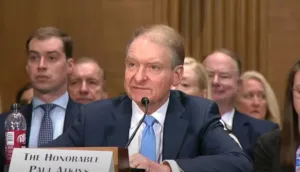
The SEC is gearing up for a massive overhaul of its regulatory framework, targeting new standards for the issuance, custody, and trading of crypto assets. Under the leadership of Paul Atkins, the agency is signaling a strategic pivot that aims to redefine how crypto exchanges operate within the United States.
This regulatory shift is expected to mitigate the legal uncertainty currently plaguing the sector, fostering a more stable environment for institutional adoption. The implications of these changes regarding custody and trading norms will likely set a global benchmark for crypto asset compliance and market structure.
The U.S. Securities and Exchange Commission (SEC) is preparing significant changes to its oversight rules. The new regulatory agenda outlines adjustments to the norms governing the issuance, custody, and trading of crypto assets. This move marks a new era under Paul Atkins' leadership, suggesting a transition toward a more defined regulatory framework for crypto exchanges operating in the American market.
This is a summarized and adapted version by Artificial Intelligence. To read the complete original story, visit the official source.
Read Full Article at Portal do BitcoinSupport Jornal Bitcoin
Independent journalism, curated by AI, no clickbait. Keep the flame alive with any amount of BTC.
jonata@walletofsatoshi.comDaily Crypto Brief 📬
Subscribe to receive the curation of the most important Bitcoin and crypto news, summarized by AI. No spam.
Join more than 10,000 smart readers.
Related News
KuCoin’s UAE Alliance: The Gulf’s Master Plan to Dominate Crypto Infrastructure
By joining forces with this alliance, KuCoin is positioning itself at the forefront of an ecosystem designed to turn regulatory openness into global market dominance. The rapid expansion of crypto infrastructure in the United Arab Emirates serves as a clear indicator that the region is building the foundational pillars for a future where digital assets drive the local economy.

India Crypto Tax Gap: Less Than 25% of Traders Are Reporting Income
The Indian tax department highlighted that offshore exchanges, private wallets, and peer-to-peer (P2P) trades are complicating tracking efforts. With an estimated 39 million crypto traders holding over $2.1 billion in assets, the government is shifting its focus from financial stability concerns to aggressive tax enforcement and recovering lost revenue.

Geopolitical Shock: US-Iran Conflict Could Force Fed to Hike Interest Rates
This potential energy shock poses a direct threat to the current economic trajectory, as it may compel the Federal Reserve to implement unexpected interest rate hikes. For those navigating the crypto markets and macro assets, understanding the link between geopolitical instability and Fed decisions is essential for managing risk in an unpredictable environment.

Privacy Under Siege? Free Course Teaches How to Track Bitcoin Using AI Agents
This development marks a pivotal moment for cybersecurity and institutional adoption within the crypto space. By integrating AI agents into their workflow, financial professionals can significantly enhance their ability to trace fund movements, providing a powerful new layer of defense and transparency against malicious actors in the decentralized economy.

Cardano Price Alert: ADA Pulls Back to $0.17 as Bulls Eye Critical $0.20 Reclaim
Market bulls are now laser-focused on reclaiming the $0.20 and $0.22 resistance levels to confirm a sustained bullish trend. Successfully breaking through these key zones could pave a clear path toward the $0.30 target, making this a pivotal moment for ADA holders and traders alike.

IMF Warning: Middle East Conflict Risks Global Recession as Oil Nears $100
Beyond immediate energy concerns, this geopolitical tension is expected to complicate economic policies and heighten inflationary pressures worldwide. As the world grapples with these macroeconomic shifts, the intersection of energy costs and global stability remains a primary driver of market uncertainty.
