Morgan Stanley Overtakes Goldman Sachs as Wall Street’s AI Debt Powerhouse
Morgan Stanley has officially seized the throne as Wall Street’s leading bank for artificial intelligence (AI) debt deals, surpassing longtime rival Goldman Sachs. By architecting billions of dollars in financing specifically for massive data center build-outs, the firm has secured a dominant position in the most critical infrastructure race of the decade.
This shift highlights a massive pivot in institutional banking, where debt underwriting for AI-related projects has emerged as a premier profit driver. As the global demand for computational power surges, Morgan Stanley's ability to navigate complex financing for AI infrastructure sets a new benchmark for the future of Wall Street's capital allocation.
This is a summarized and adapted version by Artificial Intelligence. To read the complete original story, visit the official source.
Read Full Article at Bitcoin.comSupport Jornal Bitcoin
Independent journalism, curated by AI, no clickbait. Keep the flame alive with any amount of BTC.
jonata@walletofsatoshi.comDaily Crypto Brief 📬
Subscribe to receive the curation of the most important Bitcoin and crypto news, summarized by AI. No spam.
Join more than 10,000 smart readers.
Related News

Market Shock: Polymarket Predicts US May Halt Iran Offensive Operations by 2026
For crypto investors, these geopolitical indicators are vital, as Middle East tensions often drive market volatility and macro shifts. Understanding these prediction markets is key to navigating how global political stability—or the lack thereof—will impact asset prices and broader economic trends.
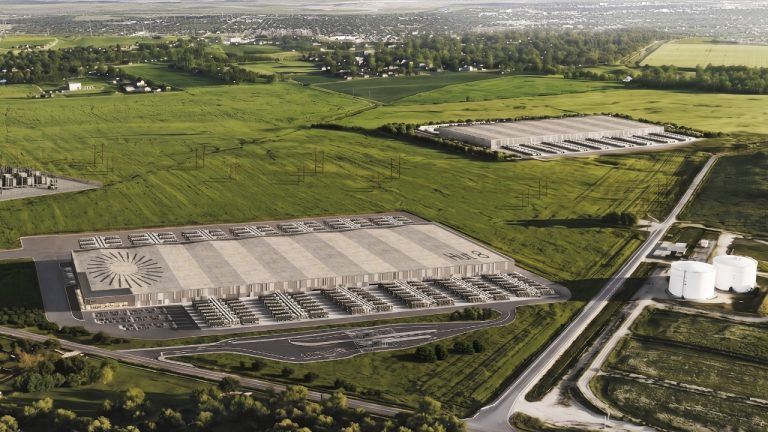
The $9.8 Billion Pivot: Hut 8 Secures Massive Texas AI Lease as Miners Embrace Compute
This strategic pivot highlights a broader industry trend where Bitcoin miners are transitioning toward long-term data center contracts to fuel the AI revolution. By leveraging their existing energy infrastructure for AI compute, companies like Hut 8 are diversifying their revenue streams and tapping into the unprecedented demand for large-scale computational power.

Geopolitical Escalation: IRGC Destroys US Radar and Strikes Bases in Kuwait
By targeting a Gulf state, the IRGC has fundamentally shifted the regional security paradigm, raising the specter of a large-scale military retaliation. The impact of these strikes extends beyond the battlefield, threatening to destabilize global energy corridors and trigger massive volatility in international markets.

Banking Chokepoint: UK Parliament Launches Inquiry into Crypto Business Restrictions
This investigation aims to address the systemic 'chokepoint' that prevents crypto businesses from accessing essential banking services. By scrutinizing these institutional hurdles, the UK seeks to foster a more inclusive environment for blockchain innovation and ensure that the digital asset sector can operate within the traditional financial framework without undue discrimination.

Bullish Signals: Polymarket Odds Suggest BTC Surpasses $64K by July 22
While the $64,000 threshold looks increasingly likely, reaching the $66,000 mark remains a toss-up according to current market data. Traders are closely watching Bitcoin price action and volatility to gauge whether this momentum can sustain a broader breakout in the crypto market.

Iran Crackdown: Two Sentenced to Death as Regime Stability Faces Critical Test
Beyond the immediate judicial actions, the political landscape is shifting rapidly, with some analysts forecasting a potential collapse of the Iranian regime by the end of 2026. The combination of violent repression and growing civil defiance suggests a volatile period ahead for the Middle East and global geopolitical stability.
