Legal Storm: Circle Hit with Criminal Complaint Over USDC Recovery Refusal

Circle, the prominent issuer of the USDC stablecoin, is facing a criminal complaint in Wisconsin following its refusal to assist in the recovery of digital assets. This legal challenge strikes at the heart of the relationship between centralized stablecoin issuers and law enforcement, testing the limits of corporate compliance in the crypto space.
This landmark case could fundamentally redefine stablecoin issuer responsibilities and the broader regulatory frameworks governing digital assets. The outcome will likely determine the extent of court authority over asset recovery, setting a massive precedent for how decentralized finance interacts with traditional legal systems.
Circle is facing a criminal complaint in Wisconsin after refusing to comply with requests regarding USDC recovery. The case is poised to become a defining moment for the industry, potentially reshaping how stablecoin issuers are held accountable by judicial authorities. Legal experts suggest that the ruling could have far-reaching consequences for regulatory frameworks and the ability of courts to oversee the recovery of digital assets.
This is a summarized and adapted version by Artificial Intelligence. To read the complete original story, visit the official source.
Read Full Article at Crypto BriefingSupport Jornal Bitcoin
Independent journalism, curated by AI, no clickbait. Keep the flame alive with any amount of BTC.
jonata@walletofsatoshi.comDaily Crypto Brief 📬
Subscribe to receive the curation of the most important Bitcoin and crypto news, summarized by AI. No spam.
Join more than 10,000 smart readers.
Related News

Deep Dive: Cronos (CRO) Onchain Data Goes Live on Dune Analytics
This integration marks a significant milestone for the Cronos (CRO) ecosystem, fostering greater transparency and data-driven decision-making. By leveraging Dune's powerful analytics, stakeholders can now better understand network growth and liquidity shifts as they happen on the blockchain.
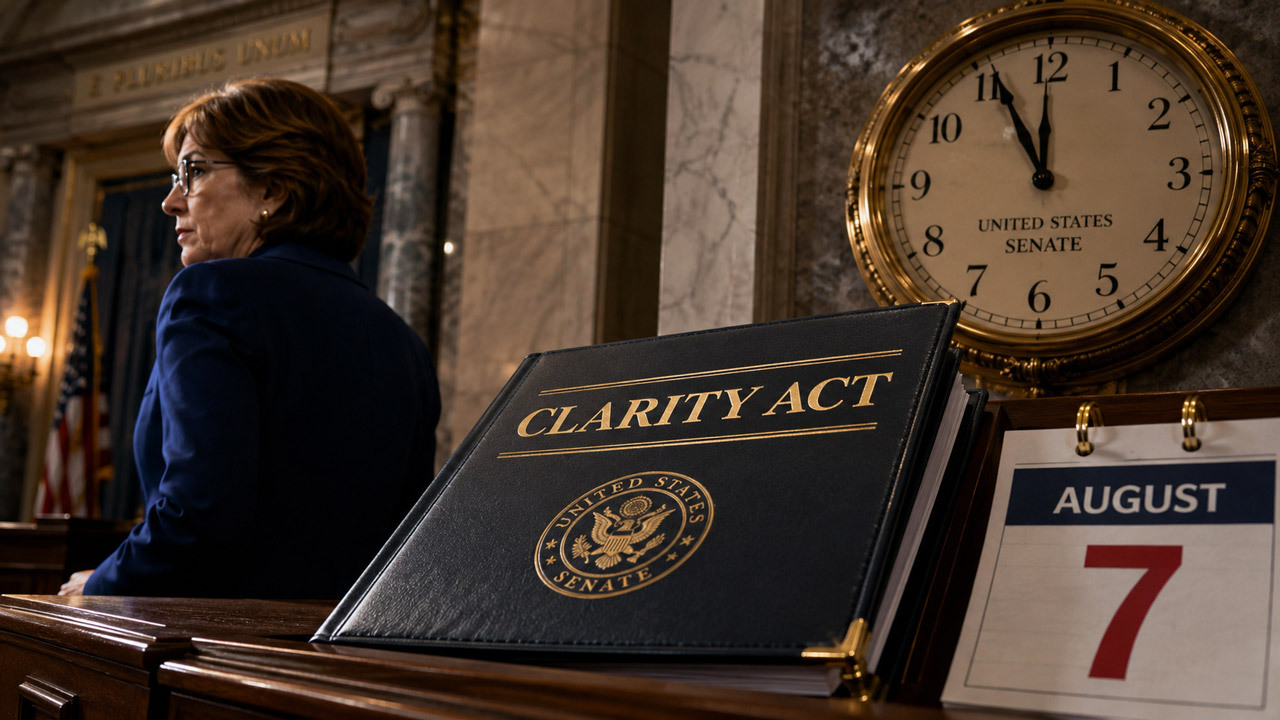
Deadline Alert: August 7 Becomes the Make-or-Break Date for the CLARITY Act
This delay carries significant implications for the future of crypto regulation. Failure to secure floor time could stall the momentum of the CLARITY Act, potentially delaying much-needed regulatory clarity for the digital asset industry and shifting the political landscape for blockchain legislation.

MiCA Crackdown: ESMA Guidelines Tighten Grip on Non-Euro Stablecoins
This regulatory tightening is designed to bolster financial stability and reduce systemic risks within the crypto ecosystem. As the MiCA framework matures, service providers must adapt to these heightened standards or face significant barriers to entry in the lucrative European digital asset market.

Fed Pivot? Williams Expresses Lower Concern Over Stablecoin Risks
Despite this optimism, the industry faces a dual reality. While the regulatory framework provided by the GENIUS Act is expected to boost stablecoin growth, market participants must still navigate ongoing concerns regarding reserve quality and liquidity risks to ensure long-term stability.

PayPal’s PYUSD Hits Polygon: A Massive Leap for Compliant Global Payments
By removing the friction of managing multiple payment providers, this integration positions Polygon as a premier destination for institutional-grade liquidity. The expansion of PYUSD onto Polygon is set to accelerate the adoption of stablecoins for real-world commerce and cross-border settlements.

Aave Unlocks Yield for Fintechs: New Stable Vaults Target Institutional Adoption
This strategic rollout empowers fintech companies to leverage Aave's liquidity pools to provide competitive returns. By lowering the barrier to entry for stablecoin yields, Aave is cementing its role as the essential infrastructure layer for the growing institutional demand in the digital asset space.
