CoinDesk

Coldcard Hack Exposes 5-Year-Old Flaw, Triggers Self-Custody Security Revolution

August 5, 202606:55 AM
Coldcard Hack Exposes 5-Year-Old Flaw, Triggers Self-Custody Security Revolution

The Coldcard hack has exposed a five-year-old firmware flaw that is shaking the foundations of self-custody security. The cryptocurrency industry is responding aggressively by accelerating the adoption of collaborative multisig security, according to Cory Klippsten. This critical revelation is forcing a complete reassessment of security practices across the crypto ecosystem. The shift to multisig solutions represents a new paradigm where responsibility is distributed among multiple parties, making attacks significantly more complex and costly for perpetrators.

This is a summarized and adapted version by Artificial Intelligence. To read the complete original story, visit the official source.

Read Full Article at CoinDesk
QR Code Lightning

Support Jornal Bitcoin

Independent journalism, curated by AI, no clickbait. Keep the flame alive with any amount of BTC.

Wallet of Satoshi
jonata@walletofsatoshi.com

Daily Crypto Brief 📬

Subscribe to receive the curation of the most important Bitcoin and crypto news, summarized by AI. No spam.

Join more than 10,000 smart readers.

Related News

Kazakhstan Returns to Yuan Debt Market with $500M Panda Bond Issue
Crypto Briefing

Kazakhstan Returns to Yuan Debt Market with $500M Panda Bond Issue

Kazakhstan is set to return to the yuan debt market with a $500 million 'panda bond' issuance, a strategic move that strengthens financial ties between the Central Asian nation and China. This yuan-denominated bond initiative represents a significant shift in Kazakhstan's financial strategy and could have profound implications for the cryptocurrency mining sector in the region.

The issuance of 'panda bonds' by Kazakhstan not only expands China's economic influence in Central Asia but may also influence the country's regulatory stance on cryptocurrencies. With growing financial dependence on China, Kazakhstan might reconsider its approach to cryptocurrency mining, which previously faced restrictions due to excessive energy consumption. This financial move reflects a broader trend of emerging nations seeking alternative funding sources and strengthening strategic partnerships with global powers in an ever-evolving economic landscape.
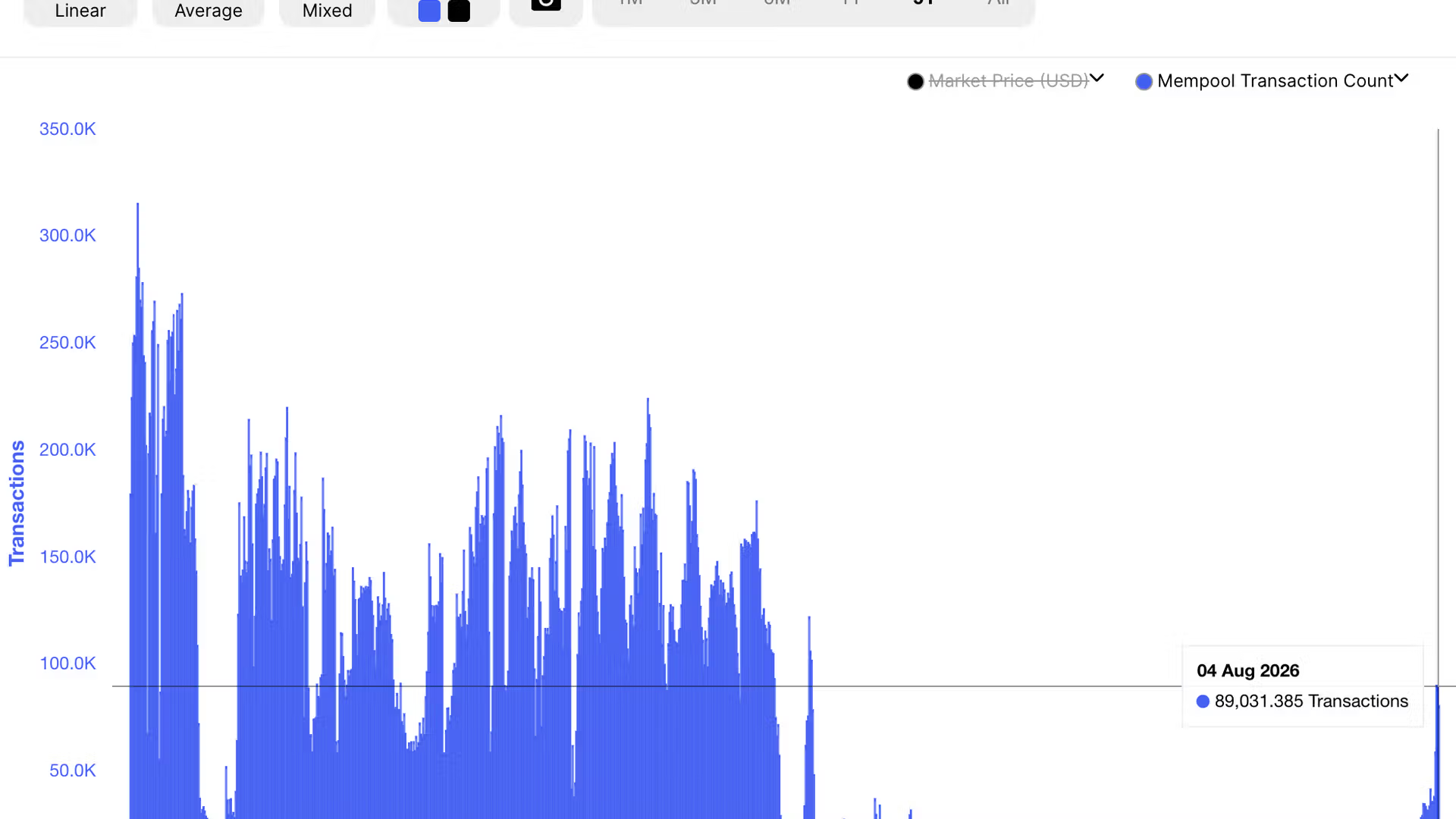
The $120 million Coldcard hack lights up Bitcoin's memory pool

CoinDesk★ Featured

The $120 million Coldcard hack lights up Bitcoin's memory pool

Intel Brief: Coldcard, a popular Bitcoin hardware wallet, suffered a major hack resulting in $120 million being stolen, with suspicious transactions lighting up Bitcoin's memory pool. The incident represents one of the largest security breaches in the crypto ecosystem this year. The hack comes at a critical time for hardware wallet security, as the Bitcoin community actively monitors the mempool to track the stolen funds. This incident reignites debates about the need for better security protocols and may accelerate the development of more robust solutions for digital asset protection.
Circle Teams Up with BlackRock, Visa, and DTCC as Arc Validators
Crypto Briefing

Circle Teams Up with BlackRock, Visa, and DTCC as Arc Validators

Circle, in a strategic move that could redefine digital financial infrastructure, has announced partnerships with giants like BlackRock, Visa, and DTCC as validators for its Arc platform. This alliance bridges the gap between the cryptocurrency world and established traditional financial institutions, potentially accelerating blockchain adoption and driving innovation in the digital finance sector. The collaboration represents a significant bridge between traditional finance and blockchain technology, bringing credibility and scale to the stablecoin ecosystem. With BlackRock, the world's largest asset manager, Visa a leader in payment technology, and DTCC a financial market infrastructure provider, Circle is positioning its Arc platform as an essential component of the future of digital finance, paving the way for widespread institutional adoption.
Bitcoin Left in Dust as Global Stocks Soar to All-Time Highs
CoinDesk

Bitcoin Left in Dust as Global Stocks Soar to All-Time Highs

Derivatives data indicates subdued activity in Bitcoin and Ethereum, while traders take aggressive positions in select altcoins. The broader cryptocurrency market fails to keep pace with global equities hitting record highs, highlighting a growing divergence between traditional and digital assets.

This performance disparity reflects a moment of risk reassessment by investors, with capital flowing toward what are perceived as safer, more established assets. Despite Bitcoin's historical volatility, the current landscape suggests traders are more cautious with major cryptocurrencies, instead exploring opportunities in emerging projects with higher potential returns.

Ethereum's 54% Reward Cut Could Turn DeFi's Favorite Loop into a Daily Loss Machine
CryptoSlate★ Featured

Ethereum's 54% Reward Cut Could Turn DeFi's Favorite Loop into a Daily Loss Machine

A newly proposed Ethereum Improvement Proposal (EIP-8361) would slash staking rewards by 54%, reducing validator yields from 2.6% to approximately 1.2%. This change, phased in over 18 months, implements a burn mechanism where validators lose a larger share of their consensus rewards as the total amount of staked ETH increases. The proposal threatens to turn DeFi's favorite mechanism into a 'daily loss machine,' potentially discouraging large-scale staking and impacting network security.

With the DeFi ecosystem heavily relying on staking for liquidity and validation, this significant reward reduction could reconfigure the economic incentive behind the world's largest smart contract platform. Investors and validators will need to reassess their strategies as Ethereum continues its development to scale and improve its energy efficiency.
Bitcoin ETFs See Massive Inflows as Cold Wallet Hack Reignites Custody Debate
CoinTelegraph★ Featured

Bitcoin ETFs See Massive Inflows as Cold Wallet Hack Reignites Custody Debate

US spot Bitcoin ETFs attracted a massive $382 million in just two days, with Galaxy's Bitcoin ETF returning to gains as the Coldcard hack reignites critical debates about digital asset custody. The inflows demonstrate continued institutional confidence in regulated Bitcoin products despite security concerns in the broader crypto ecosystem. The capital flow, with $211.5 million on Tuesday following $170 million on Monday, comes as the Coldcard hack impacts up to 7,300 addresses and results in approximately $130 million in suspected Bitcoin losses. This incident has intensified scrutiny on hardware wallet security and the need for more robust custody solutions in crypto, potentially accelerating the adoption of regulated ETFs as a safer alternative for institutional investors.
Jornal Bitcoin Logo
