Senate Showdown: Republicans Push CLARITY Act as Bitcoin Fights to Hold $66K
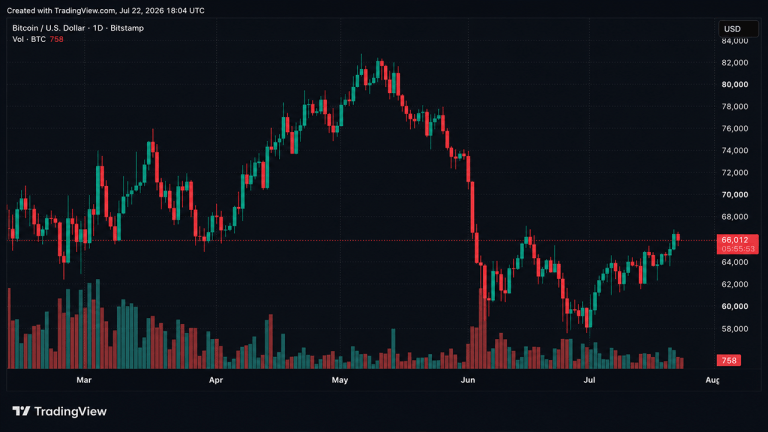
U.S. Senate Republicans are aggressively pushing the CLARITY Act with only 15 days remaining, creating a high-stakes environment for digital asset regulation. As legislative progress remains slow, Bitcoin is experiencing significant price movement, struggling to maintain its position above the critical $66,000 level.
This regulatory friction is contributing to heightened intra-day volatility, as investors weigh the implications of the CLARITY Act on market stability. After nearly breaching the $67,000 mark recently, Bitcoin's inability to hold key support levels highlights the direct link between political developments and crypto market sentiment.
Bitcoin struggled to hold the $66,000 mark on Wednesday, trading near $66,200 after bouncing between a low of $65,536 and a peak of $66,921. The asset's performance comes amid intense political maneuvering in Washington, where Senate Republicans are fast-tracking the CLARITY Act.
With only 15 days left on the clock, the slow progress of this crucial legislation is weighing heavily on market confidence. Having come within striking distance of $67,000 on July 21, Bitcoin is now grappling with volatility as the market awaits clarity on the regulatory framework governing digital assets in the United States.
This is a summarized and adapted version by Artificial Intelligence. To read the complete original story, visit the official source.
Read Full Article at Bitcoin.comSupport Jornal Bitcoin
Independent journalism, curated by AI, no clickbait. Keep the flame alive with any amount of BTC.
jonata@walletofsatoshi.comDaily Crypto Brief 📬
Subscribe to receive the curation of the most important Bitcoin and crypto news, summarized by AI. No spam.
Join more than 10,000 smart readers.
Related News

Geopolitical Alert: US C-RAM Defense System Activated in Erbil Following Drone Attack
As military actions involving Iranian influence in the Gulf region continue to loom, the impact of this drone attack cannot be understated. For the crypto and macro markets, such geopolitical friction often serves as a catalyst for sudden volatility and shifts in global liquidity.
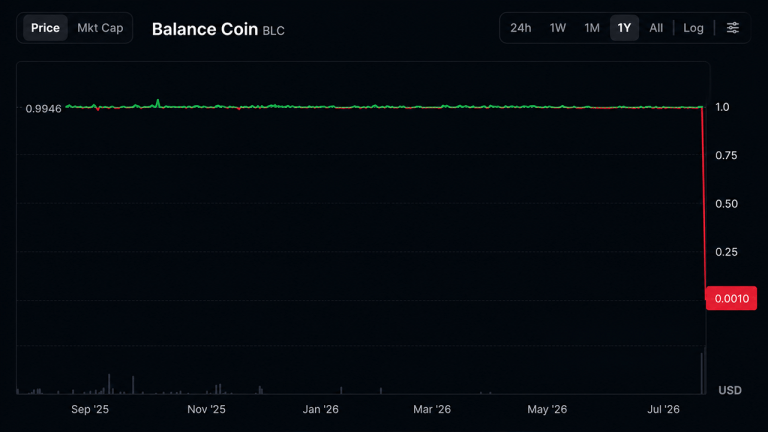
Stablecoin Carnage: BLC Crashes 99% Following Massive Oracle Manipulation Exploit
Security giants Peckshield and Slowmist have verified the exploit, highlighting the persistent vulnerabilities inherent in decentralized finance protocols. This crash underscores the systemic risks posed by oracle manipulation and the precarious nature of algorithmic stablecoins when faced with targeted liquidity attacks.
Price Target Surge: Benchmark Upgrades Hut 8 Following Massive $9.8B AI Data Center Deal
This strategic expansion places Hut 8 at the epicenter of the convergence between Bitcoin mining and artificial intelligence. By leveraging its existing infrastructure for AI workloads, the company is transforming into a critical provider of high-performance computing, a move expected to drive significant long-term shareholder value.

Capitulation Alert: Coinbase Report Shows Bitcoin Sentiment Nearing Critical Levels in Q2
While the immediate outlook appears grim, this capitulation phase could serve as a massive investment opportunity for strategic players. Understanding the nuances of Bitcoin volatility and sentiment shifts is essential for navigating the potential market bottom predicted in this quarterly update.

Tesla’s Q2 2026 Earnings: Why Bitcoin Holders Are Watching Closely
Beyond traditional metrics, the spotlight is firmly on Tesla's Bitcoin holdings. The strategic management of these digital assets remains a critical variable that could drive massive market shifts, linking the performance of tech giants directly to the broader cryptocurrency landscape.

Cathie Wood Defies 48% Stock Slide, Claims SpaceX Could Be 'Most Important Company in History'
By highlighting the strategic importance of Starlink, deep space exploration, and the emergence of orbital data centers, Wood argues that the current market volatility ignores a historic shift. The long-term impact of space-based connectivity and data processing could redefine the global technological landscape.
