Maritime Chaos: Pirate Attacks in Gulf of Aden Trigger High Alert and Shipping Disruptions

Pirate activity in the Gulf of Aden has surged following reports of a suspected vessel boarding, forcing a massive spike in maritime security alerts. The strategic Bab el-Mandeb Strait is now under intense scrutiny as authorities scramble to manage the escalating threat to international shipping lanes.
Data suggests that the Bab el-Mandeb Strait could face effective closure or significant operational paralysis by September 30, with impact metrics hitting 21.5%. This sudden maritime instability threatens to disrupt global supply chains and increase volatility in trade-related commodities and logistics sectors.
Pirates are suspected of boarding a vessel in the Gulf of Aden, prompting a heightened maritime alert across the region. The situation is escalating rapidly, with reports indicating that the Bab el-Mandeb Strait could be effectively closed or face severe operational constraints by September 30, reaching a 21.5% disruption threshold. This development underscores the growing risk to critical maritime corridors and global trade stability.
This is a summarized and adapted version by Artificial Intelligence. To read the complete original story, visit the official source.
Read Full Article at Crypto BriefingSupport Jornal Bitcoin
Independent journalism, curated by AI, no clickbait. Keep the flame alive with any amount of BTC.
jonata@walletofsatoshi.comDaily Crypto Brief 📬
Subscribe to receive the curation of the most important Bitcoin and crypto news, summarized by AI. No spam.
Join more than 10,000 smart readers.
Related News

South China Sea Escalation: US Coast Guard Boosts Presence Amid Chinese Patrols
Beyond the immediate naval standoff, this escalation poses a direct threat to regional stability and vital global trade routes. As geopolitical risks rise, market participants should prepare for potential shifts in global economic sentiment and increased volatility across interconnected financial sectors.

Global Alert: UN Extends Red Sea Houthi Attack Monitoring, Fueling Market Uncertainty
By prolonging this oversight, the UN acknowledges that the maritime corridor remains a high-risk zone for international logistics. This extended period of instability could trigger volatility in global markets, as investors weigh the consequences of potential supply chain disruptions and heightened geopolitical risks.

Explosions Reported on Iran’s Larak Island: Strait of Hormuz Tensions Spike
The heightened tensions in the Strait of Hormuz pose a direct threat to global oil shipping and overall market stability. Should these disruptions persist, the impact on global energy supplies could trigger significant volatility across international markets and broader economic sectors.

Trump Demands Nations Pay US for Strait of Hormuz Defense: A Geopolitical Shift?
This demand for payment threatens to strain long-standing alliances and force a massive shift in global military cost-sharing. The resulting geopolitical instability could disrupt critical trade routes and create significant ripple effects across global markets, including increased volatility in the crypto and commodity sectors.

Middle East Crisis: Iran Missile Strikes Trigger Global Market Fears and Shipping Threats
Market analysts are closely monitoring the potential for massive disruptions in the Strait of Hormuz, a critical maritime chokepoint. Any significant impact on shipping routes could lead to severe supply chain volatility and heightened economic risks, forcing a re-evaluation of risk assets in the current climate.
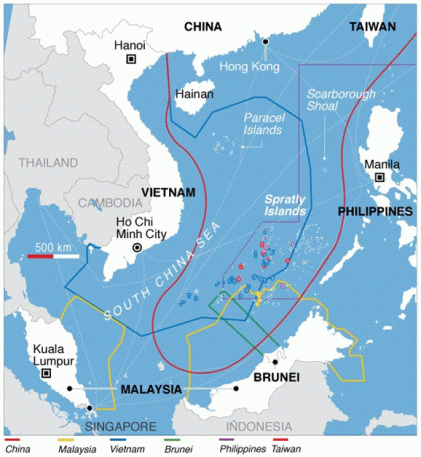
South China Sea Showdown: Joint Statement Rejects China’s Maritime Claims
By addressing these disputes head-on, the statement aims to de-escalate regional tensions and mitigate the looming risk of military conflict. The long-term consequence could be a significant shift in geopolitical dynamics, reshaping how maritime security and international law are enforced in the region.
