Bitcoin.com

Peter Schiff: Strategy's STRC Plan is 'Hurting MSTR Shareholders'

July 31, 202602:29 PM
Peter Schiff: Strategy's STRC Plan is 'Hurting MSTR Shareholders'

Renowned investor Peter Schiff has launched a scathing critique of Strategy Inc., arguing that its STRC priority is directly harming MSTR shareholders. Following the release of second-quarter earnings, Strategy's shares plummeted approximately 7%, reflecting market concerns about the company's strategy regarding bitcoin reserves and common stock value. The dispute between Schiff and Strategy Inc. exposes divergent views on preferred-stock stability, bitcoin reserves, and common-stock value. As one of the most prominent critics of the company's cryptocurrency approach, Schiff argues that the prioritization of STRC is diverting resources that could be used more directly to benefit MSTR shareholders.

This is a summarized and adapted version by Artificial Intelligence. To read the complete original story, visit the official source.

Read Full Article at Bitcoin.com
QR Code Lightning

Support Jornal Bitcoin

Independent journalism, curated by AI, no clickbait. Keep the flame alive with any amount of BTC.

Wallet of Satoshi
jonata@walletofsatoshi.com

Daily Crypto Brief 📬

Subscribe to receive the curation of the most important Bitcoin and crypto news, summarized by AI. No spam.

Join more than 10,000 smart readers.

Related News
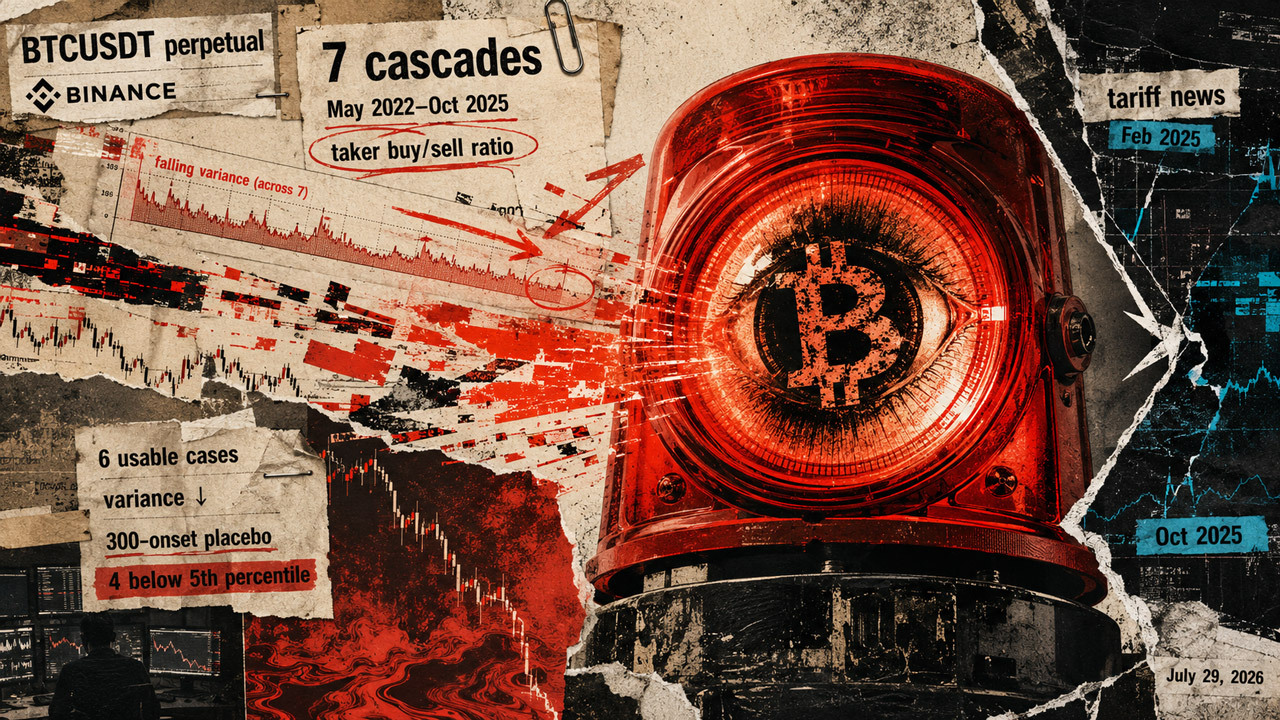
Bitcoin Study: Strongest Liquidation Warnings Can't Predict Individual Crashes
CryptoSlate

Bitcoin Study: Strongest Liquidation Warnings Can't Predict Individual Crashes

A groundbreaking Bitcoin study reveals that the strongest recurring liquidation warning signs, while consistent across multiple events, cannot predict individual market crashes with precision. The research identified an order-flow pattern that stood out across six distinct market events, but also noted that two of these observations overlapped with ordinary market conditions, limiting their reliability as standalone indicators.

This finding presents a significant challenge for traders and investors who rely solely on liquidation warning signals for decision-making. The study suggests that while these patterns may indicate general market instability, they should not be used in isolation to forecast specific crashes. Researchers emphasize the need for a more holistic approach, combining multiple indicators and fundamental analysis for a more accurate risk assessment in the cryptocurrency market.
Bitcoin Traders Lose $100M as BTC Drops $3K in 12 Hours

Bitcoin.com

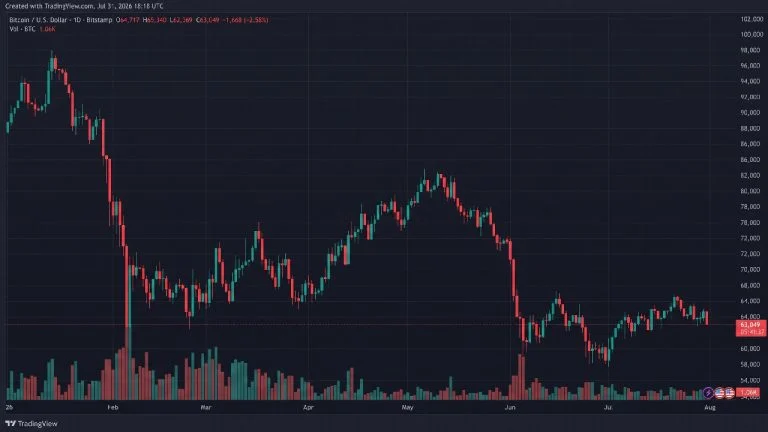
Bitcoin Traders Lose $100M as BTC Drops $3K in 12 Hours

Bitcoin plunged nearly $3,000 on July 31, with traders losing approximately $100 million in just 12 hours. The cryptocurrency hit an intraday low of $62,369, reducing its monthly gain from 10% to just 4.5%, while market capitalization plummeted from $1.3 trillion to $1.26 trillion. The sudden volatility occurred as Federal Reserve momentum appeared to fade, causing panic among investors. This significant drop highlights the unpredictable nature of the cryptocurrency market, where rapid price movements can result in substantial losses for traders. Despite the decline, Bitcoin still maintains positive monthly gains, though market confidence may have been shaken by this event.
Tether Posts $1.5B Q2 Profit as Reserves Plummet by Half

CoinDesk★ Featured

Tether Posts $1.5B Q2 Profit as Reserves Plummet by Half

Tether, the world's largest stablecoin issuer, reported a staggering $1.5 billion operating profit in Q2, even as its reserve buffer fell by half. The company added 14 metric tons of gold and approximately 1,800 bitcoin to its reserves during the quarter, showcasing a diversified reserve strategy amid market turbulence. This development comes at a critical time for the cryptocurrency market, where stablecoin transparency faces intense scrutiny. Tether's robust profit contrasts sharply with its shrinking reserve, raising questions about the long-term sustainability of the stablecoin model. The strategic moves into gold and bitcoin may signal preparation for future volatility or an attempt to bolster investor confidence amid increasing regulatory pressures.
Tether Shatters Records with $1.5B Q2 Profit, Hoards 98,932 Bitcoin
Bitcoin.com★ Featured

Tether Shatters Records with $1.5B Q2 Profit, Hoards 98,932 Bitcoin

Tether, the largest stablecoin issuer, reported a staggering $1.5 billion Q2 profit, increasing its market capitalization by $446 million despite a general market slowdown. The company now holds an impressive 98,932 Bitcoin, solidifying its position as one of the largest Bitcoin holders globally. While most of USDT's collateral remains comprised of U.S. Treasury bills, the company has diversified its assets, adding 14 tons of physical gold to its portfolio. Tether's robust growth comes amid regulatory uncertainty for stablecoins, highlighting the resilience of the company's business model and its ability to generate significant revenue even in adverse market conditions.
Bitcoin Magazine

Coinkite Releases Fixed Firmware After Coldcard Bug; AI Likely Involved In The Breach

Bitcoin hardware manufacturer Coinkite has released fixed firmware after a critical vulnerability was discovered in Coldcard, with evidence suggesting artificial intelligence was likely used in exploiting the flaw. Developer NVK highlighted that AI-assisted code review can now find latent bugs at a speed outpacing even the industry's most seasoned experts, marking a sober reality of the new AI paradigm. This incident represents a turning point in cryptocurrency security, demonstrating how AI tools can be both a threat and a defense in the blockchain ecosystem. Coinkite's swift response and adoption of AI-assisted code review technologies reflect the growing need for innovation in digital security as adversaries also leverage the same advanced technologies. The case serves as a warning to the entire industry about the importance of staying ahead in the technological arms race.
CryptoPotato

Japan's Yen Crisis Could Trigger Bitcoin Market Meltdown: Analyst

An analyst warns that a rapid unwind of yen-funded trades could trigger forced selling across markets, including cryptocurrencies. The instability of the Japanese yen represents a systemic risk that could dramatically impact Bitcoin prices and other digital assets. The current situation in Japan, with the Bank of Japan maintaining low interest rates while other countries hike them, has created an environment where traders borrowed in yen to invest in higher-yielding assets. If this dynamic reverses, the mass selling of these assets to cover yen-denominated debts could trigger a wave of liquidations that would spread to the cryptocurrency market, intensifying volatility and potentially causing significant price drops.
Jornal Bitcoin Logo