The AI Therapist Trend: Why Psychologists Are Worried About Patients Using AI for Mental Health

A groundbreaking APA survey has uncovered a significant shift in mental health dynamics: over one-third of psychologists report that patients are increasingly utilizing artificial intelligence as an additional mental health professional. This trend marks a pivotal moment where AI intersects directly with clinical psychological practice.
While the accessibility of AI tools is undeniable, clinicians are issuing urgent warnings regarding the potential for technology to reinforce delusions and cognitive distortions. The integration of AI into therapy sessions presents a complex challenge, balancing technological convenience against the critical need for human-led clinical accuracy and patient safety.
A new survey conducted by the American Psychological Association (APA) highlights a growing trend in the mental health landscape: more than a third of psychologists have observed patients using AI as a supplementary mental health professional. This shift indicates that patients are seeking immediate, automated guidance outside of traditional clinical settings.
However, the medical community remains cautious. Clinicians warn that AI lacks the nuanced judgment of a human professional and may inadvertently reinforce delusions or harmful thought patterns. As AI becomes more embedded in daily life, the psychological community is grappling with how to manage these digital interventions safely.
This is a summarized and adapted version by Artificial Intelligence. To read the complete original story, visit the official source.
Read Full Article at DecryptSupport Jornal Bitcoin
Independent journalism, curated by AI, no clickbait. Keep the flame alive with any amount of BTC.
jonata@walletofsatoshi.comDaily Crypto Brief 📬
Subscribe to receive the curation of the most important Bitcoin and crypto news, summarized by AI. No spam.
Join more than 10,000 smart readers.
Related News
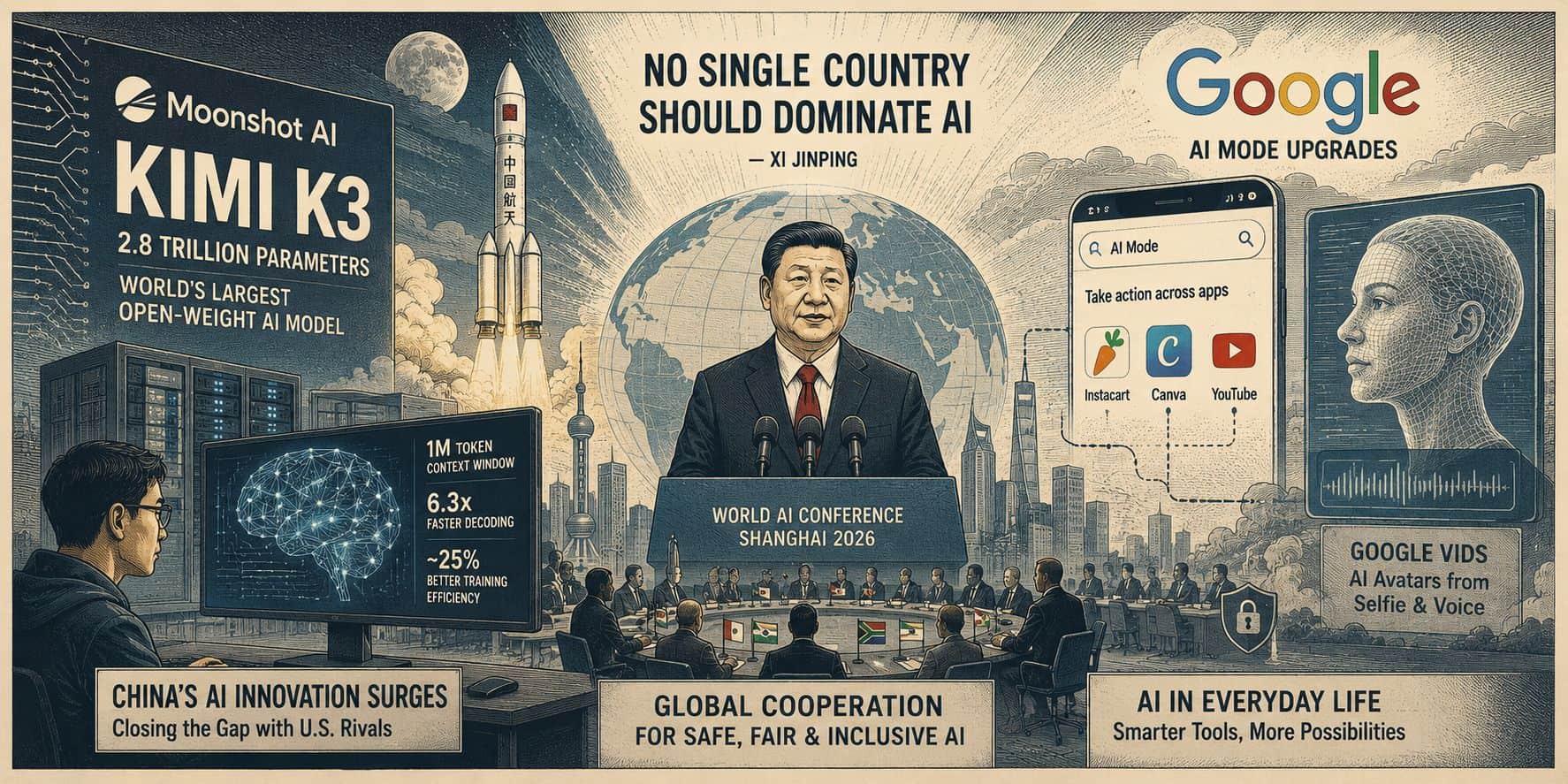
AI Race Boils Over: Moonshot Drops Kimi K3 (Open-Weight), Google Upgrades AI Mode, Xi Rejects Single-Country Dominance
The stakes extend beyond demos: open-weight models can accelerate adoption by enabling broader scrutiny and experimentation, while Google’s AI Mode upgrades raise the bar on product capability and user-facing creativity. With Xi pushing back against AI dominance, the contest is increasingly geopolitical—bringing fresh pressure for global coordination, standards, and policy clarity around AI deployment.

Bitcoin Treasury Firm Eyes 10% Income—Still Can’t Sell Nearly Half Its Shares
For investors, the tension is clear: higher projected returns haven’t translated into full demand. Even with the potential yield lift tied to pricing below SEK 120, the inability to sell a large portion of the stake raises questions about liquidity, pricing efficiency, and how attractive Bitcoin treasury structures are in practice.
The Kimi K3 Effect: New AI Model Triggers Semiconductor Stock Sell-off
This sudden shift highlights growing concerns regarding the competitive landscape of the AI industry. As high-parameter open-weight models become more capable, investors are questioning the long-term dominance of hardware giants and the potential for rapid shifts in the semiconductor market demand.

China's AI Giant Awakens: New Open-Source Model Challenges OpenAI and Anthropic Dominance
This strategic move reignites the intensifying technological war and poses a direct threat to the valuations of major American big tech companies. By providing a high-scale open-source alternative, China is poised to disrupt the global technology market and challenge the established Silicon Valley hegemony.

The Next Nvidia? Major Ethereum Holder Predicts AI-Driven Moonshot
This strategic outlook positions Ethereum not just as a digital asset, but as a foundational layer for the AI revolution. As the intersection of blockchain and AI intensifies, the market is watching closely to see if Ethereum can trigger a new era of unprecedented capital inflow and network utility.

Pharma Giant Eli Lilly Bets $2.8 Billion on Psychedelic Drug Revolution
With a market projection potentially reaching $7 billion by 2032, this acquisition positions the giant at the heart of an exploding sector. The investment reinforces the thesis that psychedelic therapies will be the next major frontier for treating complex psychiatric conditions.
