The Daily Hodl

OpenAI to Pay $3.2M Settlement After Discrimination Claims Against US Workers

August 7, 202603:05 PM
OpenAI to Pay $3.2M Settlement After Discrimination Claims Against US Workers

OpenAI and its subsidiary Statsig have reached a $3.2 million settlement with the U.S. Department of Justice following allegations of discriminating against American workers in favor of foreign visa holders for certain PERM-related positions. The artificial intelligence powerhouse has agreed to pay penalties, compensate victims, revise hiring policies, and submit to monitoring as part of the resolution. This case involves discrimination in the hiring process and violation of U.S. labor laws.

This settlement sets a significant precedent in the technology sector, where the global race for talent often collides with local employment laws. The financial penalty, combined with the requirement to compensate victims and implement systemic changes, sends a clear message to AI and tech companies about the importance of compliance with U.S. labor laws, even amid the pursuit of global talent acquisition.

This is a summarized and adapted version by Artificial Intelligence. To read the complete original story, visit the official source.

Read Full Article at The Daily Hodl
QR Code Lightning

Support Jornal Bitcoin

Independent journalism, curated by AI, no clickbait. Keep the flame alive with any amount of BTC.

Wallet of Satoshi
jonata@walletofsatoshi.com

Daily Crypto Brief 📬

Subscribe to receive the curation of the most important Bitcoin and crypto news, summarized by AI. No spam.

Join more than 10,000 smart readers.

Related News
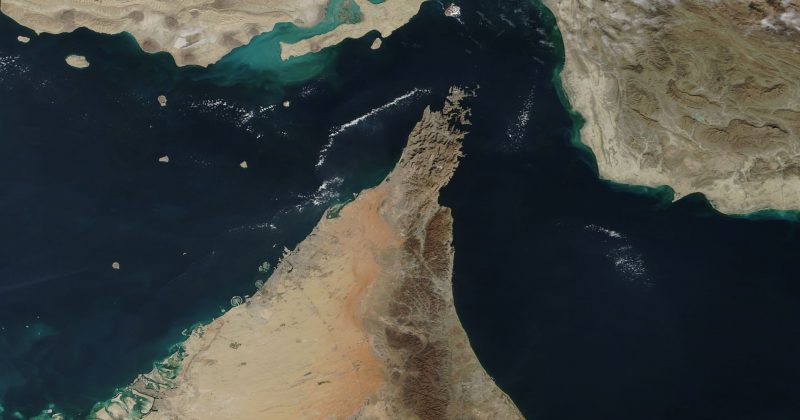
Oil Prices Surge as Iran-Oman Hormuz Deal Rocks Global Markets

Crypto Briefing

Oil Prices Surge as Iran-Oman Hormuz Deal Rocks Global Markets

Global oil prices have surged following reports of a potential Iran-Oman agreement concerning the strategically vital Strait of Hormuz, exposing the extreme sensitivity of energy markets to geopolitical shifts. The news sent shockwaves through financial markets, with energy stocks and cryptocurrencies showing divergent reactions as investors reassess risk factors. The Strait of Hormuz, a critical chokepoint for oil transportation, handles approximately one-third of the world's seaborne oil. Any agreement affecting security in this maritime corridor has profound implications for global oil price stability and inflation, directly impacting emerging economies and the cryptocurrency market as a refuge asset during times of geopolitical uncertainty.
Bitcoin's BIP-110 activation in 185 blocks: What miners need to know
CryptoSlate

Bitcoin's BIP-110 activation in 185 blocks: What miners need to know

Bitcoin has just 185 blocks remaining until block height 961,632, when enforcing nodes will begin rejecting non-signaling blocks according to BIP-110 rules. This technical milestone represents a critical moment for the Bitcoin network, requiring miners to adjust their operations to ensure continuous block validation and maintain network integrity. The BIP-110 proposal is not automatically adopted by Bitcoin but serves as a signaling mechanism allowing the community to test compatibility with future upgrades. As this critical height approaches, the Bitcoin community is closely monitoring signaling adoption while experts analyze potential consequences for network security and decentralization. This development highlights the collaborative nature of Bitcoin governance and the importance of technical consensus in the evolution of the world's leading cryptocurrency.
Judge Halts US Move to Add Chinese Biotech Giant WuXi AppTec to Military Ties List

Crypto Briefing

Judge Halts US Move to Add Chinese Biotech Giant WuXi AppTec to Military Ties List

A federal judge has blocked the U.S. government's decision to add Chinese biotech giant WuXi AppTec to the Pentagon's list of entities with ties to the Chinese military, a ruling that directly impacts global biotech collaborations and market dynamics between the world's two largest economies. The decision underscores the complex interplay between legal systems and geopolitical tensions, potentially paving the way for increased scientific and technological cooperation between Western and Chinese companies while creating uncertainty about U.S. national security policies and their effect on international biotechnology markets.
Surveillance Firm Planned to Turn 350,000 Uber Drivers into Nationwide License Plate Scanning Fleet

Decrypt★ Featured

Surveillance Firm Planned to Turn 350,000 Uber Drivers into Nationwide License Plate Scanning Fleet

A leaked Flock presentation reveals the surveillance firm's ambitious plan to turn 350,000 Uber and delivery drivers into a nationwide license plate scanning fleet. The proposal, which has shocked the transportation industry, demonstrates how driver data could be collected on a massive scale without explicit consent. The mass surveillance scheme would have allowed Flock to access location and vehicle identification data through rideshare apps, creating a surveillance network under the guise of mobility services. This revelation raises alarms about digital privacy and raises questions about how user data is being exploited by tech and surveillance companies without public knowledge.
Crypto Dispensers Names Mohamed Abdel Aleem as Chief Compliance Officer Amid Regulatory Push
Brave New Coin

Crypto Dispensers Names Mohamed Abdel Aleem as Chief Compliance Officer Amid Regulatory Push

Crypto Dispensers has appointed Mohamed Abdel Aleem as Chief Compliance Officer, a strategic move that underscores the company's commitment to regulatory compliance in an increasingly scrutinized crypto landscape. With regulatory bodies worldwide tightening their grip on digital assets, this appointment signals Crypto Dispensers' proactive approach to navigating complex compliance frameworks. The hiring comes at a critical time as the cryptocurrency industry faces mounting pressure from regulators globally. Abdel Aleem's expertise will be crucial in helping Crypto Dispensers maintain its operations while adhering to evolving compliance requirements, positioning the company favorably in the eyes of regulators and institutional investors who prioritize compliance in their crypto partnerships.
US Widens Iran Crypto Crackdown with Sanctions on Two Exchanges
CoinDesk

US Widens Iran Crypto Crackdown with Sanctions on Two Exchanges

The U.S. Treasury's Office of Foreign Assets Control (OFAC) has sanctioned Iranian cryptocurrency exchanges Shelbit and Aban Tether, widening Washington's campaign to cut Tehran's access to crypto and foreign currency markets. This action marks a significant escalation in America's efforts to prevent sanctioned nations from utilizing digital assets for financial transactions.

The sanctions specifically target financial infrastructure that allows Iran to bypass traditional economic restrictions, using cryptocurrencies for international transactions. This move reflects growing U.S. concerns about digital assets being used to evade sanctions and may lead to increased scrutiny on exchanges operating in regions with international restrictions.

Jornal Bitcoin Logo