Live Fee Auction: What Happens When a Bitcoin Block Hits Capacity?
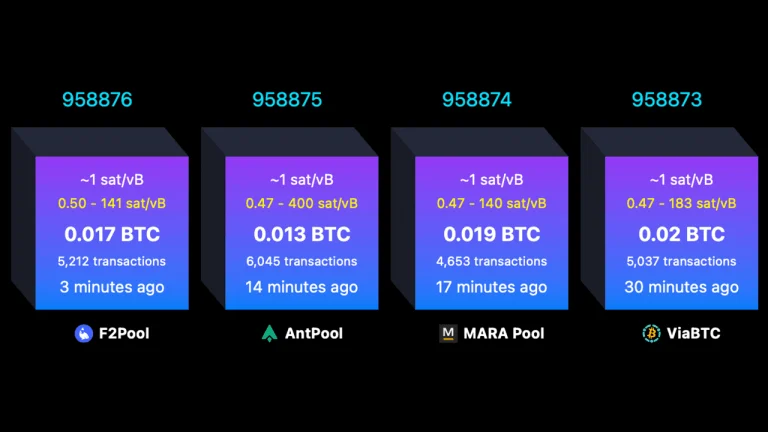
Bitcoin network congestion doesn't halt operations; instead, it triggers a high-stakes live auction for block space. When a block reaches its limit, every byte becomes a competitive asset, forcing users to bid higher transaction fees to ensure their data is processed by miners.
This auction-based mechanism is a fundamental feature of the Bitcoin protocol, managing scarcity through economic incentives. For users and developers, navigating these fee spikes is essential to understanding network throughput and the real-time cost of securing transactions on the blockchain.
This is a summarized and adapted version by Artificial Intelligence. To read the complete original story, visit the official source.
Read Full Article at Bitcoin.comSupport Jornal Bitcoin
Independent journalism, curated by AI, no clickbait. Keep the flame alive with any amount of BTC.
jonata@walletofsatoshi.comDaily Crypto Brief 📬
Subscribe to receive the curation of the most important Bitcoin and crypto news, summarized by AI. No spam.
Join more than 10,000 smart readers.
Related News

Security Breach: Ostium Halts Trading Following $18M Oracle Key Exploit
This exploit highlights the growing systemic risks associated with oracle vulnerabilities within the decentralized finance (DeFi) sector. As the industry reacts to the $18M loss, the focus shifts to the long-term implications for protocol security standards and the immediate recovery efforts for affected stakeholders.
Bitcoin Nears $67,000 Milestone, Sending Crypto Stocks Soaring
As the Bitcoin price climbs, crypto-related stocks, most notably MicroStrategy, are seeing a direct surge in valuation. This trend highlights the deepening integration between Bitcoin and traditional equity markets, as investors leverage crypto stocks to gain exposure to the primary driver of the digital economy.

Russia Passes Crypto Law: $3,800 Annual Cap Set for Retail Investors
While Bitcoin remains unavailable for everyday consumer purchases, the law provides a critical loophole for corporations to utilize digital tokens to bypass international sanctions. By integrating blockchain technology into its economic defense, Russia aims to navigate global trade hurdles and maintain financial connectivity despite mounting geopolitical pressures.

Bitcoin defies geopolitical chaos, surging toward seven-week high
This rally mirrors a resilient performance in US stock markets, indicating that investors are currently looking past potential trade wars and military escalations. By ignoring the noise of Trump's tariff plans and Middle East instability, Bitcoin is reinforcing its role as a dominant force in the current financial cycle.

Chip Wars: AMD Unveils Massive MI350 GPUs to Topple Nvidia's AI Empire
This technological leap extends beyond artificial intelligence, carrying heavy implications for crypto compute and decentralized infrastructure. As AMD scales its hardware capabilities, the shift in the semiconductor landscape could reshape the economics of high-performance computing and crypto-related processing power.

Bitcoin Rallies as Bessent Fast-Tracks Clarity Act Through Senate
The potential passage of the Clarity Act is viewed as a game-changer for the digital asset landscape. By providing a structured legal framework, this legislation aims to eliminate ambiguity, fostering greater institutional adoption and stabilizing the long-term outlook for Bitcoin and the broader crypto market.
