MicroStrategy's New Metric Unveils Massive $36.6 Billion Net Bitcoin Reserve

MicroStrategy has fundamentally shifted its reporting standards to provide a more sophisticated view of its holdings. By moving from gross indicators to net metrics that account for debt and preferred stock, the firm has disclosed a staggering net reserve of $36.6 billion in Bitcoin, reinforcing its dominance as the world's largest corporate holder.
This strategic pivot provides a much-needed layer of clarity for institutional investors navigating the crypto markets. By focusing on net value rather than gross assets, the company offers a more transparent look at its true financial strength, setting a new benchmark for how corporate Bitcoin treasuries should be analyzed.
MicroStrategy, the world's largest corporate holder of Bitcoin, has implemented a significant change in its financial reporting methodology. The company has replaced gross indicators with net metrics, a move designed to discount its debt and preferred shares to present a more accurate picture of its financial health.
Through this new approach, Strategy revealed a net reserve of $36.6 billion in Bitcoin. This transition to net value metrics allows the market to better understand the company's true exposure and actual wealth, effectively separating the gross value of its assets from the financial obligations that underpin its massive accumulation strategy.
This is a summarized and adapted version by Artificial Intelligence. To read the complete original story, visit the official source.
Read Full Article at BlockTrendsSupport Jornal Bitcoin
Independent journalism, curated by AI, no clickbait. Keep the flame alive with any amount of BTC.
jonata@walletofsatoshi.comDaily Crypto Brief 📬
Subscribe to receive the curation of the most important Bitcoin and crypto news, summarized by AI. No spam.
Join more than 10,000 smart readers.
Related News
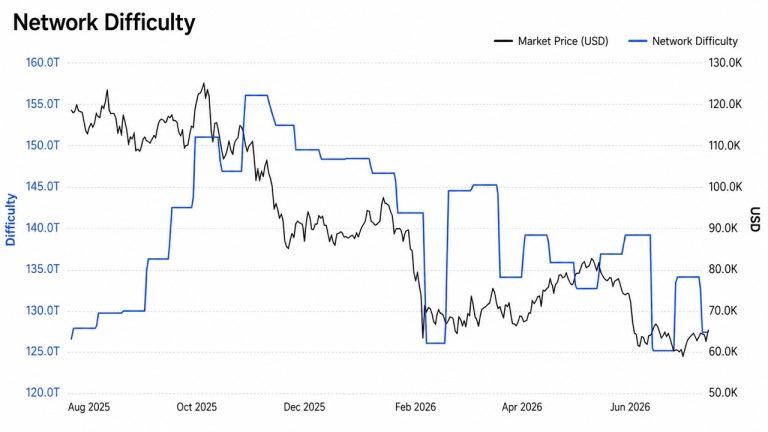
Bitcoin's Difficulty Adjustment: The Self-Correcting Rule Causing Massive Network Swings
This automated adjustment occurs every 2,016 blocks to ensure that block production remains consistent regardless of changes in total mining power. By functioning without a central manager or human vote, this mathematical rule maintains Bitcoin's scarcity and stabilizes the network against extreme fluctuations in hash rate.
Market Chaos? Fed Sparks Uncertainty as Warsh Embraces Strategic Ambiguity
With a 33% probability of a rate hike and a clear refusal to offer any bailout promises, the central bank is signaling a high-stakes environment. This lack of clarity regarding monetary policy is expected to drive significant volatility across crypto markets and traditional equities alike.

The Bitcoin Treasury Shakeout: Which Companies Are Selling and Who’s Next?
This shakeout highlights the growing maturity of corporate crypto adoption, where profit-taking and risk management are becoming central to treasury management. Identifying which firms are exiting and which are preparing to pivot is critical for forecasting institutional liquidity flows and market sentiment.

Privacy Revolution: Uniswap RFC Proposes Private Swaps via v4 Hooks and UniswapX
This strategic move addresses the growing demand for privacy and MEV protection within the DeFi space. Integrating Uniswap v4 hooks with UniswapX could fundamentally change how liquidity is accessed, offering a more secure and discreet trading environment for all participants.

Binance Yield Boost: Massive Rewards Announced for XRP Holders
Investors should note that some of these rewards are projected to exceed 22%, marking a significant boost in potential returns. This aggressive incentive structure is designed to capture market interest and solidify Binance's position as the premier destination for XRP liquidity and staking rewards.

Bitcoin Breaks Free from AI Stocks, but $96 Oil Could Turn the Escape Into a Trap
However, a massive macroeconomic threat looms: oil prices hitting $96. Should energy costs drive inflation higher, the resulting market pressure could turn this recent decoupling into a liquidity trap, forcing Bitcoin back into a correlation with traditional risk assets.
