Massive Liquidity Trap for Bitcoin Tomorrow as US Treasury Quietly Drains $77 Billion from Bank Reserves
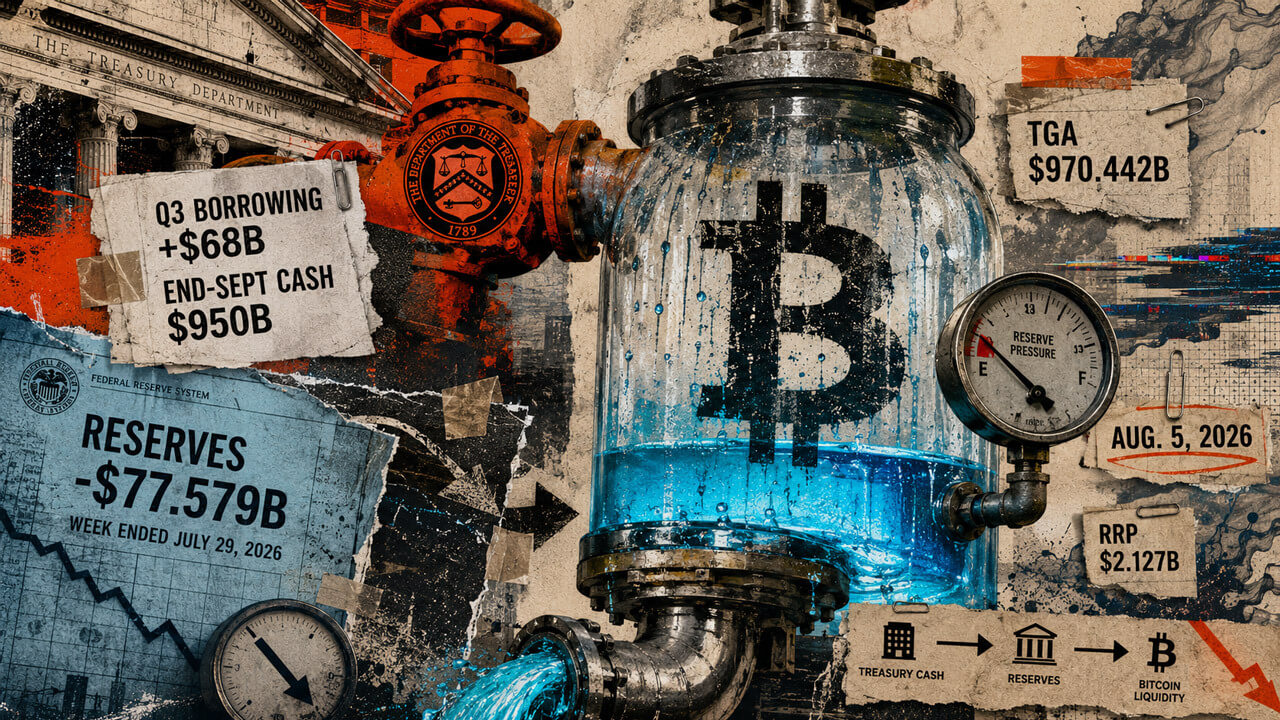
The US Treasury is poised to drain $77 billion from bank reserves in an operation that tomorrow, August 5th, could create a devastating liquidity trap for Bitcoin. The outcome will depend on the government bill-coupon mix, determining whether financing pressure reaches Bitcoin-sensitive risk appetite or keeps reserves stable. This massive liquidity movement occurs at a critical time for the cryptocurrency market, where capital availability can dictate price direction. With Bitcoin already experiencing volatility, the sudden reduction of $77 billion in bank reserves could intensify selling pressure or, alternatively, create opportunities for strategic investors anticipating market movements.
This is a summarized and adapted version by Artificial Intelligence. To read the complete original story, visit the official source.
Read Full Article at CryptoSlateSupport Jornal Bitcoin
Independent journalism, curated by AI, no clickbait. Keep the flame alive with any amount of BTC.
jonata@walletofsatoshi.comDaily Crypto Brief 📬
Subscribe to receive the curation of the most important Bitcoin and crypto news, summarized by AI. No spam.
Join more than 10,000 smart readers.
Related News

Situational Awareness hedge fund implodes 67% after AI bets backfire, forced to sell $16B to Citadel at fire-sale prices
Bitcoin Holds Strong as Whales Accumulate 155,000 BTC at Key Price Level

$2 AI Audit Could Have Caught Coldcard Flaw, Says Dragonfly's Haseeb Qureshi

Cipher Mining Stock Plummets as Executives Plan to Sell Shares Through 2027
Self Custody Is Dead? Bitcoin's Future Hangs in the Balance
This incident serves as a crucial reminder that security in the Bitcoin network is an ongoing responsibility, not a finished product. While some may view this as a death blow to self-custody, ecosystem visionaries are already developing more advanced solutions. Bitcoin's future depends on our ability to learn from these challenges and strengthen our protection systems, maintaining the financial sovereignty that made the Bitcoin revolution possible in the first place.