JD Vance Claims Israeli Factions May Seek Indefinite War with Iran

VP candidate JD Vance has issued a stark warning regarding Middle East instability, claiming that certain elements within Israel may desire an indefinite continuation of the conflict with Iran. This intelligence brief highlights a critical fracture in diplomatic efforts, suggesting that internal political motivations could undermine U.S.-Iran negotiations and global security.
Beyond the immediate political fallout, these remarks underscore a growing risk to market confidence and the predictability of diplomatic resolutions. As geopolitical tensions rise, the prospect of a prolonged war between Israel and Iran threatens to inject significant volatility into global markets, forcing investors to brace for heightened uncertainty.
VP candidate JD Vance has claimed that some factions in Israel want the war with Iran to continue indefinitely. Vance's remarks highlight significant potential for geopolitical instability, which could severely hamper U.S.-Iran negotiations and erode market confidence in achieving diplomatic resolutions. The statement points to a deepening crisis where internal political agendas may clash with international efforts to stabilize the region.
This is a summarized and adapted version by Artificial Intelligence. To read the complete original story, visit the official source.
Read Full Article at Crypto BriefingSupport Jornal Bitcoin
Independent journalism, curated by AI, no clickbait. Keep the flame alive with any amount of BTC.
jonata@walletofsatoshi.comDaily Crypto Brief 📬
Subscribe to receive the curation of the most important Bitcoin and crypto news, summarized by AI. No spam.
Join more than 10,000 smart readers.
Related News
Record Profits Aren't Enough: Why TSMC Shares Are Sliding Despite Massive Q2 Gains
Geopolitical tensions remain the primary driver of this market volatility, exposing the extreme vulnerability of tech supply chains to shifting political climates. As the world watches the semiconductor industry, the TSMC situation underscores how geopolitical instability can decouple stock performance from fundamental corporate success.

Diesel Hits $5 a Gallon: Iran Conflict Triggers 33% Price Surge and Inflation Fears
The impact extends far beyond the pump, threatening to destabilize the transportation and agriculture sectors while risking major disruptions in global energy markets. As geopolitical tensions rise, the economic consequences of this fuel shortage could reshape market volatility in the coming months.

Middle East Escalation: Iran Warns of Regional Strikes Against US Infrastructure Targets
This escalation significantly complicates ongoing diplomatic efforts and creates a high-stakes environment for global stability. The heightened tension is expected to reduce the likelihood of a successful US-Iran deal by 2026, potentially triggering volatility across global markets and complicating international security frameworks.
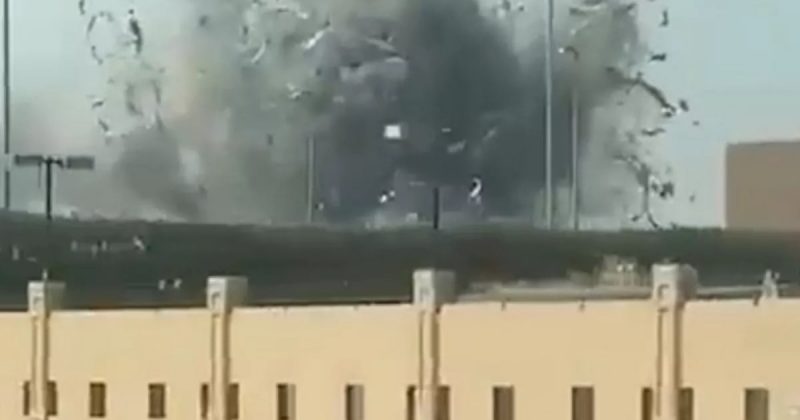
Geopolitical Shockwave: IRGC Claims Destruction of US Military Assets in Bahrain
Such instability is expected to destabilize regional markets and trigger immediate diplomatic interventions. As geopolitical risks rise, the ripple effects could cause significant volatility across global financial sectors and energy markets.

Geopolitical Shock: Odds of US Invasion of Iran Surge to 23.5% on Polymarket
As the odds of a US invasion of Iran jump to 23.5% on Polymarket, the platform is capturing a massive shift in global sentiment. This sudden surge reflects how quickly geopolitical instability can translate into measurable market volatility, leaving analysts closely monitoring the potential for a wider regional conflict.

Russian Missile Strikes Hit Kyiv and Odesa: Escalating Tensions and Global Risks
The strikes heighten NATO-Russia tensions and may signal further Russian territorial ambitions in the region. As geopolitical instability rises, the potential for broader conflict remains a primary driver of uncertainty for global markets and international security protocols.
