Hungary Decriminalizes Crypto Offenses, Aligns With EU MiCA Framework
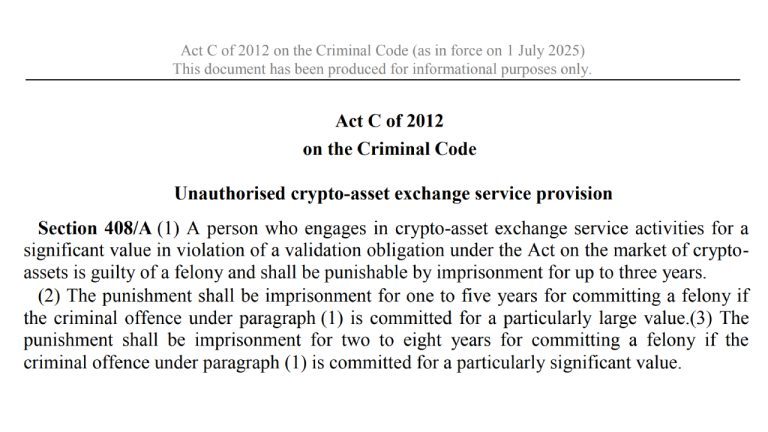
Hungary's parliament has voted to repeal strict cryptocurrency regulations, removing validation requirements for crypto asset conversions and eliminating crypto-related offenses that carried penalties of up to eight years imprisonment. This landmark decision aligns the country with the EU's MiCA framework, marking a significant shift in Hungary's digital asset regulatory landscape.
The move represents a major victory for the cryptocurrency industry in Hungary, removing legal barriers that had stifled innovation and development in the digital asset sector. By fully embracing the MiCA standard, the country aims to attract increased investment and foster a more robust and transparent crypto ecosystem, benefiting both local and international businesses seeking clear and favorable regulatory environments.
This is a summarized and adapted version by Artificial Intelligence. To read the complete original story, visit the official source.
Read Full Article at Bitcoin.comSupport Jornal Bitcoin
Independent journalism, curated by AI, no clickbait. Keep the flame alive with any amount of BTC.
jonata@walletofsatoshi.comDaily Crypto Brief 📬
Subscribe to receive the curation of the most important Bitcoin and crypto news, summarized by AI. No spam.
Join more than 10,000 smart readers.
Related News

Multicoin Capital Moves Millions in HYPE to Coinbase Prime, Sparking Sell Pressure Concerns
This development comes at a critical time for the cryptocurrency ecosystem, as liquidity and market sentiment face heightened scrutiny. The transfer to a major exchange like Coinbase Prime suggests possible preparations for larger-scale operations, which could directly impact token stability and holder confidence. Market participants are closely monitoring any signs of potential price depreciation or shifts in the fund's long-term strategy regarding HYPE.

CoinGecko Unveils Game-Changing Connector for Live Crypto Data on Claude AI
The new integration radically transforms how users interact with the crypto market, potentially impacting market dynamics and the way analysis is conducted across the industry. With access to real-time updated data, investors can make more informed decisions, strengthening the crypto investment environment. This initiative demonstrates the growing convergence between artificial intelligence and decentralized finance, opening new possibilities for innovation in the sector.

Institutional Shift: BNY Mellon Unit Joins MiCA Register as ESMA Expands Crypto Oversight
As the interim MiCA register grows to 309 licensed crypto-asset service providers (CASPs), the inclusion of major banking institutions alongside platforms like BitPay and Coinify underscores a tightening regulatory environment. This expansion ensures that both traditional finance and digital asset platforms operate under a unified, high-standard compliance structure in Europe.

EU Expands Crypto Ban: Belarusian Nationals Blocked from Managing MiCA-Regulated Firms
While previous restrictions were limited to wallet and custody services, the new mandate expands the ban to include all crypto exchanges and MiCA-regulated entities starting August 25. This escalation demonstrates the EU's increasing resolve to use crypto-asset regulation as a primary tool in its geopolitical sanctions arsenal.

Fed Hold Odds Hit 94% as Softer US Inflation Ignites Bitcoin Rally
This shift marks a critical turning point for the industry, effectively ending a brutal $8 billion outflow streak from crypto investment products. The convergence of cooling inflation and a potential pause in interest rate hikes is successfully reversing capital flight and restoring liquidity to the digital asset ecosystem.

BitPay Secures Dutch License Under MiCA, Primed for Major Stablecoin Payment Expansion in EU
This strategic expansion is set to accelerate the adoption of crypto and stablecoin payments throughout the region. As regulatory requirements for crypto-related services tighten, BitPay is positioning itself as a dominant player in the evolving European payment landscape.
