Bitcoin's Floor is Rising: Bitwise Explains Why This Cycle is Different

Bitwise has released a compelling analysis suggesting that Bitcoin's price floor is rising with every market cycle, despite recent downturns and the massive surge in AI interest. The firm highlights that current market corrections are significantly milder than those seen in previous years, signaling a shift in asset stability.
This structural evolution is primarily driven by massive institutional adoption, which provides a stronger support level for the cryptocurrency. As the industry evolves, Bitwise contends that the influx of institutional capital is effectively raising the baseline price, creating a more resilient market environment compared to earlier cycles.
Despite recent price volatility and the growing dominance of Artificial Intelligence in the tech sector, Bitwise asserts that Bitcoin is exhibiting unprecedented structural strength. The asset management firm notes that Bitcoin's 'floor'—the minimum support level during market corrections—has been steadily climbing with each successive cycle.
Bitwise's core argument rests on the impact of institutional adoption. Unlike previous cycles characterized by deep and prolonged crashes, the integration of Bitcoin into institutional portfolios is acting as a stabilizer. This influx of professional capital is creating a higher price floor, making current market movements appear much more controlled and robust than in the past.
This is a summarized and adapted version by Artificial Intelligence. To read the complete original story, visit the official source.
Read Full Article at Portal do BitcoinSupport Jornal Bitcoin
Independent journalism, curated by AI, no clickbait. Keep the flame alive with any amount of BTC.
jonata@walletofsatoshi.comDaily Crypto Brief 📬
Subscribe to receive the curation of the most important Bitcoin and crypto news, summarized by AI. No spam.
Join more than 10,000 smart readers.
Related News

Bitcoin's July Rally Gains Momentum: Is This a Real Reversal or a Bear Market Trap?
However, market analysts warn that conditions remain extremely bearish, suggesting that investors should not get ahead of themselves. For now, every upward movement is being categorized as a mere bear-market recovery rather than a definitive trend reversal, highlighting the precarious nature of the current Bitcoin price action.

Geopolitical Chaos: Iran Closes Strait of Hormuz, Sending Oil Prices Soaring and US Stock Futures Tumbling
Beyond the immediate spike in energy costs, the closure threatens to destabilize international trade routes and exacerbate global inflation. As the world watches for strategic responses from major powers, the resulting market volatility is expected to drive significant shifts in risk appetite across both traditional finance and the broader crypto ecosystem.

Macro Storm Incoming: US CPI and China GDP Data Set to Trigger Crypto Volatility
These economic pillars are expected to drive significant liquidity shifts across the crypto markets. The interplay between US inflation trends, Chinese economic momentum, and Brazilian domestic indicators will likely dictate whether Bitcoin and major altcoins find support or face intense selling pressure.

Fed Speeches and Economic Data: The Hidden Drivers Behind the Clarity Act's Progress
As the economic landscape evolves, the interplay between Fed policy and crypto regulation will determine the depth of institutional engagement. Monitoring these indicators is essential for understanding how legislative progress will shape the future of digital asset integration into traditional finance.

Breaking Correlation: How AI, Geopolitics, and the Fed are Decoupling Bitcoin from Stocks and Gold
This decoupling suggests that Bitcoin is solidifying its identity as a unique asset class. As capital shifts between commodities and technology driven by Fed decisions, Bitcoin's price action and volatility are increasingly responding to tech innovation narratives and warfare risks rather than moving in lockstep with traditional markets.
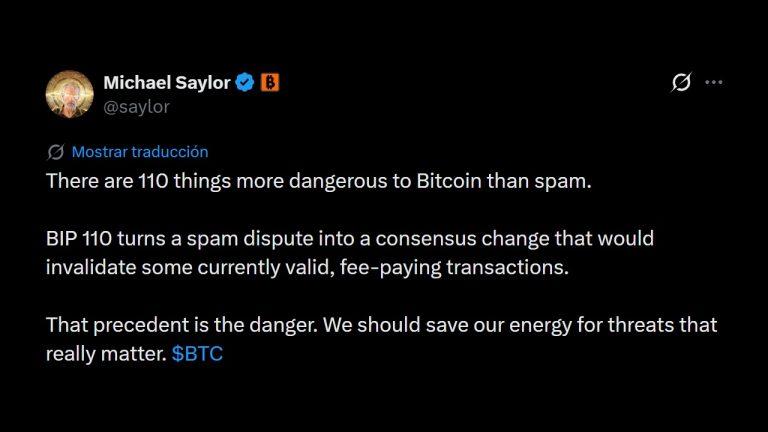
‘110 Things More Dangerous’: Michael Saylor Slams Bitcoin’s Controversial Anti-Spam Fork
By targeting a problem he claims is not currently a threat to the Bitcoin network, Saylor suggests that the implementation of BIP-110 could introduce unnecessary volatility and risk. The core of his argument rests on the idea that protecting the network from non-existent spam should not come at the cost of transaction certainty and protocol stability.
