Stop Paying Crypto Fees: NOWPayments CEO Issues Bold Challenge to Businesses

The crypto industry is facing a direct challenge to its long-standing cost structures. Kate Lifshits, CEO of NOWPayments, is calling on businesses to stop accepting high blockchain fees as an unavoidable expense for crypto payouts.
By targeting these unnecessary costs, NOWPayments aims to reshape how enterprises interact with digital assets. This movement seeks to eliminate the financial friction that has historically hindered the seamless integration of crypto payments into mainstream business operations.
In a recent press release from Amsterdam, NOWPayments declared that the crypto industry has accepted unnecessary costs for far too long. CEO Kate Lifshits is leading the charge to challenge the assumption that high blockchain fees are simply the 'price of doing business' when sending cryptocurrency.
The company believes that businesses should no longer be burdened by these inefficiencies. By rethinking the payout model, NOWPayments intends to provide a more cost-effective solution for companies looking to leverage blockchain technology without the traditional overhead of network fees.
This is a summarized and adapted version by Artificial Intelligence. To read the complete original story, visit the official source.
Read Full Article at CryptoPotatoSupport Jornal Bitcoin
Independent journalism, curated by AI, no clickbait. Keep the flame alive with any amount of BTC.
jonata@walletofsatoshi.comDaily Crypto Brief 📬
Subscribe to receive the curation of the most important Bitcoin and crypto news, summarized by AI. No spam.
Join more than 10,000 smart readers.
Related News

Aave V4 Gas Optimization: Why Low Fees Are the Real Key to DeFi's Next Cycle
By prioritizing cost reduction in its next iteration, Aave is addressing the primary barrier to mass adoption: user experience. If protocols continue to force users to hesitate before every transaction due to prohibitive fees, the ecosystem will struggle to move beyond high-net-worth individuals. The success of Aave V4 will likely set the standard for how liquidity protocols handle scalability and economic accessibility.
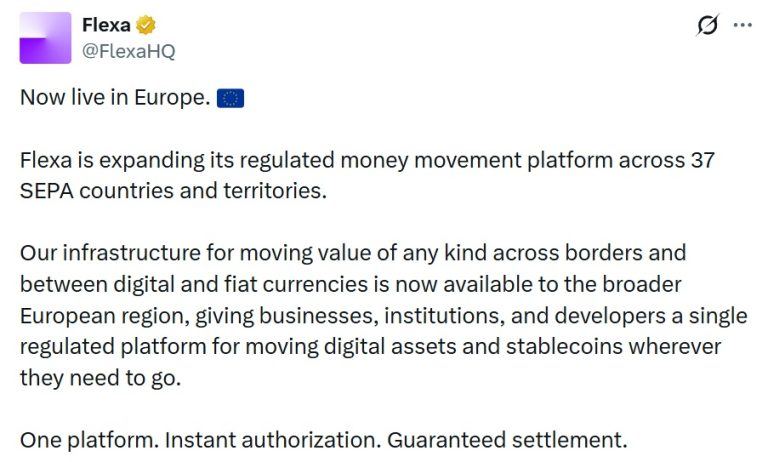
Crypto Payments Breakthrough: Flexa Expands Across 37 European Markets
This expansion marks a significant milestone for the crypto payments landscape in Europe, providing the necessary regulatory framework for large-scale adoption. By leveraging SEPA for euro settlements, Flexa ensures that digital asset transactions are not only fast but also fully integrated into the existing financial ecosystem, driving massive utility for blockchain-based payouts.

Ethereum Gas Hits 1 Gwei: A Rare Golden Window for Mainnet Users
This low-fee environment fundamentally shifts the user experience, making complex on-chain activities more accessible than ever. For those who have historically bypassed the mainnet due to high costs, this sudden drop in gas prices offers a strategic moment to execute smart contracts and manage assets with maximum capital efficiency.

Hormuz Strait Crisis: Iran's Tanker Attacks Shake Energy Markets and Fuel Crypto Payment Interest
As traditional maritime routes face increasing risks, the geopolitical fallout is expected to reshape global commerce. A significant consequence of this instability could be the accelerated integration of crypto payments within maritime trade to bypass traditional financial bottlenecks and maintain liquidity in high-risk zones.
Sui Efficiency Leap: Testnet v1.74.1 Slashes Gas Fees via Protocol v128
This technical evolution is a critical step toward mass adoption, as lowering gas fees is essential for scaling any Layer 1 blockchain. The implementation of Protocol v128 signals Sui's commitment to high-performance computing and cost-effective scalability, making it a formidable player in the current crypto landscape.

Robinhood Disrupts Crypto Space: New Ethereum Layer 2 Targets AI and Tokenized Stocks
This strategic expansion is more than just a technical upgrade; it is a calculated bet on the future of finance. By prioritizing artificial intelligence and the tokenization of real-world assets, Robinhood is bridging the gap between traditional stock markets and the blockchain, setting the stage for a highly automated and tokenized financial future.
