CryptoPotato

Ethereum Just Had Its Best Month in a Year: Can ETH Keep Rallying in August?

August 2, 202608:27 AM

Ethereum just delivered its strongest monthly performance in a year during July, with ETH significantly outperforming other digital assets. Despite the bullish momentum, warning signs of risk aversion have emerged that could impact the crypto market in August. The ETH rally in July has boosted investor confidence, yet persistent volatility and regulatory uncertainty continue to pose significant challenges for the Ethereum ecosystem. Meanwhile, the community eagerly awaits upcoming network developments, including crucial upgrades and potential institutional adoption that could determine ETH's price direction in the coming months.

This is a summarized and adapted version by Artificial Intelligence. To read the complete original story, visit the official source.

Read Full Article at CryptoPotato
QR Code Lightning

Support Jornal Bitcoin

Independent journalism, curated by AI, no clickbait. Keep the flame alive with any amount of BTC.

Wallet of Satoshi
jonata@walletofsatoshi.com

Daily Crypto Brief 📬

Subscribe to receive the curation of the most important Bitcoin and crypto news, summarized by AI. No spam.

Join more than 10,000 smart readers.

Related News

United Airlines Lands $22B Trump Approval for Massive Dulles Airport Overhaul
Crypto Briefing

United Airlines Lands $22B Trump Approval for Massive Dulles Airport Overhaul

United Airlines has secured a $22 billion pre-approval from the Trump administration for a massive overhaul of Dulles International Airport, one of the United States' most significant aviation infrastructure projects. This historic agreement marks a pivotal moment for airport development and could reshape the competitive landscape of American aviation.

The Dulles airport renovation, backed by substantial federal funding, promises to modernize facilities, expand capacity, and enhance passenger experience, potentially driving regional economic growth. This deal between United Airlines and the Trump administration may set a precedent for future large-scale projects, influencing infrastructure policies and airport development nationwide.
Coldcard Hack Triggers Bitcoin Exodus to Exchanges - Opposite Post-FTX Trend

CoinDesk

Coldcard Hack Triggers Bitcoin Exodus to Exchanges - Opposite Post-FTX Trend

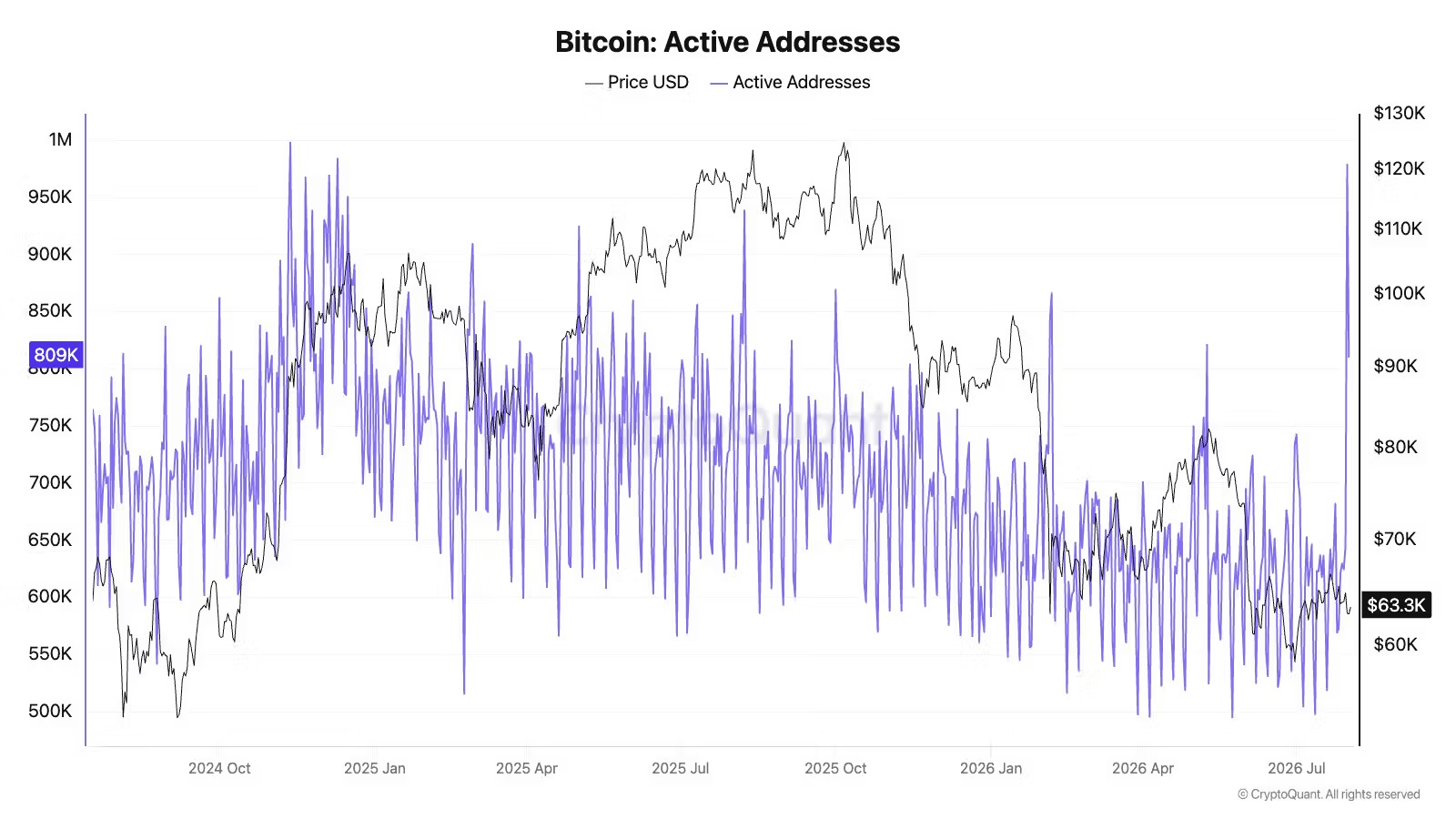
The Coldcard hardware wallet vulnerability has led to an $89 million exploit, triggering a mass exodus of smaller Bitcoin holders to exchanges - a stark contrast to the post-FTX collapse trend of 2022. This security breach has caused retail investors to prioritize safety over self-custody, moving their Bitcoin assets to centralized platforms for protection. This reversal in behavior highlights how security concerns can quickly reshape market dynamics, with smaller Bitcoin investors prioritizing liquidity and protection against technical vulnerabilities. While the FTX collapse drove users toward self-custody solutions, the Coldcard exploit has created a temporary flight to centralized exchanges, demonstrating how even the most decentralized community can shift toward centralized platforms when faced with tangible threats to their digital assets.
Battle Shifts Layers: How Visa, Samsung and Regulators Are Redefining Payments' Future with Stablecoins
Portal do Bitcoin

Battle Shifts Layers: How Visa, Samsung and Regulators Are Redefining Payments' Future with Stablecoins

The stablecoin war has evolved from a mere token battle to a strategic competition for payment infrastructure, as evidenced by recent moves from Visa, Samsung, and regulatory bodies. The focus has now shifted to building decentralized financial systems that integrate stablecoins into the traditional ecosystem, indicating a maturation of the crypto sector toward mass adoption.

This paradigm shift represents a crucial inflection point for the future of digital finance, with tech and financial giants now competing to dominate the infrastructure behind stablecoins. The growing regulatory acceptance and traditional players' entry into the crypto space signal that we're witnessing the transition from a niche to a mainstream market, where efficiency and interoperability will be the determining factors for success.
$20 Billion AI Fund's Collapse Shows Why Bitcoin Is the First Wall Street Sells During Margin Calls
CryptoSlate★ Featured

$20 Billion AI Fund's Collapse Shows Why Bitcoin Is the First Wall Street Sells During Margin Calls

The sudden collapse of a $20 billion AI hedge fund delivers a critical warning to the cryptocurrency market. After an impressive 439% gain through June, the fund lost roughly two-thirds of its value in July, forcing the sale of $16 billion in public stocks as leverage turned against them. This event reveals a dangerous pattern: when Wall Street needs cash quickly, Bitcoin may be the first asset to be sacrificed.

The situation exposes Bitcoin's vulnerability to traditional market pressures. Institutional investors entering the crypto space with leverage may be forced to sell their digital assets to cover losses in other sectors, creating an unwanted correlation with traditional financial markets. This AI fund collapse serves as a reminder that decentralization doesn't fully insulate Bitcoin from traditional market forces, especially during times of financial stress.

Sharvel's LCK Breakout Exposes Esports' Talent Pipeline, But Where's the Crypto?

Crypto Briefing

Sharvel's LCK Breakout Exposes Esports' Talent Pipeline, But Where's the Crypto?

Sharvel, the breakout jungler dominating the LCK (League of Legends Champions Korea), is showcasing the esports industry's robust talent pipeline with his exceptional performances. His meteoric rise in the competitive South Korean scene demonstrates how esports continues to evolve and produce high-level stars, yet the notable absence of cryptocurrency and blockchain integration raises critical questions about future monetization strategies for these athletes. The lack of partnerships with crypto projects or exchange sponsorships within the LCK ecosystem contrasts sharply with other entertainment industries that have already embraced decentralized technologies. While Sharvel and other players build impressive careers, the potential for monetization through NFTs, utility tokens, or smart contracts remains largely unexplored, representing a missed opportunity to innovate and create new revenue streams for esports professionals.
Russia Targets Durov, Bessent Slams CLARITY Opponents, and More - Weekly Recap
Bitcoin.com

Russia Targets Durov, Bessent Slams CLARITY Opponents, and More - Weekly Recap

This week's crypto landscape blended Bitcoin history, U.S. regulation, emerging financial markets, DeFi consolidation, and geopolitical pressures. Satoshi Nakamoto's famous 'I don't have time to try to convince you' remark marked its 16th anniversary, while Scott Bessent demanded an immediate Senate vote on the CLARITY Act. CME Group unveiled sports index futures, and Aave announced plans to exit six low-utilization assets, signaling a transformative period for the cryptocurrency industry.

Geopolitical pressures continue to shape the crypto ecosystem, with Russia taking action against prominent figures like Pavel Durov. Meanwhile, the debate over U.S. regulation intensifies, with the CLARITY Act emerging as a central point of controversy. Consolidation within the DeFi sector and the expansion of traditional products like sports futures indicate increasing market maturity despite regulatory uncertainties. Investors and developers are actively monitoring these trends seeking opportunities and protection against market volatility.

Jornal Bitcoin Logo