Whale Alert: Ethereum’s Top 12 Wallets Unmask 6 Exchanges Controlling 6.6 Million ETH
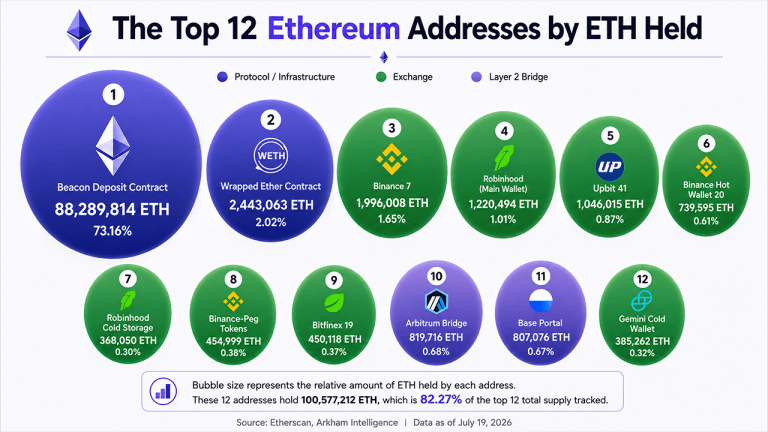
Onchain intelligence has uncovered a massive concentration of wealth within the Ethereum network, with the top 12 wallets commanding a staggering portion of the tracked supply. This brief highlights how power is distributed across staking infrastructure, wrapping contracts, and six major exchanges holding millions of ETH.
By analyzing data through Arkham Intelligence and Etherscan, it becomes clear that the influence of Layer 2 (L2) bridges and centralized exchanges remains a dominant force. This concentration of assets poses significant implications for the network's decentralization and the overall liquidity dynamics of the Ethereum ecosystem.
Ethereum’s largest wallets hold a massive portion of the supply tracked across the network’s top 12 addresses, according to onchain data reviewed by Bitcoin.com News. The list spans staking infrastructure, a token wrapping contract, five exchange wallets, two layer two (L2) bridges, and one address unlabeled on Etherscan but identified through Arkham Intelligence.
Together, these entities control approximately 6.6 million ETH, exposing the heavy hand of six major exchanges in the ecosystem. This concentration of assets among a few elite addresses and infrastructure providers remains a critical focal point for analyzing the decentralization and market stability of Ethereum.
This is a summarized and adapted version by Artificial Intelligence. To read the complete original story, visit the official source.
Read Full Article at Bitcoin.comSupport Jornal Bitcoin
Independent journalism, curated by AI, no clickbait. Keep the flame alive with any amount of BTC.
jonata@walletofsatoshi.comDaily Crypto Brief 📬
Subscribe to receive the curation of the most important Bitcoin and crypto news, summarized by AI. No spam.
Join more than 10,000 smart readers.
Related News

Mastering Crypto Derivatives: CFDs, Options, Perpetuals, and Futures Explained
Navigating this landscape requires more than just market timing; it demands an understanding of diverse risk profiles and varying regulatory frameworks. Each derivative type functions uniquely, meaning mastery of their specific mechanics is vital for survival in the volatile crypto derivatives market.
Anchorage Digital Expands Capabilities: Native TRX Staking Now Live for Institutional Clients
By adding TRX staking to its robust offerings, Anchorage is directly addressing the surging institutional demand for secure, yield-bearing crypto products. This move strengthens the firm's competitive edge in the digital asset custody space, providing a seamless bridge between high-level security and decentralized network participation.

BlackRock Inflows Hit $204M as Bitcoin and Ether ETFs Bounce Back
In a surprising twist, Ether ETFs outperformed Bitcoin products in weekly inflows, adding $105 million to their total. This shift highlights a dynamic market environment where capital flows rapidly between major crypto assets, driven by shifting investor sentiment and institutional demand.
Tether Gold Hits Major Milestone: Recognized as Spot Commodity in Abu Dhabi
Building on the previous acceptance of USDT as an Accepted Fiat Referenced Token, this expansion solidifies Tether's footprint in one of the Middle East's most influential financial hubs. As CEO Paolo Ardoino noted, this designation provides a clear regulatory pathway for firms to offer XAUT, driving business growth and bridging the gap between traditional commodities and blockchain technology.

Grayscale Goes Big: New Worldcoin ETF Filing Targets Nasdaq Debut!
This filing represents a significant pivot toward diversifying crypto-linked products beyond the standard Bitcoin and Ethereum offerings. If approved, the Worldcoin ETF could catalyze massive liquidity inflows for the WLD ecosystem and cement Grayscale's position as the primary bridge between traditional finance and cutting-edge blockchain protocols.
Russia's First Major Crypto Law Nears Passage to Bypass Western Sanctions
By enabling companies to pay foreign partners in crypto, the bill serves as a strategic tool to bypass Western sanctions and maintain economic liquidity. While the law introduces restrictions for retail investors—capping annual investments at roughly $3,800—the broader impact focuses on institutionalizing crypto as a vital instrument for national financial sovereignty.
