Banking Disruption: Emirates NBD Debuts Real-Time USD Blockchain Payments
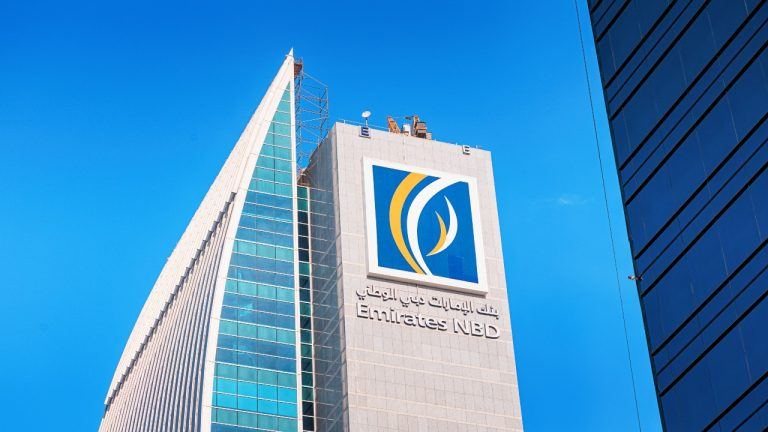
Emirates NBD has officially gone live on the blockchain-based Partior network, marking a massive milestone as the first financial institution in the MENAT region to offer blockchain-enabled cross-border U.S. dollar payments. This move introduces instant settlement capabilities that bypass the traditional delays of legacy banking systems.
By leveraging blockchain technology for real-time USD transfers, the bank is setting a new benchmark for international liquidity and efficiency. This integration is expected to significantly slash cross-border friction and operational costs, proving that blockchain is no longer just theoretical but a vital tool for global institutional finance.
Dubai-based Emirates NBD has become one of the first financial institutions in the Middle East, North Africa, and Türkiye (MENAT) region to launch real-time cross-border U.S. dollar payments. By utilizing the blockchain-based Partior network, the bank provides instant settlement, drastically cutting down the time required for international transactions.
The implementation of this blockchain-driven solution addresses the long-standing inefficiencies in cross-border USD movements. As financial institutions increasingly adopt distributed ledger technology, Emirates NBD's move signals a shift toward a more interconnected and instantaneous global monetary system.
This is a summarized and adapted version by Artificial Intelligence. To read the complete original story, visit the official source.
Read Full Article at Bitcoin.comSupport Jornal Bitcoin
Independent journalism, curated by AI, no clickbait. Keep the flame alive with any amount of BTC.
jonata@walletofsatoshi.comDaily Crypto Brief 📬
Subscribe to receive the curation of the most important Bitcoin and crypto news, summarized by AI. No spam.
Join more than 10,000 smart readers.
Related News

Middle East Escalation: Iran Warns of Regional Strikes Against US Infrastructure Targets
This escalation significantly complicates ongoing diplomatic efforts and creates a high-stakes environment for global stability. The heightened tension is expected to reduce the likelihood of a successful US-Iran deal by 2026, potentially triggering volatility across global markets and complicating international security frameworks.
Luno Takes on South Africa: A Parliamentary Battle to Save Crypto Regulation
By pushing the debate into Parliament rather than accepting executive proclamations, Luno aims to ensure a more democratic legislative process. The outcome will determine whether strict enforcement and steep penalties will stifle the local crypto market or if South Africa can establish a balanced regulatory framework for digital assets.

Geopolitical Shock: Odds of US Invasion of Iran Surge to 23.5% on Polymarket
As the odds of a US invasion of Iran jump to 23.5% on Polymarket, the platform is capturing a massive shift in global sentiment. This sudden surge reflects how quickly geopolitical instability can translate into measurable market volatility, leaving analysts closely monitoring the potential for a wider regional conflict.

ZachXBT Slams Hardware Wallets as 'Complete Garbage' While BTC Holds Steady
Amidst this security debate, Bitcoin (BTC) continues to demonstrate resilience, trading steadily near the $65,000 level. The market's stability follows recent macroeconomic shifts, specifically the interest rate hike in South Korea, which has kept traders on high alert regarding global liquidity and crypto price action.

Middle East Escalation: Military Strikes Target Iranian Cities and Airports
Beyond the immediate tactical damage, these strikes pose a direct threat to the stability of the Iranian regime itself. As the situation evolves, the resulting political instability is expected to drive significant volatility in global markets, forcing a rapid reassessment of risk premiums associated with Middle East conflicts.
Volvo Group Eyes Blockchain Integration and Proprietary Crypto for Supplier Payments
This strategic shift toward blockchain and cryptocurrency initiatives could fundamentally revolutionize supply chain efficiency by enhancing trust and regulatory compliance. By leveraging digital assets, Volvo aims to significantly increase payment speed and operational transparency, setting a new standard for industrial logistics and corporate finance.
