CLARITY Act Passage Is a Matter of 'When, Not If', Says Former House Financial Chair
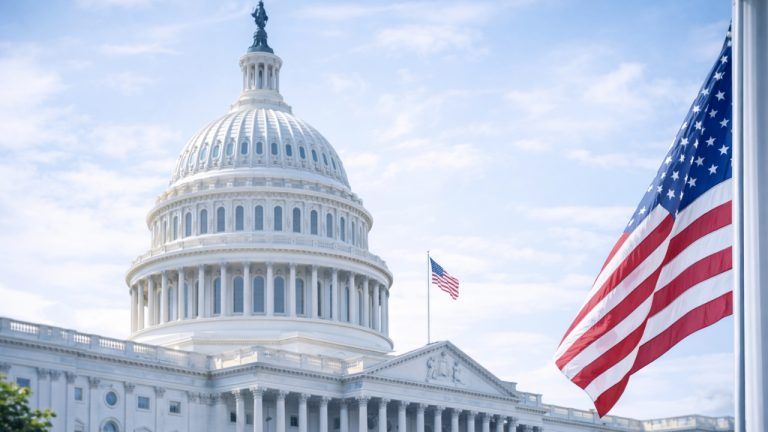
The crypto regulatory landscape is approaching a major turning point. Former House Financial Services Committee Chairman Patrick McHenry told Bloomberg that the passage of the CLARITY Act is a question of 'when, not if,' signaling an inevitable shift toward a structured market framework for digital assets.
Drawing a massive comparison to the 1996 Telecommunications Act, McHenry suggests the bill could serve as the foundational architecture for the industry's future. This legislative push aims to provide the legal certainty required for institutional adoption, potentially resolving the long-standing jurisdictional disputes that have hindered the crypto market's growth.
This is a summarized and adapted version by Artificial Intelligence. To read the complete original story, visit the official source.
Read Full Article at Bitcoin.comSupport Jornal Bitcoin
Independent journalism, curated by AI, no clickbait. Keep the flame alive with any amount of BTC.
jonata@walletofsatoshi.comDaily Crypto Brief 📬
Subscribe to receive the curation of the most important Bitcoin and crypto news, summarized by AI. No spam.
Join more than 10,000 smart readers.
Related News

Hard Lessons: Jack Mallers Reveals How Bitcoin Shaped His Philosophy After 21 Market Exits
This insight provides a profound look into the psychological demands of the crypto market. By embracing the lessons learned from multiple market exits, Mallers emphasizes that the true value of Bitcoin is forged through hardship, ensuring only the most resilient actors remain in the ecosystem.

Trade War Escalation: US Weighs New EU Tariffs, Threatening Global Tech and Crypto Stability
Beyond traditional commodities, this geopolitical friction carries significant implications for the digital economy. The potential for increased trade barriers and regulatory retaliation could reshape the landscape for crypto assets, introducing new layers of volatility and shifting the global technological governance framework.

Samsung Wallet to Support Stablecoins: Massive USDC Integration Teased
While specific technical details remain scarce, the potential integration of USDC into Samsung's hardware ecosystem could bridge the gap between traditional finance and decentralized assets. This development positions Samsung as a key player in the future of mobile-based digital asset management.

Geopolitical Escalation: US Threatens to Destroy IRGC Revenue Facilities Amid Iran Tensions
Amidst the military threats, speculative reports suggest a potential US-Iran deal in 2026 that could involve funding for Iranian reconstruction, currently sitting at a 29% probability. The interplay between direct military threats and long-term diplomatic maneuvering keeps the global financial community on edge regarding sudden geopolitical volatility.

FATF Report: Crypto 'Travel Rule' Adoption Surges, but Enforcement Gap Remains a Major Risk
Despite this progress, a dangerous gap persists between technical implementation and actual regulatory enforcement. As crypto-asset service providers ramp up their compliance protocols, the lack of unified global oversight means that enforcement remains inconsistent, potentially leaving loopholes that bad actors could exploit if authorities do not catch up with the technology.

BitMEX Under Fire: 623 BTC Lawsuit Hits Exchange Following Shutdown Announcement
This development follows the exchange's recent announcement regarding its shutdown, casting a dark shadow over its operational integrity. The lawsuit highlights the growing demand for accountability in the crypto industry, specifically regarding how exchanges manage user data and assets during periods of technical instability or wind-down phases.
