China vs. USA: How the New 12.5% Tariff Escalation Shifts the Investor Landscape

Geopolitical tensions have reached a boiling point as Beijing reacts to the new 12.5% US tariff, signaling a massive commercial escalation that demands immediate attention from the global investment community. This direct confrontation between the world's two largest economies is reshaping the global risk landscape and challenging market stability.
For traders and institutional players, the consequences are far-reaching, impacting foreign exchange rates, stock market volatility, and the overall performance of risk assets. Navigating this era of trade tariffs and retaliations is essential to mitigate exposure to macroeconomic uncertainty and potential liquidity shifts.
The trade war between China and the USA has escalated following the imposition of a new 12.5% tariff by the United States, prompting an immediate response from Beijing, which is demanding an end to unilateral tariffs. This movement is more than just foreign policy; it is a decisive factor for global capital flows.
Investors must closely monitor how this escalation affects foreign exchange, the stock market, and, most importantly, risk assets. The uncertainty generated by this tariff war could trigger severe volatility, forcing a shift in asset allocation strategies as markets seek refuge amidst the economic conflict.
This is a summarized and adapted version by Artificial Intelligence. To read the complete original story, visit the official source.
Read Full Article at BlockTrendsSupport Jornal Bitcoin
Independent journalism, curated by AI, no clickbait. Keep the flame alive with any amount of BTC.
jonata@walletofsatoshi.comDaily Crypto Brief 📬
Subscribe to receive the curation of the most important Bitcoin and crypto news, summarized by AI. No spam.
Join more than 10,000 smart readers.
Related News

Securitize Secures SEC Adviser License to Fuel Institutional Tokenization Surge
As the industry moves toward a future of onchain investment products, this license allows Securitize to broaden its service offerings significantly. With regulators currently weighing the rules for digital assets, Securitize is proactively building the infrastructure required to bridge traditional finance with blockchain technology.
India's Interest Rates Frozen Until 2026: Is a Crypto Bull Run Incoming?
As traditional savings accounts lose their competitive edge due to stagnant rates, investors are likely to pivot toward alternative assets. This shift could trigger a massive influx of capital into the crypto market, driving increased interest in digital assets and blockchain-based investments.
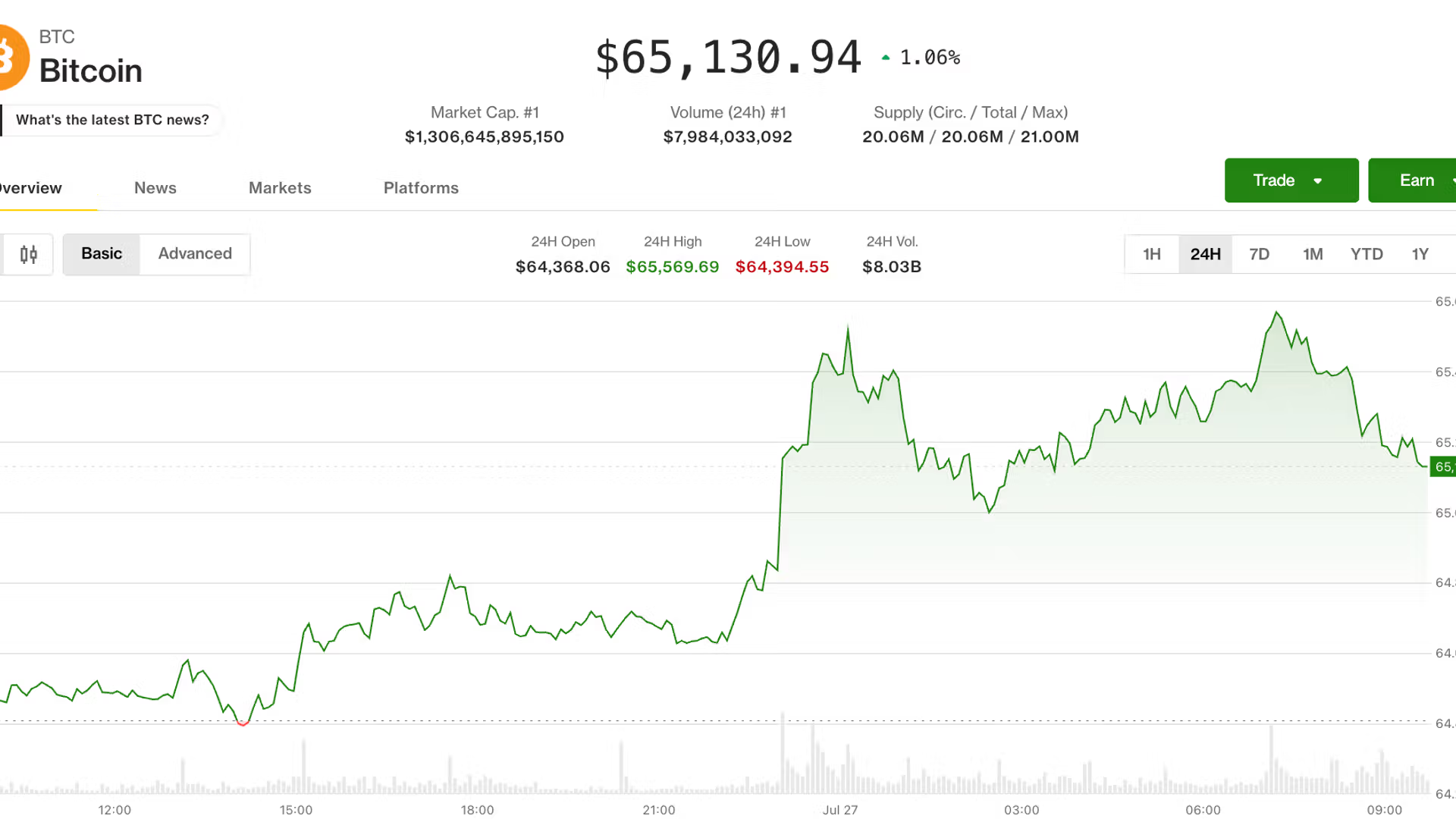
Geopolitical Relief: Iran-U.S. Pause Sends Oil Tumbling and Lifts Risk Assets
The sudden drop in oil prices has provided a tailwind for equities and DeFi tokens, shifting the focus from geopolitical conflict to macroeconomic policy. All eyes are now on the upcoming Federal Reserve decision this Wednesday, which remains the primary catalyst for market direction and liquidity.
The $87 Million Pivot: Why Bitcoin Treasuries are Trading BTC for AI Data Centers
This move highlights a growing trend of companies leveraging Bitcoin liquidity to fund high-stakes investments in AI-driven hardware and data centers. By managing a $45 million debt alongside these new infrastructure plays, the entity is betting that the long-term value of AI computational power may outweigh the immediate holding benefits of Bitcoin.

ECB Money Supply Surges 3.2% as Eurozone Lending Gains Quiet Momentum
This shift carries significant implications for eurozone financial stability and the broader crypto markets. As liquidity begins to circulate more freely, the interplay between central bank policy and credit availability could trigger renewed interest in high-risk assets and digital currencies.
Japan's Political Turmoil: Why PM Takaichi’s Falling Approval Matters for Crypto
Investors should closely monitor the potential impact on the yen carry trade. A destabilized yen could force a massive deleveraging process, pulling liquidity away from high-risk assets and creating volatility across the entire cryptocurrency market.
