Senate Chaos: Democrats Label 'Clarity Act' as Corrupt, Threatening Crypto Regulation

A growing rift within the Democratic Party is jeopardizing the passage of the Clarity Act, a pivotal piece of legislation aimed at defining the U.S. crypto market structure. Key Senators have begun labeling the bill as 'corrupt,' presenting a major roadblock for crypto regulation efforts.
This internal opposition creates significant uncertainty for the crypto market, as the bill's success hinges on securing a substantial number of Democratic votes. Failure to pass this framework could leave the digital asset industry in a regulatory vacuum, potentially stifling institutional adoption and market stability.
This is a summarized and adapted version by Artificial Intelligence. To read the complete original story, visit the official source.
Read Full Article at CoinDeskSupport Jornal Bitcoin
Independent journalism, curated by AI, no clickbait. Keep the flame alive with any amount of BTC.
jonata@walletofsatoshi.comDaily Crypto Brief 📬
Subscribe to receive the curation of the most important Bitcoin and crypto news, summarized by AI. No spam.
Join more than 10,000 smart readers.
Related News

Ripple (XRP) at a Crossroads: Is the Final Shakeout to $0.87 Underway?
Whether we see a plunge below $0.90 toward the $0.87 mark or a successful bounce, this volatility is a precursor to significant movement. A successful defense of this level could ignite a new bull run, while a failure might trigger a deeper correction.

Hormuz Strait Crisis: Polymarket Bets on Low Chance of Normalization by July
As interim peace deals unravel, reports of vessels being hit in Gulf waters underscore a growing conflict. The market's skeptical outlook suggests that investors are bracing for prolonged instability, which could have far-reaching consequences for global trade routes and broader financial market volatility.

Satoshi Nakamoto: Lone Genius or Secret Team? AI Models Attempt to Solve Bitcoin's Greatest Mystery
By leveraging advanced machine learning logic, this investigation dives into the technical complexities of the Bitcoin protocol to weigh the probabilities of a single architect versus a group effort. The findings provide a fascinating look at how artificial intelligence interprets the origins of the world's largest cryptocurrency and what it means for the future of decentralization.
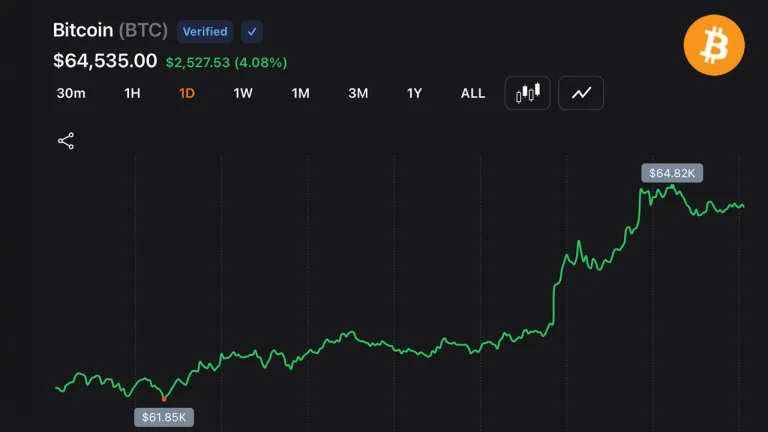
Bitcoin Bulls Defy Middle East Turmoil: BTC Races Toward $65,000 as Short Squeeze Ignites
The sudden price action was largely driven by a collapse in short positions, triggering a squeeze that propelled BTC toward its recent highs. Even as geopolitical tensions escalate due to strikes in the Middle East, the market's ability to stabilize around $64,500 suggests a robust underlying demand for Bitcoin.

Bitcoin Treasury Crisis: Collateral Calls Hit Hard as 12-Hour Liquidation Window Looms
This instability is compounded by the terrifying speed of modern crypto lending, where certain loans can face liquidation in as little as 12 hours. This narrow window for response means that sudden Bitcoin price swings could trigger a rapid chain reaction of liquidations, potentially destabilizing institutional holders and the broader market.

The Death of Memecoin Mania? Major Exchanges Pivot to Tokenized Assets
By analyzing over 10,000 listings and 4,000 delistings across the top ten exchanges, the study highlights a pivot away from pure speculative hype. This trend suggests that major players are prioritizing tokenized assets to attract institutional liquidity and provide more stable, value-driven investment opportunities within the crypto ecosystem.
