Livecoins

Brazilians Among Hardest Hit as Coldcard Wallet Vulnerability Costs Over $110M
August 5, 202611:54 AM
Brazilians Among Hardest Hit as Coldcard Wallet Vulnerability Costs Over $110M

Chainalysis data reveals Brazilian investors are among the most severely impacted by the Coldcard wallet vulnerability, with global losses estimated at over $110 million according to a Galaxy Research study. The security breach directly affects Brazil's rapidly growing cryptocurrency market. The Coldcard team has been actively engaging on social media regarding the incident, while security experts emphasize the critical importance of cold wallet security for protecting large-scale digital assets.

This is a summarized and adapted version by Artificial Intelligence. To read the complete original story, visit the official source.

Read Full Article at Livecoins
QR Code Lightning

Support Jornal Bitcoin

Independent journalism, curated by AI, no clickbait. Keep the flame alive with any amount of BTC.

Wallet of Satoshi
jonata@walletofsatoshi.com

Daily Crypto Brief 📬

Subscribe to receive the curation of the most important Bitcoin and crypto news, summarized by AI. No spam.

Join more than 10,000 smart readers.

Related News

Coldcard exploit could boost demand for regulated bitcoin exposure, analysts say
CoinDesk

Coldcard exploit could boost demand for regulated bitcoin exposure, analysts say

The recent Coldcard hardware wallet exploit has triggered optimism among analysts regarding the future of regulated Bitcoin exposure. Firms like Cantor Fitzgerald see a positive signal for crypto custody providers, while FRNT Financial predicts the vulnerability could steer investors toward Bitcoin ETFs as a safer alternative. This development comes at a critical juncture for the Bitcoin ecosystem, where security remains a central concern for both institutional and individual investors. Demand for regulated and supervised solutions is likely to increase as market participants seek more secure alternatives to store their digital assets, potentially accelerating the adoption of traditional financial products like Bitcoin ETFs.
Coldcard Crisis Doubles Bitcoin's Hot Supply in Just One Week
Bitcoin.com

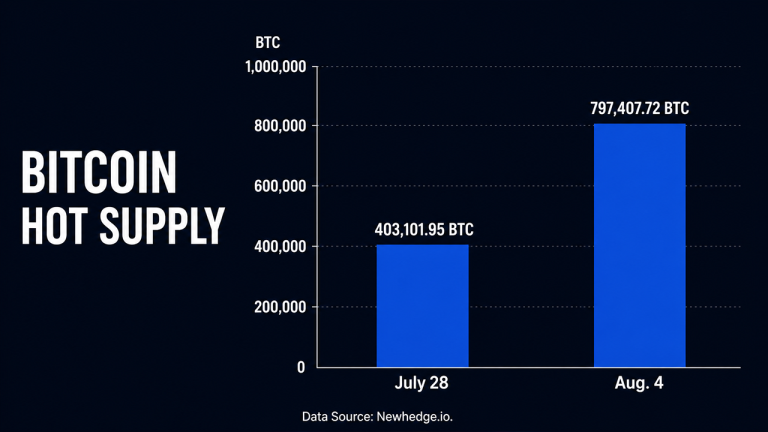
Coldcard Crisis Doubles Bitcoin's Hot Supply in Just One Week

Intel Brief: The Coldcard exploit has unleashed a wave of Bitcoin movement, sending dormant coins to exchanges, multi-signature wallets, and new addresses while the market price remains largely unaffected. This doubling of Bitcoin's hot supply represents a significant development in the crypto ecosystem, with potential implications for market liquidity and volatility. K33's 'Textbook summer doldrums' report highlights on-chain transfers as the glaring exception in the current summer market lull.

Context & Impact: Despite the massive Bitcoin movement, market price reaction has been surprisingly contained, suggesting investors may be absorbing this additional liquidity without panic. This phenomenon demonstrates Bitcoin market resilience and growing sophistication among participants. Analysts are closely watching to determine if this movement represents a buying opportunity or a warning sign for long-term investors, while the wallet security ecosystem, including Coldcard, faces renewed scrutiny.

COLDCARD HACK: $100M Bitcoin Theft Exposes Critical Flaw in ALL Hardware Wallets?
CoinTelegraph★ Featured

COLDCARD HACK: $100M Bitcoin Theft Exposes Critical Flaw in ALL Hardware Wallets?

The discovery of an entropy flaw in Coldcard, one of the industry's longest-running hardware wallets, has triggered a crisis of confidence in crypto security. Researchers at Galaxy Digital confirm attackers have stolen over 1,596 Bitcoin worth at least $100 million through coordinated attacks since the vulnerability was disclosed on July 31. This critical breach raises serious questions about the security of all hardware wallets, including popular options like Ledger, Trezor, and Foundation.

The Coldcard vulnerability serves as a stark reminder that there is no perfectly safe place to store all your Bitcoin. While Coldcard has already released patches to fix the flaw, the incident exposes systemic risks in hardware wallet design that could affect other devices. Crypto investors and users now face the dilemma of whether to trust hardware wallets or seek alternatives to protect their digital assets against emerging threats in the crypto space. The industry urgently needs independent security audits and stricter standards to restore user confidence.

Binance Founder Claims Exchanges Safer Than Self-Custody After $131M Bitcoin Theft
Livecoins

Binance Founder Claims Exchanges Safer Than Self-Custody After $131M Bitcoin Theft

Binance CEO Changpeng Zhao has ignited controversy in the crypto community by claiming that holding cryptocurrencies on centralized exchanges is safer than self-custody. This statement comes in the wake of a recent theft of 2,054 bitcoins (US$131 million) from Coldcard wallet users, highlighting the risks of individual digital asset management. Zhao's position directly contradicts the 'not your keys, not your coins' philosophy that many crypto advocates consider fundamental to digital asset security. Despite the claim from the founder of the world's largest exchange, historical data reveals a complex risk landscape on both sides. Exchanges face regulatory challenges, security vulnerabilities, and operational failures that have resulted in billions of dollars in losses for customers, as seen in cases like Mt. Gox and FTX. Meanwhile, self-custody demands rigorous technical knowledge from users and protection against physical and digital threats, creating a security dilemma for cryptocurrency investors at all experience levels.
The $120 million Coldcard hack lights up Bitcoin's memory pool
CoinDesk★ Featured

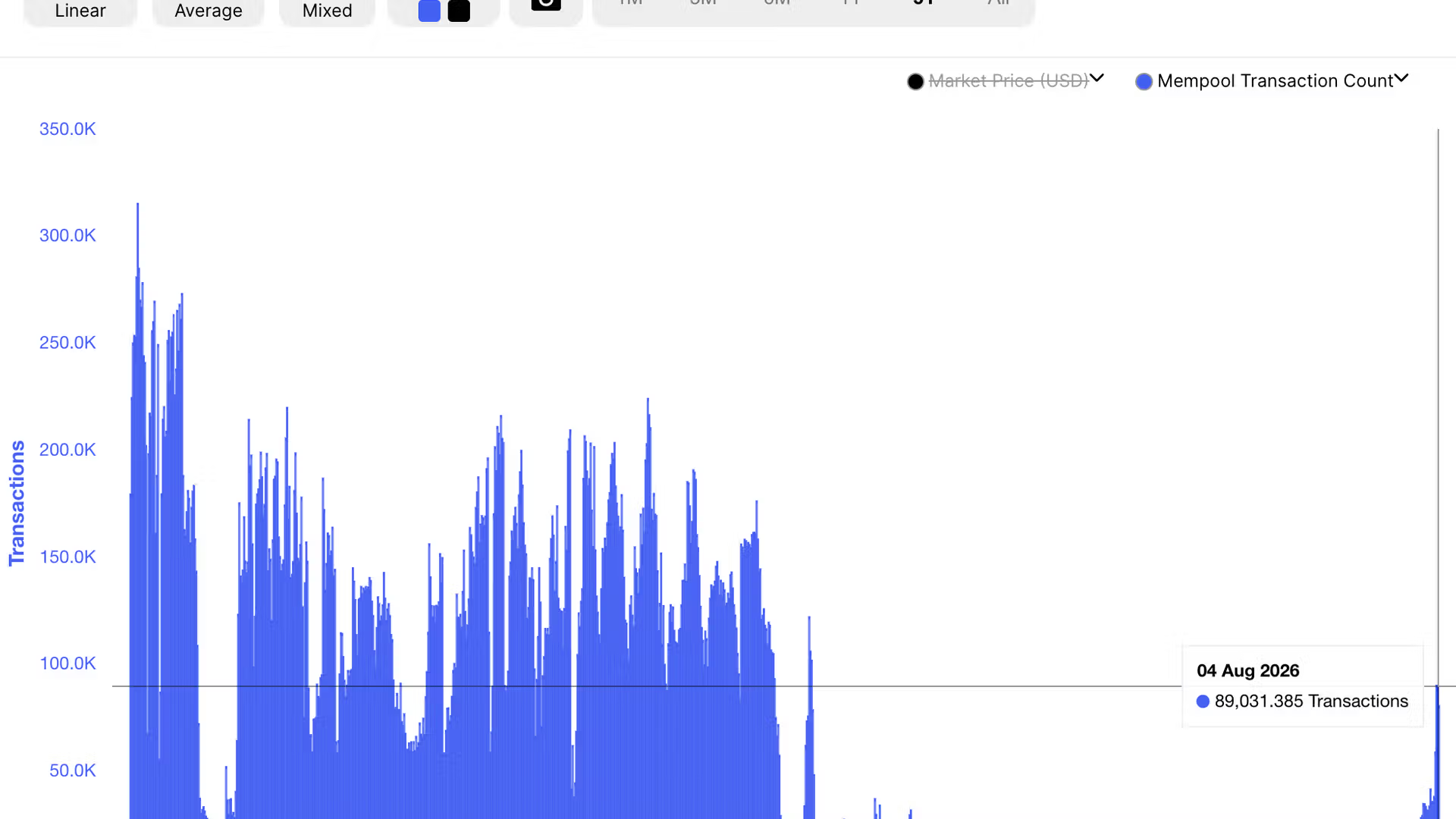
The $120 million Coldcard hack lights up Bitcoin's memory pool

Intel Brief: Coldcard, a popular Bitcoin hardware wallet, suffered a major hack resulting in $120 million being stolen, with suspicious transactions lighting up Bitcoin's memory pool. The incident represents one of the largest security breaches in the crypto ecosystem this year. The hack comes at a critical time for hardware wallet security, as the Bitcoin community actively monitors the mempool to track the stolen funds. This incident reignites debates about the need for better security protocols and may accelerate the development of more robust solutions for digital asset protection.
Bitcoin ETFs See Massive Inflows as Cold Wallet Hack Reignites Custody Debate
CoinTelegraph★ Featured

Bitcoin ETFs See Massive Inflows as Cold Wallet Hack Reignites Custody Debate

US spot Bitcoin ETFs attracted a massive $382 million in just two days, with Galaxy's Bitcoin ETF returning to gains as the Coldcard hack reignites critical debates about digital asset custody. The inflows demonstrate continued institutional confidence in regulated Bitcoin products despite security concerns in the broader crypto ecosystem. The capital flow, with $211.5 million on Tuesday following $170 million on Monday, comes as the Coldcard hack impacts up to 7,300 addresses and results in approximately $130 million in suspected Bitcoin losses. This incident has intensified scrutiny on hardware wallet security and the need for more robust custody solutions in crypto, potentially accelerating the adoption of regulated ETFs as a safer alternative for institutional investors.
Jornal Bitcoin Logo