Coldcard Crisis Doubles Bitcoin's Hot Supply in Just One Week
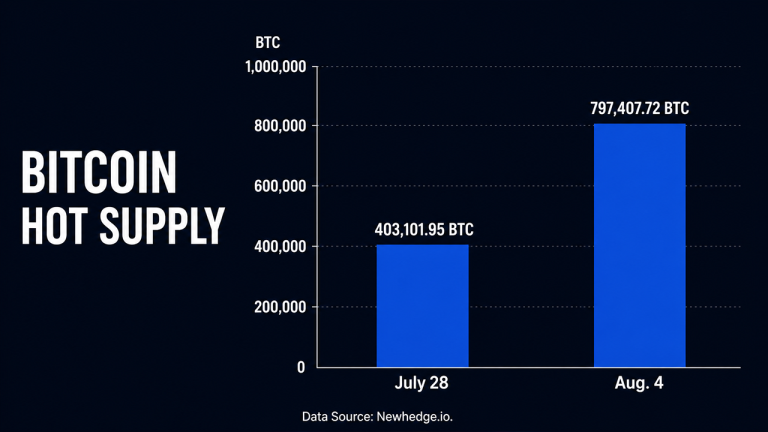
Intel Brief: The Coldcard exploit has unleashed a wave of Bitcoin movement, sending dormant coins to exchanges, multi-signature wallets, and new addresses while the market price remains largely unaffected. This doubling of Bitcoin's hot supply represents a significant development in the crypto ecosystem, with potential implications for market liquidity and volatility. K33's 'Textbook summer doldrums' report highlights on-chain transfers as the glaring exception in the current summer market lull.
Context & Impact: Despite the massive Bitcoin movement, market price reaction has been surprisingly contained, suggesting investors may be absorbing this additional liquidity without panic. This phenomenon demonstrates Bitcoin market resilience and growing sophistication among participants. Analysts are closely watching to determine if this movement represents a buying opportunity or a warning sign for long-term investors, while the wallet security ecosystem, including Coldcard, faces renewed scrutiny.
This is a summarized and adapted version by Artificial Intelligence. To read the complete original story, visit the official source.
Read Full Article at Bitcoin.comSupport Jornal Bitcoin
Independent journalism, curated by AI, no clickbait. Keep the flame alive with any amount of BTC.
jonata@walletofsatoshi.comDaily Crypto Brief 📬
Subscribe to receive the curation of the most important Bitcoin and crypto news, summarized by AI. No spam.
Join more than 10,000 smart readers.
Related News

Crypto hacks drop 47% in H1, but CertiK warns the ecosystem isn’t safer—attackers are getting nastier
In Q2, exploits surged 59% quarter-on-quarter to $807.5 million, driven in part by the KelpDAO and Drift Protocol exploits reportedly linked to North Korean, state-sponsored hackers. The report also shows phishing dominated Q1 losses (up to $508.2 million), while wallet compromises became the biggest attack vector in Q2—reinforcing that crypto security, wallet hardening, and threat prevention remain urgent priorities.

World Cup 2026 group stage shocks: 6 biggest disappointments—and how crypto markets are reacting
With outcomes turning unexpectedly, investors are adjusting on the fly. The key shift is how crypto markets translate surprises into price action: tightening risk controls, revisiting scenarios, and staying focused on liquidity because crypto volatility often amplifies randomness, rewarding traders who can adapt quickly.

Navination vs HULIGANI: The TI2026 qualifier match that could shift esports betting trends
Context and impact: As the link between esports betting and digital finance tightens, real-time performance can quickly affect odds, attention, and capital flows around major qualification stages. Events like this tend to sharpen how traders and bettors view timing, liquidity, and risk—especially where crypto markets overlap with esports betting activity.

Oil slips back to prewar levels: the US–Iran framework deal could reshape both energy—and crypto—markets
The bigger implication is the knock-on effect. If the US–Iran framework reduces volatility in oil markets, capital allocation may shift and reshape expectations across correlated assets. For crypto, that environment can influence risk appetite, liquidity, and price action in crypto markets—especially when macro conditions change the market’s baseline.

Market Shift: Bitcoin ETP Flows Turn Negative for the First Time Since 2023
This shift highlights a potential cooling period in institutional demand or a strategic reallocation of capital. As Bitcoin ETP flows fluctuate, market participants are closely watching for signs of whether this represents a temporary correction or a broader trend reversal.

