Bitcoin Breaks Free from AI Stocks, but $96 Oil Could Turn the Escape Into a Trap

Bitcoin has demonstrated a sharp decoupling from the tech sector, with its daily correlation to the S&P 500 plummeting from 0.58 to 0.12 during the second quarter. This shift indicates that Bitcoin is successfully distancing itself from the volatility of AI stocks and the Nasdaq, carving out its own market path.
However, a massive macroeconomic threat looms: oil prices hitting $96. Should energy costs drive inflation higher, the resulting market pressure could turn this recent decoupling into a liquidity trap, forcing Bitcoin back into a correlation with traditional risk assets.
Despite this independence, analysts warn that the escape might be short-lived. If oil prices climb toward the $96 mark, the inflationary pressure could trigger a macro shift. What currently looks like a successful decoupling from AI stocks could quickly transform into a trap for Bitcoin holders as global liquidity conditions tighten.
This is a summarized and adapted version by Artificial Intelligence. To read the complete original story, visit the official source.
Read Full Article at CryptoSlateSupport Jornal Bitcoin
Independent journalism, curated by AI, no clickbait. Keep the flame alive with any amount of BTC.
jonata@walletofsatoshi.comDaily Crypto Brief 📬
Subscribe to receive the curation of the most important Bitcoin and crypto news, summarized by AI. No spam.
Join more than 10,000 smart readers.
Related News

Trump Defies Supreme Court with New 15% Tariffs: Bitcoin Volatility Explodes
The crypto market felt the immediate impact of this news, as Bitcoin experienced a rapid surge followed by a sharp reversal. As investors navigate this new era of trade warfare, the volatility of Bitcoin remains a key indicator of how digital assets react to sudden shifts in US executive power and international trade regulations.
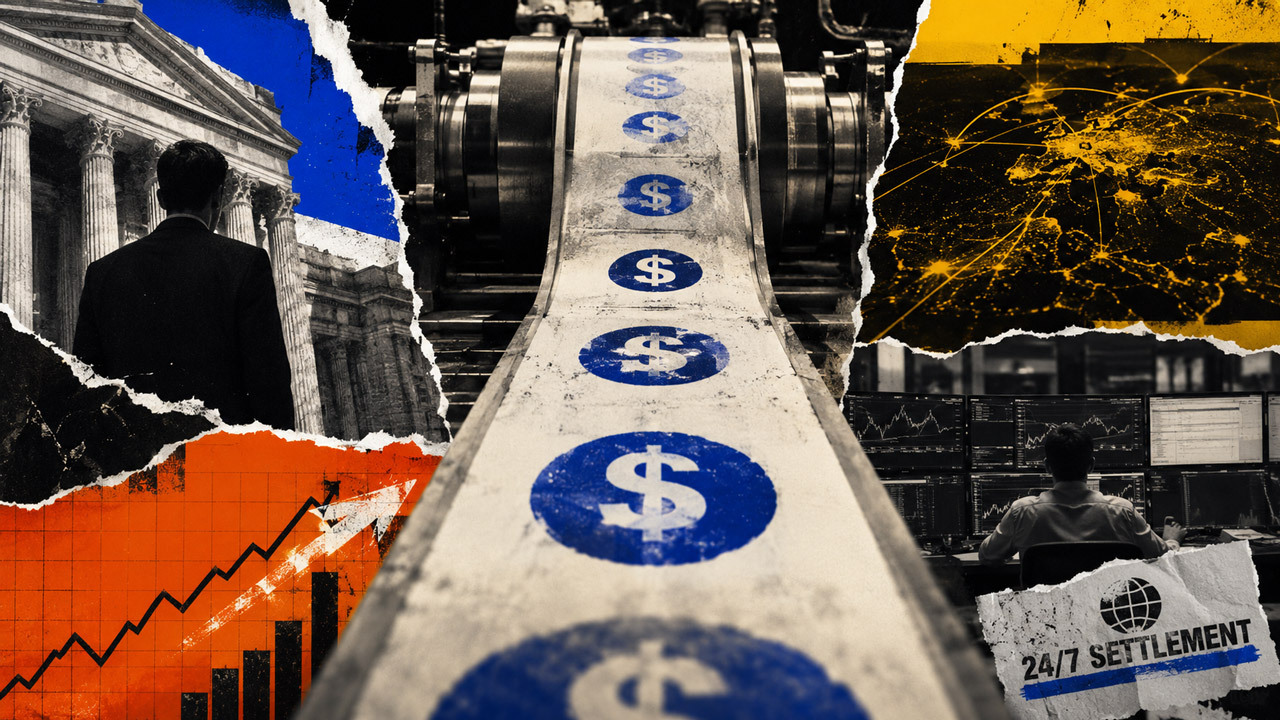
8x Faster Than US Cash: The $1T Network Settling Millions While Banks Sleep
This surge is characterized by a massive fourfold to fivefold increase in entity-adjusted transaction volume, creating a widening gap between available dollar liquidity and the actual network activity it supports. As market capitalization continues to track the growing stock of circulating stablecoins, this $1T network is proving to be the unstoppable engine of modern global finance.

Bitcoin Mining Giant Poolin Files for Chapter 11 Bankruptcy in New Jersey
Despite the instability signaled by the Poolin bankruptcy, market sentiment remains split on long-term price action. Some bullish forecasts suggest Bitcoin could reach $67.5K by July 2026, even as the industry grapples with the fallout of major players restructuring their debt through legal channels.

The $12B Survivors: 10 Altcoins Still Standing After a Brutal 97% Crash
Beyond the price action, the core concern shifts to network sustainability and economic viability. As these altcoins struggle to bridge the gap—requiring anywhere from 21x to over 300x growth—investors are scrutinizing whether user transaction fees are sufficient to fund the ongoing operations of these decentralized infrastructures.

Fidelity Joins Massive Push for Senate Passage of CLARITY Act
This legislative push, supported by industry heavyweights like Coinbase and the Blockchain Association, aims to establish a definitive market structure. By advocating for this digital asset legislation, these institutions are seeking the legal certainty required to integrate crypto more deeply into the traditional financial ecosystem.
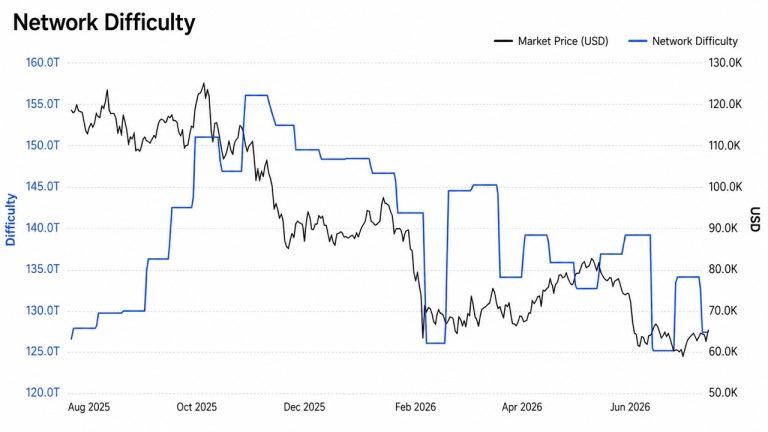
Bitcoin's Difficulty Adjustment: The Self-Correcting Rule Causing Massive Network Swings
This automated adjustment occurs every 2,016 blocks to ensure that block production remains consistent regardless of changes in total mining power. By functioning without a central manager or human vote, this mathematical rule maintains Bitcoin's scarcity and stabilizes the network against extreme fluctuations in hash rate.
