Banking Lobby Strikes: US Banks Move to Cap Stablecoin Yields in New Crypto Law
Traditional banking associations are ramping up pressure in the United States, lobbying for strict limits on stablecoin yields within upcoming crypto legislation. Their primary mission is to close regulatory loopholes that allow stablecoins to function as interest-bearing accounts, directly challenging the core business model of commercial banks.
This strategic move aims to safeguard the banking sector's control over consumer savings and interest-driven capital. If successful, these restrictions could fundamentally reshape the stablecoin landscape, potentially stifling the growth of yield-generating protocols and altering the flow of liquidity within the broader digital asset market.
Banking associations are actively lobbying US lawmakers to impose caps on stablecoin yields as part of the nation's evolving crypto regulatory framework. The industry's main concern is that stablecoins are increasingly being used as remunerated accounts, offering competitive returns that threaten traditional banking deposits.
By pushing to close these regulatory gaps, banks hope to prevent a massive migration of capital from conventional savings into the crypto ecosystem. The outcome of this legislative battle will be a defining moment for the industry, determining whether stablecoins remain simple payment tools or evolve into powerful yield-bearing assets in the digital economy.
This is a summarized and adapted version by Artificial Intelligence. To read the complete original story, visit the official source.
Read Full Article at Portal do BitcoinSupport Jornal Bitcoin
Independent journalism, curated by AI, no clickbait. Keep the flame alive with any amount of BTC.
jonata@walletofsatoshi.comDaily Crypto Brief 📬
Subscribe to receive the curation of the most important Bitcoin and crypto news, summarized by AI. No spam.
Join more than 10,000 smart readers.
Related News
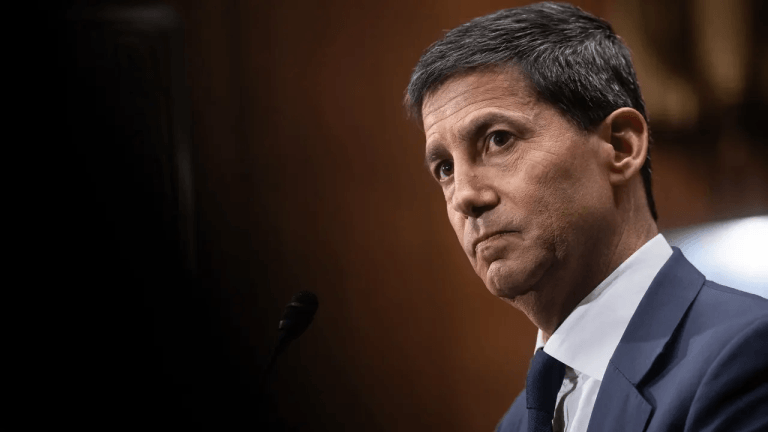
No Safety Net: Fed Chair Warns Crypto and Stablecoins Are on Their Own
This decisive stance shifts the burden of risk management directly onto the crypto ecosystem and stablecoin issuers. By explicitly stating that the Fed does not want to be in the 'bailout business,' Warsh is signaling a future where digital assets must maintain extreme liquidity and self-sufficiency to survive market volatility without the expectation of a government-backed safety net.

Beyond Token Prices: Timelock Recovery Revolutionizes Ethereum Smart Account Security
By prioritizing infrastructure resilience over mere token price volatility, this development signals a shift toward institutional-grade security. The implementation of these robust recovery methods is essential for the long-term stability of the Ethereum ecosystem and the widespread usability of smart contract wallets.

AI Revolution: NVIDIA's Blackwell NVL72 Delivers Massive 25x Efficiency Boost
Beyond the raw numbers, this shift directly impacts the profitability and scalability of global AI operations. By drastically reducing energy consumption per unit of compute, NVIDIA is enabling data centers to deploy massive AI models while mitigating the rising costs and environmental concerns of high-density computing.

XRP at a Crossroads: The Critical Level That Will Decide Ripple's Next Big Move
The market is now testing a vital demand zone that serves as a make-or-break point for the asset. The outcome of this test will decide whether XRP can finally stabilize or if it is destined to extend its current downward trend in the broader crypto market.

XRP’s $1 Rebound Hits a Wall: Massive Number of Holders Trapped Above $2
This concentration of holders trapped above $2 creates a massive liquidity hurdle for any potential rally. As the token trades significantly below these levels, the market must contend with the psychological pressure of long-term investors looking for an exit strategy as soon as the price approaches their break-even point.
Ready for Prime Time: Senator Lummis Signals CLARITY Act Breakthrough
This legislative push aims to secure a floor vote before the scheduled August recess, potentially setting a new standard for digital asset oversight. The successful passage of the CLARITY Act could provide the long-awaited legal framework necessary for mainstream crypto adoption in the United States.
