Aave V4 Gas Optimization: Why Low Fees Are the Real Key to DeFi's Next Cycle

The ongoing discussions surrounding Aave V4 serve as a stark reminder that the next DeFi cycle won't be won solely through higher yields or hype-driven token narratives. Instead, the industry is facing a fundamental battle over gas optimization and transaction efficiency. For decentralized finance to truly scale, reducing the friction of high costs is no longer optional—it is a necessity.
By prioritizing cost reduction in its next iteration, Aave is addressing the primary barrier to mass adoption: user experience. If protocols continue to force users to hesitate before every transaction due to prohibitive fees, the ecosystem will struggle to move beyond high-net-worth individuals. The success of Aave V4 will likely set the standard for how liquidity protocols handle scalability and economic accessibility.
The Aave V4 discussion is a useful reminder that DeFi’s next cycle will not be won only by bigger yields or louder token narratives. Cost still matters. If users have to think twice before every transaction due to high fees, the product fails to achieve mainstream viability. The push for gas optimization in V4 highlights that the industry's focus must shift toward making decentralized protocols economically sustainable for everyone.
This is a summarized and adapted version by Artificial Intelligence. To read the complete original story, visit the official source.
Read Full Article at NewsBTCSupport Jornal Bitcoin
Independent journalism, curated by AI, no clickbait. Keep the flame alive with any amount of BTC.
jonata@walletofsatoshi.comDaily Crypto Brief 📬
Subscribe to receive the curation of the most important Bitcoin and crypto news, summarized by AI. No spam.
Join more than 10,000 smart readers.
Related News

Middle East Conflict: Iran Attacks and Oil Surge Trigger Crypto Market Volatility
The surge in oil prices is driving a flight to safety, a move that typically leaves highly volatile sectors exposed. As the conflict in the Gulf intensifies, the vulnerability of cryptocurrencies to geopolitical shocks becomes increasingly evident, underscoring the interconnectedness of energy markets and digital asset pricing.
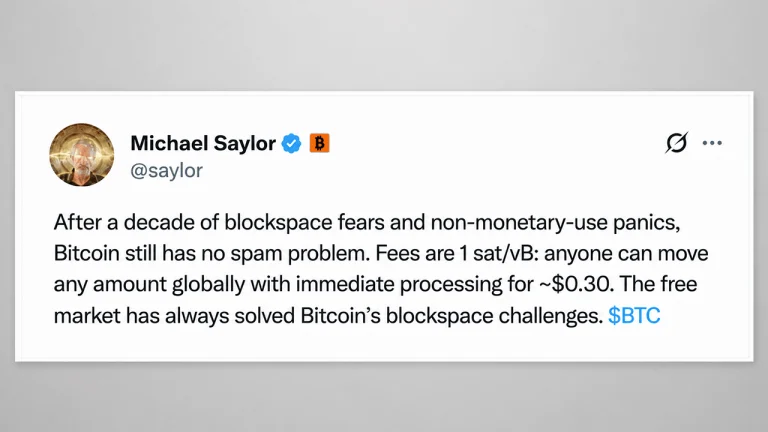
Michael Saylor Dismisses 'Spam Problem' as BIP-110 Debate Heats Up
These remarks come at a critical juncture as the community intensifies its debate over BIP-110. This proposed soft fork aims to restrict non-monetary data recorded on the blockchain, sparking a fundamental disagreement over the core principles of Bitcoin's data architecture and scalability.

MARA Stock Soars: Bitcoin Miner Secures Massive Texas Land Plot for AI Expansion
This move highlights the intensifying synergy between crypto mining and artificial intelligence. By securing high-capacity energy access, MARA is pivoting toward a dual-purpose model that addresses the critical shortage of power required for both blockchain networks and large-scale AI model training.

Market Alert: Iran Ships 10 Million Barrels of Oil Amid US Blockade Threat, Rattling Crypto
This surge in oil exports threatens to destabilize global energy markets and drive inflation higher. As a consequence, the heightened tension may trigger increased regulatory scrutiny on crypto, forcing investors to navigate a complex landscape of shifting macroeconomics and commodity instability.

The Last Stop: Why Bitcoin ATMs are the Final Link in America’s $11B Crypto Scam Pipeline
This trend underscores a dangerous intersection between digital manipulation and physical cash-out points. As these Bitcoin ATMs serve as the final stage for laundering stolen funds, the impact on the broader crypto landscape is significant, prompting urgent calls for tighter security protocols and enhanced oversight to disrupt these multi-billion dollar criminal operations.

Denied: New Hampshire Rejects Historic $100 Million Bitcoin-Backed Bond Proposal
While proponents insisted the issuance posed zero risk to taxpayers, the council chose to shelve the project, delaying the world's first Bitcoin-backed government bond. This rejection highlights the ongoing tension between traditional fiscal governance and the rapid emergence of Bitcoin as a legitimate institutional asset class.
