Bitcoin.com

Ordinary WiFi Can Now Identify People With Near-Perfect Accuracy

August 3, 202603:30 AM
Ordinary WiFi Can Now Identify People With Near-Perfect Accuracy

Scientists at Germany's Karlsruhe Institute of Technology have developed a revolutionary system that uses ordinary Wi-Fi signals to identify people with near-perfect accuracy. The technology analyzes how radio waves bounce off bodies and objects, creating unique reflection patterns that can recognize individuals even without devices or with phones turned off.

This breakthrough represents a significant advancement in identification technology, with profound implications for security, privacy, and surveillance. The Wi-Fi recognition system offers a non-invasive alternative to traditional cameras and biometric scanners, but raises serious concerns about mass surveillance and personal data protection in both public and private spaces.

This is a summarized and adapted version by Artificial Intelligence. To read the complete original story, visit the official source.

Read Full Article at Bitcoin.com
QR Code Lightning

Support Jornal Bitcoin

Independent journalism, curated by AI, no clickbait. Keep the flame alive with any amount of BTC.

Wallet of Satoshi
jonata@walletofsatoshi.com

Daily Crypto Brief 📬

Subscribe to receive the curation of the most important Bitcoin and crypto news, summarized by AI. No spam.

Join more than 10,000 smart readers.

Related News
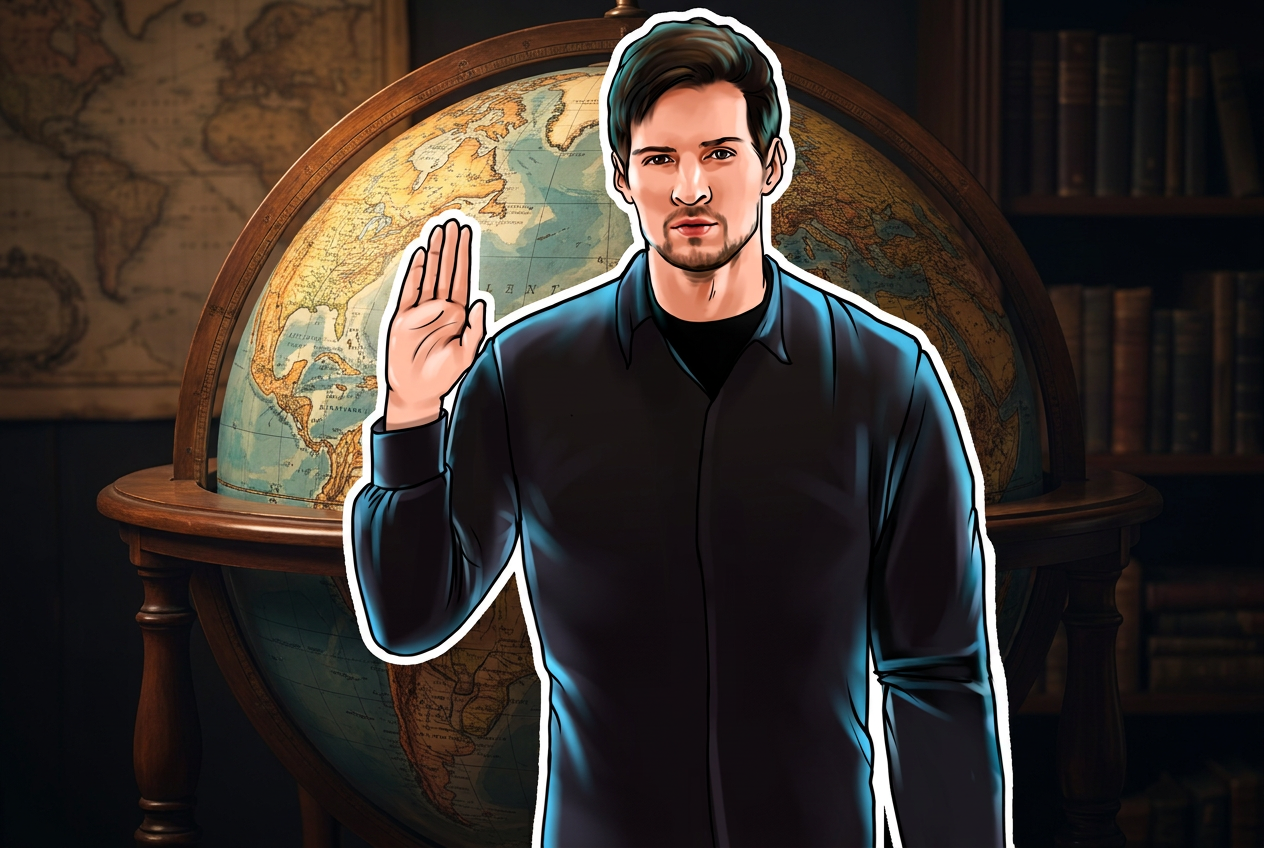
Telegram's Durov: Russia labeled me 'terrorist' for refusing mass surveillance
CoinTelegraph★ Featured

Telegram's Durov: Russia labeled me 'terrorist' for refusing mass surveillance

Telegram founder Pavel Durov has publicly responded to Russia's designation of him as a 'terrorist,' revealing that Russian authorities labeled him as such after he refused government demands for mass surveillance and censorship on the messaging platform. In a Thursday Telegram post, Durov also stated that Russia had barred him from 'publishing information on the Internet,' countering that authorities 'got confused about who can ban whom from the Internet.'

This showdown between Telegram and the Kremlin represents a direct confrontation between digital privacy and state control, with profound implications for online freedom of expression. The 'terrorist' designation against Durov, one of the most prominent digital privacy advocates, could set dangerous precedents for other technology developers and global platforms that resist government demands for user data access. The case underscores how tensions between national sovereignty and the global internet continue to intensify in today's geopolitical landscape.

'Completely Legal': GrapheneOS Pushes Back Against Duress Password Prosecution

Decrypt★ Featured

'Completely Legal': GrapheneOS Pushes Back Against Duress Password Prosecution

GrapheneOS is directly confronting authorities in a duress password case, with activist Samuel Tunick asserting that his actions are 'completely legal.' The prosecution against Tunick is proceeding despite pushback from the GrapheneOS team, who defend digital privacy as a fundamental right. The legal battle is taking on concerning implications for digital privacy, according to Tunick, who accuses authorities of attempting to 'intimidate people' and set a dangerous precedent against privacy technologies. The GrapheneOS case is being closely watched by privacy advocates worldwide, who fear that a ruling against the project could establish a template for future actions against other digital security tools.
Telegram's Pavel Durov Now on Russia's Most Wanted List as Terror Charges Spark Showdown

Bitcoin.com★ Featured

Telegram's Pavel Durov Now on Russia's Most Wanted List as Terror Charges Spark Showdown

Telegram founder Pavel Durov has been formally charged with aiding terrorist activities by Russia's Federal Security Service (FSB) and placed on an international wanted list. This development marks a significant escalation in the pressure campaign against the tech entrepreneur, moving beyond regulatory disputes into full criminal liability. The charges against Durov come amid an intensifying pressure campaign by the Russian government against the messaging platform, which has refused to comply with data-sharing demands. This case could have profound implications for the future of cryptocurrencies and digital privacy, as Telegram has historically been a popular platform for cryptocurrency communities.
Telegram Founder Hit with New Terrorism Charge by Russian Security Services
Crypto Briefing★ Featured

Telegram Founder Hit with New Terrorism Charge by Russian Security Services

Telegram founder Pavel Durov has been formally charged with terrorism by Russia's Federal Security Service (FSB), escalating the digital standoff between Moscow and global tech platforms. This development marks a significant intensification of Russian pressure on the messaging app, which has historically resisted government demands to share user data.

The Russian move comes amid a broader crackdown on digital freedoms, with profound implications for global privacy norms and digital sovereignty. While Russia accuses Telegram of "facilitating terrorist activities," critics argue the case represents a state power grab over the internet and a dangerous precedent for digital freedom worldwide. The outcome of this confrontation could shape the future of tech regulation and digital privacy on a global scale.
Russia Charges Telegram's Pavel Durov With Aiding Terrorism
Decrypt★ Featured

Russia Charges Telegram's Pavel Durov With Aiding Terrorism

Telegram founder Pavel Durov has been formally charged in Russia with alleged terrorism support, marking a critical point in the long-running legal battle between the executive and the Russian government. The indictment represents a significant escalation in pressure on the encrypted messaging platform, which has resisted Moscow's demands to share user data.

Durov, who previously called the criminal case against him "a sad spectacle of a state afraid of its own people," now faces severe legal consequences that could lead to imprisonment. This situation intensifies the tension between technology and government control, with profound implications for digital privacy and freedom of expression worldwide, particularly in authoritarian regimes.
Russia Accuses Telegram's Durov of Terrorism: What This Means for Crypto's Giant
BlockTrends★ Featured

Russia Accuses Telegram's Durov of Terrorism: What This Means for Crypto's Giant

Russia's Federal Security Service (FSB) has formally accused Telegram founder Pavel Durov of terrorism, applying unprecedented pressure on the messaging platform and its billion-dollar crypto ecosystem. The accusation, which claims Durov facilitates terrorist activities, marks a significant escalation in the ongoing conflict between the Kremlin and digital privacy. This case not only threatens Telegram's future, which already faces restrictions in multiple countries, but also puts its billion-dollar crypto ecosystem at risk. With Durov now in the global spotlight, the market is closely watching how this geopolitical dispute could redefine the boundaries between national sovereignty and digital freedom, directly impacting cryptocurrency users and privacy advocates worldwide.
Jornal Bitcoin Logo
