The Wall Street Playbook: Why BlackRock and Fidelity are Pushing for the Clarity Act
Financial titans, including BlackRock and Fidelity, are mobilizing to push the Clarity Act through the U.S. Congress. This strategic move aims to establish a definitive framework for cryptoasset supervision, directly addressing the regulatory uncertainty that has long hindered massive institutional adoption.
The implementation of this bill could fundamentally reshape the digital asset landscape by cementing the dominance of Wall Street's largest players. By advocating for clear rules, these institutions are seeking to mitigate operational risks and ensure that the cryptocurrency market operates under a compliance regime that facilitates traditional capital flows.
Wall Street giants are uniting to pressure the U.S. Congress to pass the Clarity Act, a pivotal bill designed to redesign the supervision of cryptoassets in the United States. Supported by heavyweights such as BlackRock and Fidelity, the initiative seeks to provide the necessary clarity for the digital asset sector to integrate seamlessly into the global financial system.
The Clarity Act is more than just a regulatory measure; it is an attempt to institutionalize the market. For major asset managers, the lack of clear guidelines remains the primary obstacle to massive capital inflows. Through regulation, the goal is to transform the 'Wild West' of crypto into a predictable and secure ecosystem for institutional investors.
This is a summarized and adapted version by Artificial Intelligence. To read the complete original story, visit the official source.
Read Full Article at BlockTrendsSupport Jornal Bitcoin
Independent journalism, curated by AI, no clickbait. Keep the flame alive with any amount of BTC.
jonata@walletofsatoshi.comDaily Crypto Brief 📬
Subscribe to receive the curation of the most important Bitcoin and crypto news, summarized by AI. No spam.
Join more than 10,000 smart readers.
Related News

UK Inflation Expectations Drop: A Green Light for Risk Assets?
As inflationary pressures subside, the macro environment shifts toward fostering economic growth and supporting risk assets. This shift is expected to create a more hospitable landscape for high-growth sectors, potentially triggering a liquidity surge in volatile markets like crypto.
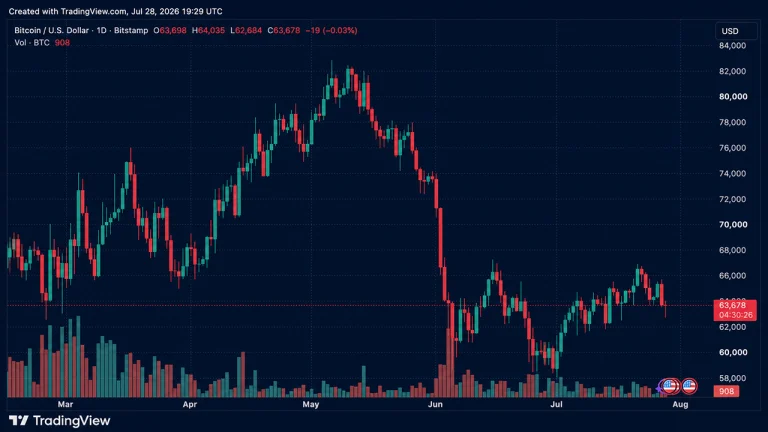
Market Bloodbath: $134M in Bitcoin Longs Wiped Out as BTC Dips Below $63K Before Fed Showdown
The pullback comes as the market enters one of the most event-heavy weeks of the summer, with all eyes on the Federal Reserve. This sudden shift in Bitcoin price action underscores the high-stakes environment as investors navigate uncertainty ahead of pivotal Fed decisions that could dictate the next major trend.

‘OC’ Actor Ben McKenzie Urges Congress to Block CLARITY Act Over Trump Ties
The opposition is gaining significant legal weight as New York Attorney General Letitia James joins the fray. James warned that the CLARITY Act could strip states of their essential power to prosecute crypto fraud, potentially creating a regulatory vacuum that leaves retail investors exposed to bad actors within the cryptocurrency market.

Market Panic: XRP and Bitcoin Plunge as US Senate Delays Critical Clarity Act Vote
As regulatory uncertainty intensifies, technical analysis shows XRP losing vital support zones, raising fears of further downside. The intersection of political hesitation and Federal Reserve policy is creating a high-stakes environment for digital asset investors seeking stability.

Wall Street Giant Morgan Stanley Scales Crypto Strategy with Ethereum and Solana ETPs
By integrating Solana alongside Ethereum, the bank is diversifying its digital asset strategy to capture the momentum of high-performance blockchain networks. This expansion is expected to bridge the gap between traditional finance and the decentralized economy, providing regulated vehicles for massive capital inflows.
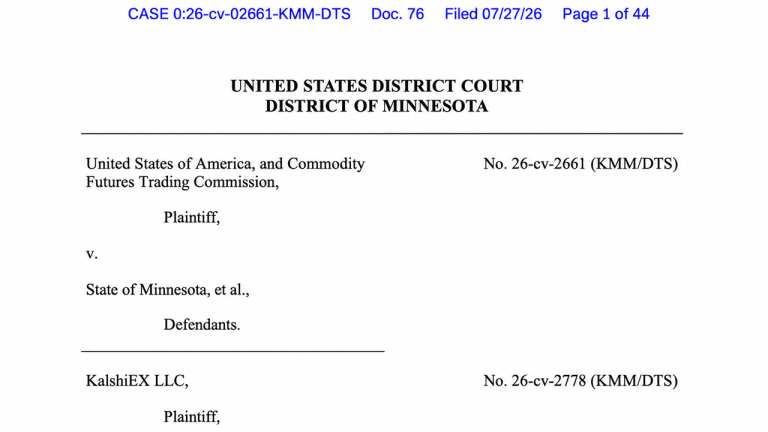
Legal Win for Polymarket: US Judge Blocks Minnesota's Prediction-Market Ban
However, the ruling is not a total sweep for the industry, as it introduces critical regulatory distinctions. The judge noted that certain entertainment-based contracts may not qualify as 'swaps' under federal regulation, potentially setting the stage for a complex legal battle over how prediction markets and digital assets are classified moving forward.
