Legal Win for Polymarket: Federal Court Blocks Minnesota's Prediction Market Ban

A major legal victory has emerged for prediction market giants Kalshi and Polymarket following a pivotal federal court ruling. A judge has determined that federal law likely preempts Minnesota's attempt to ban these platforms, ensuring that users in the state maintain uninterrupted access to prediction markets.
This ruling sets a significant precedent for the intersection of state and federal regulation within the crypto space. By prioritizing federal authority, the court has mitigated the risk of a fragmented regulatory landscape that could stifle the growth of decentralized prediction markets and digital asset trading.
The legal fight over the legality of prediction markets in Minnesota has reached a critical turning point. A federal judge has ruled that federal law likely preempts the state's ban, allowing platforms like Kalshi and Polymarket to continue serving Minnesota residents. This decision prevents a localized crackdown from disrupting the broader market access.
The ruling is a significant moment for the industry, addressing the tension between state-level restrictions and federal oversight. For the crypto community, this provides much-needed clarity and protects the scalability of prediction market protocols against localized legislative hurdles.
This is a summarized and adapted version by Artificial Intelligence. To read the complete original story, visit the official source.
Read Full Article at CryptoPotatoSupport Jornal Bitcoin
Independent journalism, curated by AI, no clickbait. Keep the flame alive with any amount of BTC.
jonata@walletofsatoshi.comDaily Crypto Brief 📬
Subscribe to receive the curation of the most important Bitcoin and crypto news, summarized by AI. No spam.
Join more than 10,000 smart readers.
Related News
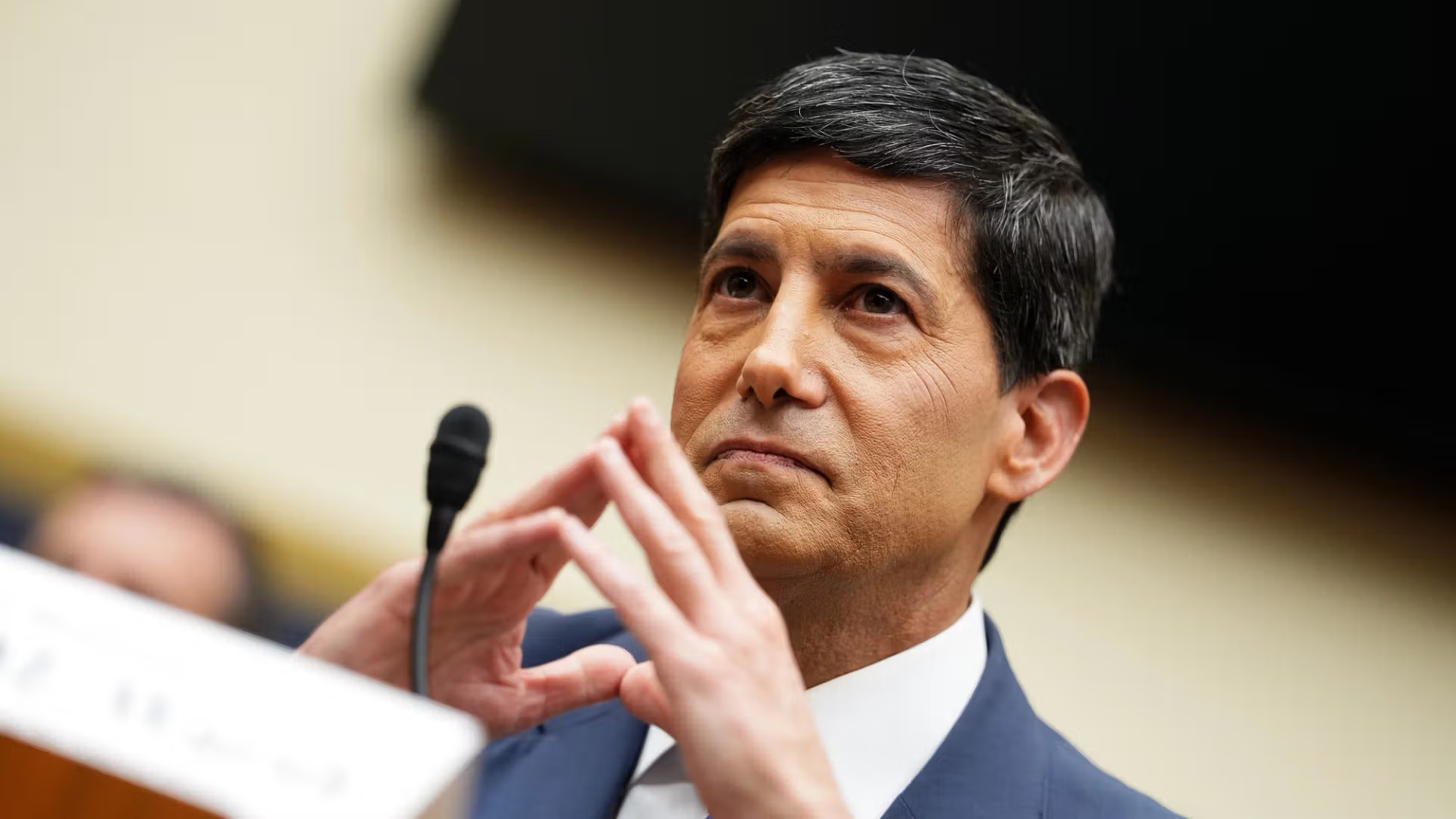
The 'Fed Effect': Why even a hint of dovishness could send Bitcoin soaring
Crucially, experts argue that Bitcoin may actually face less exposure to these macro shifts compared to AI-driven tech stocks. This divergence suggests that while the tech sector battles volatility, the Bitcoin ecosystem could find unique strength in a more accommodative interest rate environment.

Aviation Giant: Emirates Airline Now Accepts Bitcoin and Crypto Payments
Having first teased the possibility of Bitcoin payments back in 2022, the airline's full implementation underscores the growing utility of crypto in the travel sector. This decision solidifies Dubai's reputation as a leading global hub for blockchain integration and the digital economy.

Institutional Surge: Morgan Stanley Launches Ether and Solana ETPs with Staking Rewards
These new funds, MSSE and MSOL, distinguish themselves by offering staking rewards that are passed directly to investors, with the firm retaining none of the yield. Featuring a low 0.14% expense ratio and utilizing CoinDesk benchmarks, these products represent a sophisticated evolution in how institutional players interact with the Ether and Solana ecosystems.

Geopolitical Alert: Saudi Arabia Intercepts Drones Targeting Oil Facilities
While the immediate interception may reduce the risk of an escalating conflict, the ongoing instability poses a significant threat to regional stability and market perceptions. For the crypto market, such geopolitical friction often dictates the flow of capital between traditional commodities and digital assets.

UK Inflation Expectations Drop: A Green Light for Risk Assets?
As inflationary pressures subside, the macro environment shifts toward fostering economic growth and supporting risk assets. This shift is expected to create a more hospitable landscape for high-growth sectors, potentially triggering a liquidity surge in volatile markets like crypto.
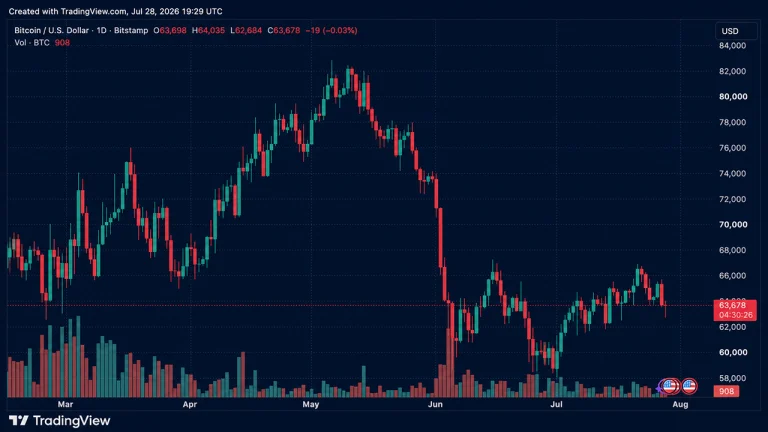
Market Bloodbath: $134M in Bitcoin Longs Wiped Out as BTC Dips Below $63K Before Fed Showdown
The pullback comes as the market enters one of the most event-heavy weeks of the summer, with all eyes on the Federal Reserve. This sudden shift in Bitcoin price action underscores the high-stakes environment as investors navigate uncertainty ahead of pivotal Fed decisions that could dictate the next major trend.
