US 25% Tariff on Brazil: How the Exchange Rate Will Actually React
A major shift in trade policy is imminent as the United States prepares to enforce a 25% tariff on Brazilian goods starting July 22. Despite the initial shock, strategic exemptions and benign inflation in the US are expected to act as critical buffers for the exchange rate.
This development forces investors to re-evaluate the volatility of the Brazilian Real. Understanding the interplay between these new trade barriers and the current US economic stability is essential for navigating the upcoming shifts in the global currency market.
Starting July 22, the trade relationship between Brazil and the United States will face a significant hurdle with the implementation of a 25% tariff. However, market analysts suggest that the direct impact on the exchange rate might be limited by specific strategic exemptions.
With US inflation remaining relatively benign, the economic pressure on the Brazilian Real may be less severe than anticipated. Investors should keep a close eye on currency fluctuations as the market adjusts to these new protectionist measures and their long-term consequences for international trade.
This is a summarized and adapted version by Artificial Intelligence. To read the complete original story, visit the official source.
Read Full Article at BlockTrendsSupport Jornal Bitcoin
Independent journalism, curated by AI, no clickbait. Keep the flame alive with any amount of BTC.
jonata@walletofsatoshi.comDaily Crypto Brief 📬
Subscribe to receive the curation of the most important Bitcoin and crypto news, summarized by AI. No spam.
Join more than 10,000 smart readers.
Related News

FATF Warning: Criminal Networks Developing Custom Stablecoins to Evade Asset Freezes
In a sophisticated move to bypass law enforcement, criminal networks are reportedly developing proprietary stablecoins engineered to resist asset seizures and freezes. The FATF is now calling on global jurisdictions to fast-track crypto AML enforcement to combat these evolving methods of money laundering and evasion.

Japan and NVIDIA Unveil the World’s First National AI Factory
This strategic move is a cornerstone of Japan's ambitious $133 billion roadmap for physical AI. By deploying this advanced infrastructure, Japan aims to secure its position as a global leader in the integration of artificial intelligence with physical industrial applications.
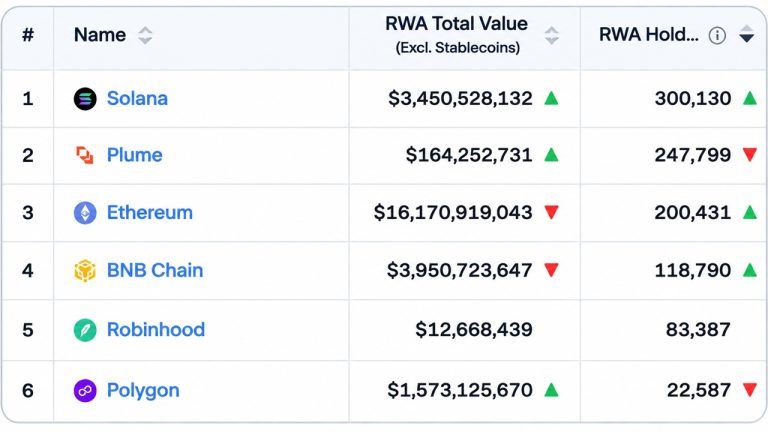
Solana Surges Past 300,000 RWA Holders as Ethereum's Dominance Begins to Falter
While Ethereum continues to hold a commanding $16.3 billion lead in total tokenized value, the gap is starting to show cracks. The rapid expansion of Solana's RWA ecosystem suggests that its high-speed, low-cost infrastructure is successfully attracting a massive wave of new participants, challenging Ethereum's long-standing supremacy.

Saylor’s $55 Billion Bitcoin Bet Sinks $9.9 Billion Underwater: Why He Is Hoarding $3 Billion in Cash
This tactical shift is designed to provide a buffer against crypto market volatility. By pairing a massive BTC stockpile with significant liquidity, Saylor aims to navigate the bear market and strengthen the company's financial resilience amidst fluctuating digital asset prices.

Luno Takes on South Africa: A Parliamentary Battle to Save Crypto Regulation
By pushing the debate into Parliament rather than accepting executive proclamations, Luno aims to ensure a more democratic legislative process. The outcome will determine whether strict enforcement and steep penalties will stifle the local crypto market or if South Africa can establish a balanced regulatory framework for digital assets.

Banking Disruption: Emirates NBD Debuts Real-Time USD Blockchain Payments
By leveraging blockchain technology for real-time USD transfers, the bank is setting a new benchmark for international liquidity and efficiency. This integration is expected to significantly slash cross-border friction and operational costs, proving that blockchain is no longer just theoretical but a vital tool for global institutional finance.
