Storj Files for Chapter 11 Bankruptcy: A High-Stakes Test for Tokenholder Rights

The decentralized storage landscape faces major uncertainty as Storj Labs officially files for Chapter 11 bankruptcy protection. Despite the filing, the company has committed to keeping its network operational, aiming to restructure legacy liabilities while maintaining essential customer services under court oversight.
This restructuring represents a landmark moment for the crypto industry, as Storj explores a court-approved ownership mechanism specifically for STORJ tokenholders. The outcome will serve as a critical legal precedent, testing whether utility token holders can successfully transition into equity participants within a company emerging from bankruptcy.
While ordinary operations and customer services are expected to continue subject to court supervision, the parent company, Inveniam, will continue to support the business. This case is being closely watched by industry experts, as it could become an unusual legal test to determine if utility-token holders can participate in the ownership of a company emerging from bankruptcy proceedings.
This is a summarized and adapted version by Artificial Intelligence. To read the complete original story, visit the official source.
Read Full Article at CoinTelegraphSupport Jornal Bitcoin
Independent journalism, curated by AI, no clickbait. Keep the flame alive with any amount of BTC.
jonata@walletofsatoshi.comDaily Crypto Brief 📬
Subscribe to receive the curation of the most important Bitcoin and crypto news, summarized by AI. No spam.
Join more than 10,000 smart readers.
Related News
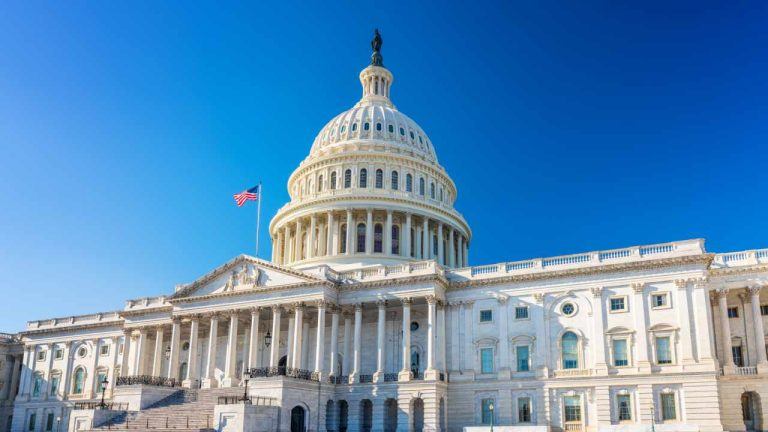
Senate Deadlock? CLARITY Act Passage Odds Plunge to 30%
Unresolved disputes among lawmakers are currently threatening the bipartisan support required to navigate the Senate. This legislative friction suggests that the path to a clear regulatory framework for the crypto industry remains fraught with political obstacles, potentially delaying institutional integration.

The AI-Crypto Convergence: Why Brian Armstrong Sees a Massive Catalyst for Blockchain
This convergence suggests a profound transformation of global financial systems, moving toward an economy driven by machine-to-machine interactions. As AI agents scale, the demand for decentralized settlement layers and crypto-native liquidity is expected to surge, positioning blockchain as the backbone of the burgeoning AI economy.

South Korean Giant Tests Receivables Tokenization with LG CNS via Injective
This pilot program for receivables tokenization highlights the growing momentum of Real World Assets (RWA) moving onchain. By leveraging Injective's specialized infrastructure, these industry leaders aim to streamline commercial workflows, providing a blueprint for how large-scale enterprises will manage liquidity and debt in a decentralized future.

Ripple Goes All In: CEO Brad Garlinghouse Demands Immediate Passage of CLARITY Act
As Senate debates intensify, a powerful coalition of financial firms, tech giants, and advocacy groups is rallying to support these clearer rules. The successful implementation of the CLARITY Act could serve as a massive catalyst for institutional adoption, providing the legal certainty the blockchain industry has long demanded.

WEMIX Exploit: Attacker Siphons $724K After Compromising WEMIX$ Stablecoin Contract
To mitigate the fallout, WEMIX has suspended all bridges, liquidity-pool trading, and several key services. The stolen funds were bridged to Ethereum and BNB Smart Chain, eventually being swapped for Ether and Tether (USDT) before being distributed across multiple wallets, prompting WEMIX to coordinate with centralized exchanges for immediate asset freezes.

Russia defends controversial crypto purchase caps: “No restrictions” for moving funds abroad
By framing the move as increased openness of the crypto ecosystem, the Bank of Russia is trying to blunt criticism of potentially uneven crypto regulation. The key question now is how these crypto purchasing caps will operate inside the broader regulatory framework—and what that means for liquidity, cross-border flows, and market confidence.
