The Bitcoin Softfork Attempting to Police 'Junk Data' Is Already Facing Failure

A controversial attempt to regulate the content written to the Bitcoin ledger is sparking intense debate within the community. At the center of the storm is BIP-110, a softfork proposal designed to police 'junk data' by restricting certain types of data-heavy transactions on the network.
This struggle highlights a critical tension between protocol efficiency and the core ethos of Bitcoin. By attempting to gatekeep what users can record on-chain, proponents of the softfork are challenging the fundamental principle that anyone willing to pay transaction fees should have the right to interact with the ledger without censorship.
Bitcoin’s real power lies in the fact that anyone willing to pay fees can write to the ledger. However, backers of BIP-110 want to change this rule for data-heavy transactions, aiming to police what they categorize as 'junk data.' This backlash reveals the high stakes of the current debate: the battle for Bitcoin's permissionless nature. As the community pushes back, the tension between technical optimization and the unstoppable nature of the Bitcoin blockchain becomes more apparent than ever.
This is a summarized and adapted version by Artificial Intelligence. To read the complete original story, visit the official source.
Read Full Article at Bitcoin MagazineSupport Jornal Bitcoin
Independent journalism, curated by AI, no clickbait. Keep the flame alive with any amount of BTC.
jonata@walletofsatoshi.comDaily Crypto Brief 📬
Subscribe to receive the curation of the most important Bitcoin and crypto news, summarized by AI. No spam.
Join more than 10,000 smart readers.
Related News

Crackdown Intensifies: China to Treat Crypto Mixers as Presumptive Evidence of Money Laundering
This strategic shift marks a major escalation in the state's efforts to monitor digital asset flows. By categorizing privacy-enhancing technologies as red flags for illicit activity, Chinese authorities are setting a precedent that could fundamentally reshape how blockchain privacy is viewed and regulated in the region.

AI Meets Blockchain: Next Acceleration Program Targets Next-Gen Fintech Innovations
This strategic move aims to foster a new wave of fintech disruption by empowering entrepreneurs with expert mentorship. By combining the predictive power of artificial intelligence with the immutable nature of blockchain, selected participants are poised to redefine the future of automated digital finance.

The Lamine Yamal Effect: How World Cup Hype is Shaking Crypto Betting Markets
This trend highlights the volatile intersection of elite sports and the blockchain ecosystem, where major event hype can dictate capital flows. For traders, understanding this correlation between athlete performance and market movement is essential for navigating narrative-driven speculation.

Bitcoin Eyes $65,000 as US Inflation Cools, But Is the Rally Fading?
Despite the bullish momentum, market experts warn that this relief may already be fading. As Bitcoin nears critical resistance levels, investors are closely monitoring whether this macro-economic shift can sustain the current upward trend or if a correction is imminent due to shifting economic signals.

Beyond the Pitch: How Crypto is Quietly Dominating the World Cup Moment
The intersection of sports and digital assets is set to redefine fan engagement and revolutionize the ticketing industry. By leveraging crypto solutions, organizers are paving the way for more secure, transparent, and interactive experiences, signaling a new era of mainstream crypto utility.
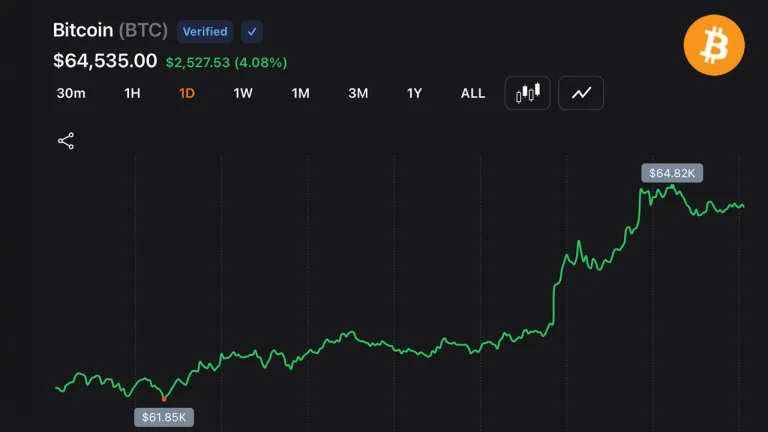
Bitcoin Bulls Defy Middle East Turmoil: BTC Races Toward $65,000 as Short Squeeze Ignites
The sudden price action was largely driven by a collapse in short positions, triggering a squeeze that propelled BTC toward its recent highs. Even as geopolitical tensions escalate due to strikes in the Middle East, the market's ability to stabilize around $64,500 suggests a robust underlying demand for Bitcoin.
