Senate Votes to Block White House Control Over Crypto Grants in Major Win for Decentralization

The US Senate has approved a funding measure that maintains congressional control over crypto grants, blocking the White House from interfering with fund distribution processes. This decision preserves merit-based grant systems and represents a significant victory for decentralization within the crypto ecosystem. The measure, which ensures funding through December 11, strengthens Congressional autonomy and prevents potential politicization of resources allocated to the cryptocurrency sector, establishing an important precedent for resource governance in the industry.
This is a summarized and adapted version by Artificial Intelligence. To read the complete original story, visit the official source.
Read Full Article at Crypto BriefingSupport Jornal Bitcoin
Independent journalism, curated by AI, no clickbait. Keep the flame alive with any amount of BTC.
jonata@walletofsatoshi.comDaily Crypto Brief 📬
Subscribe to receive the curation of the most important Bitcoin and crypto news, summarized by AI. No spam.
Join more than 10,000 smart readers.
Related News

Robinhood Crypto Chief Explains Why There Are 'Two Wolves' Inside Robinhood Chain
Micro Bitcoin Holders Vanishing at Record Pace Since December 2024

Bitcoin's BIP-110 activation in 185 blocks: What miners need to know

Ethereum's EIP-8363 Staking Proposal Sparks Fierce Backlash Amid DeFi and Decentralization Concerns
The fierce backlash against EIP-8363 raises significant concerns about the future of DeFi, decentralization, and institutional adoption on Ethereum. Critics warn that this economic shift could discourage network participation, negatively impacting the DeFi ecosystem and potentially weakening long-term security. While proponents defend the need to adjust staking rewards to prevent excessive dilution, the debate underscores the complex tensions between security, decentralization, and adoption in proof-of-stake blockchains. The Ethereum community now faces the challenge of balancing these competing concerns as the network continues to evolve following its transition to proof-of-stake.
Bitcoin's BIP110: The Fork That Could Split Bitcoin in Three Ways
Regardless of the outcome - failure, activation, or split - the debate around BIP110 exposes growing tensions within the Bitcoin community over governance and decentralization. While some see the proposal as a necessary evolution for scalability, others fear it could undermine Bitcoin's fundamental principles. The resolution of this technical battle will have profound implications for the crypto ecosystem's future, affecting everything from institutional adoption to long-term user trust.
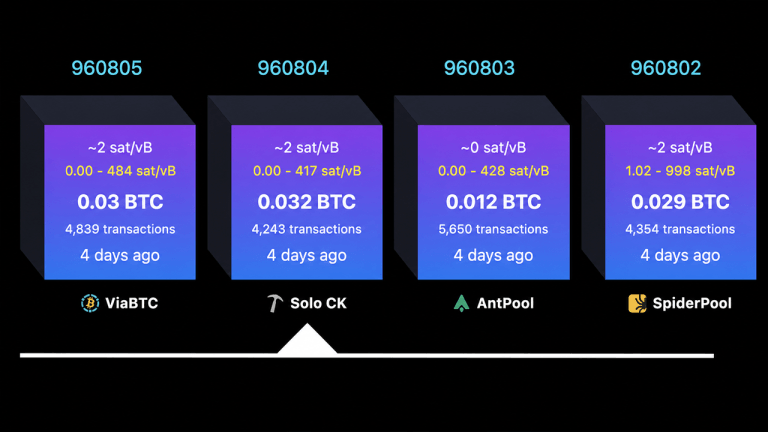
Solo Bitcoin Miner Defies Odds, Wins $200K Block Reward Jackpot
The payout went to a Bitcoin address tied to CKPool, a solo mining service that lets people point their equipment at shared infrastructure without needing to run full nodes. This event highlighted CKPool's fundamental importance to Bitcoin network decentralization, as it democratizes mining access and keeps alive Satoshi Nakamoto's original promise of a truly peer-to-peer distributed network. The $200K win serves as a powerful reminder that despite increasing difficulty, solo mining remains a viable path for direct participation in the network's security and governance.
