US Senate Unanimously Blocks Any Path to Pardon for FTX Fraudster Sam Bankman-Fried
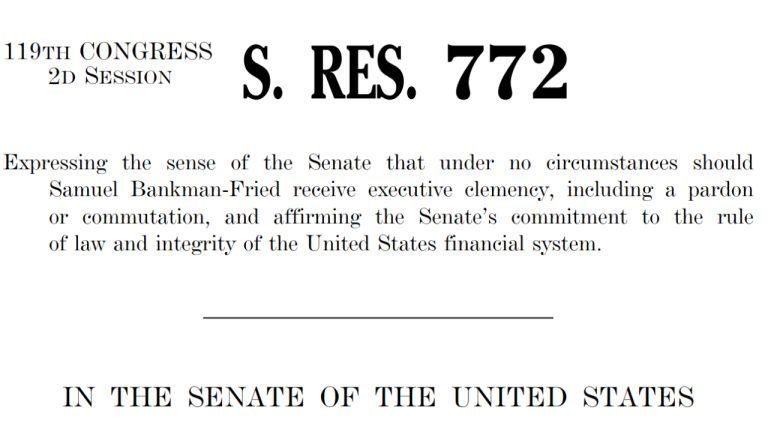
The U.S. Senate has delivered a crushing blow to potential leniency for Sam Bankman-Fried by unanimously passing the bipartisan resolution S.Res. 772. This decisive move explicitly opposes any presidential pardon or commutation of sentence for the former FTX CEO, emphasizing a zero-tolerance policy toward massive financial fraud.
As Bankman-Fried's clemency petition remains pending, this Senate action serves as a powerful signal to the crypto industry regarding accountability and legal consequences. By closing the door on political mercy, lawmakers are reinforcing the necessity of strict enforcement to maintain market integrity and investor trust.
In a rare display of bipartisan unity, the U.S. Senate approved S.Res. 772 on July 15, a resolution declaring total opposition to any presidential pardon or sentence commutation for Sam Bankman-Fried. The former FTX CEO, central to one of the largest frauds in crypto history, faces a Senate that is firmly committed to financial accountability.
The resolution aims to preemptively address the pending clemency petitions related to the FTX collapse. By passing S.Res. 772, the Senate reinforces that high-profile white-collar crimes within the digital asset space will be met with the full weight of the law, regardless of political influence.
This is a summarized and adapted version by Artificial Intelligence. To read the complete original story, visit the official source.
Read Full Article at Bitcoin.comSupport Jornal Bitcoin
Independent journalism, curated by AI, no clickbait. Keep the flame alive with any amount of BTC.
jonata@walletofsatoshi.comDaily Crypto Brief 📬
Subscribe to receive the curation of the most important Bitcoin and crypto news, summarized by AI. No spam.
Join more than 10,000 smart readers.
Related News

End of an Era? How Crypto and Betting Sponsorships are Disrupting LPL Dominance
As the esports industry integrates more deeply with blockchain-based assets and betting markets, the impact extends beyond mere funding. The industry must now navigate the complex intersection of massive capital injection and the potential risks to competitive integrity and long-term stability.

T. Rowe Price's $1.9 Trillion Bet: The Industry's First Multi-Token Active Crypto ETF
By opting for active management over passive tracking, the firm aims to navigate the inherent volatility of the crypto market more effectively. This launch represents a pivotal moment for the digital asset ecosystem, signaling that the world's largest wealth managers are ready to embrace complex, multi-asset crypto strategies.
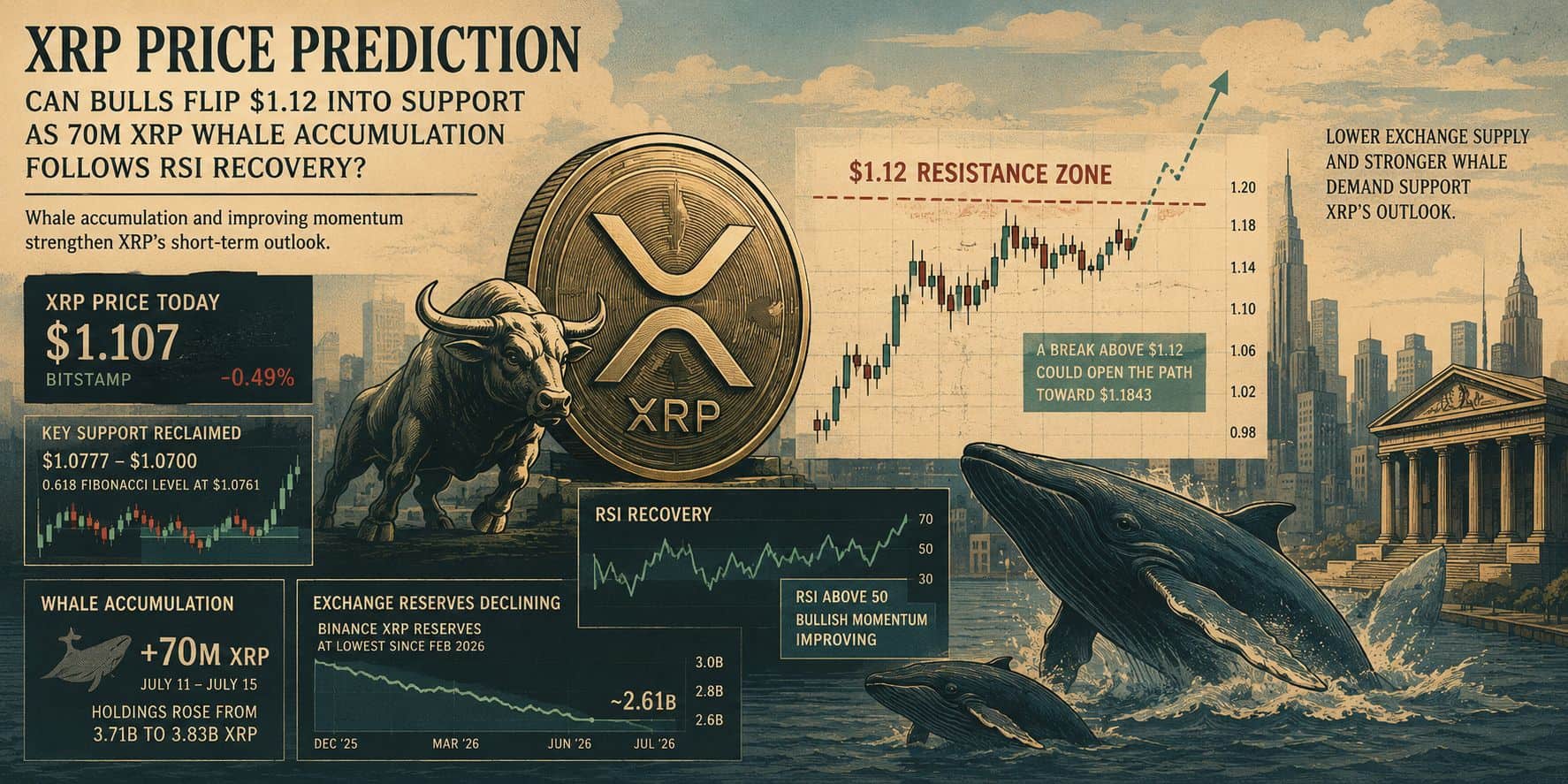
XRP Whale Alert: 70M Tokens Accumulated as Bulls Fight to Flip $1.12 into Support
This surge in on-chain activity highlights a strategic accumulation phase amidst current price consolidation. As the token tests critical resistance levels, the ability to maintain this momentum will depend on whether these whale movements can trigger a broader market breakout and sustain long-term bullish sentiment.

No Safety Net: Fed Chair Warns Crypto Industry Will Face Crises Alone
As regulators move to finalize critical frameworks under the GENIUS Act, the crypto industry faces a period of intense scrutiny and accountability. This shift toward strict regulatory oversight means that firms must prioritize robust risk management, as the era of relying on central bank liquidity to solve systemic crypto failures appears to be over.

“They are trash”: On-chain investigator ZachXBT slams physical crypto wallets
This controversial stance reignites the global conversation regarding cryptocurrency self-custody and the evolving landscape of digital asset security. As threats become more sophisticated, ZachXBT's critique forces investors to reconsider whether hardware-based solutions provide sufficient protection against high-level exploits in the crypto ecosystem.

Future Price Glitch: How 'Impossible' Data Fooled a Crypto Oracle into a $24 Million Payout
This incident highlights a critical vulnerability in how DeFi protocols rely on oracle integrity and temporal data validation. As Ostium has yet to release a formal postmortem or final loss accounting, the industry is left grappling with the implications of synthetic data attacks and the urgent need for more resilient oracle architectures.
