Satoshi’s Prophecy: How a 16-Year-Old Hash Defense Shields Bitcoin from Quantum Threats
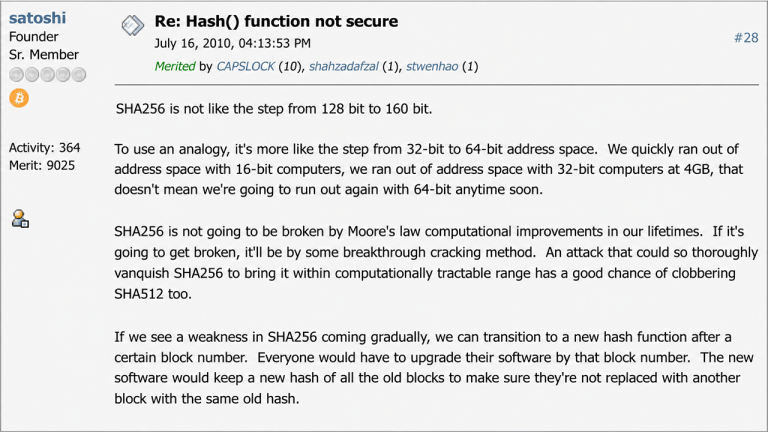
A deep dive into Bitcoin's origins reveals that Satoshi Nakamoto addressed network vulnerabilities long before the modern era of quantum computing fears. A pivotal 2010 forum post clarifies the strategic implementation of double SHA-256 hashing, a design choice that remains the cornerstone of Bitcoin's cryptographic integrity today.
This historical context proves that the Bitcoin protocol was engineered with foresight, prioritizing long-term resilience against evolving computational power. As the industry grapples with the potential impact of quantum computing, Satoshi's original defense mechanisms provide a blueprint for how the network maintains its security and decentralization.
Sixteen years ago, Satoshi Nakamoto answered a doubter on a forum, and that reply still guides how the network defends its money today. On July 16, 2010, a user named bdonlan questioned Bitcoin’s double SHA-256 hashing on the Bitcointalk forum, asking whether the design weakened the network. Satoshi's response provided the technical foundation that protects the ecosystem from collision attacks and brute-force attempts, demonstrating that Bitcoin's architecture was built to withstand the test of time and technological evolution.
This is a summarized and adapted version by Artificial Intelligence. To read the complete original story, visit the official source.
Read Full Article at Bitcoin.comSupport Jornal Bitcoin
Independent journalism, curated by AI, no clickbait. Keep the flame alive with any amount of BTC.
jonata@walletofsatoshi.comDaily Crypto Brief 📬
Subscribe to receive the curation of the most important Bitcoin and crypto news, summarized by AI. No spam.
Join more than 10,000 smart readers.
Related News

Polymarket Bets 99.95% on BTC Staying Above $52K Despite Geopolitical Storms
However, the landscape is shifting as shipping risks in the Strait of Hormuz threaten global stability. With equity and oil markets closed for the weekend, thin liquidity could turn Bitcoin into the primary battleground for price swings, making it the first asset class to react to escalating geopolitical tensions.

Deschamps Breaks World Cup Record as FIFA Scales Massive Blockchain & Digital Strategy
As the organization expands its digital footprint leading up to 2026, the implications for the crypto markets are significant. The integration of blockchain technology into FIFA's ecosystem suggests a massive push toward mainstream adoption, offering a blueprint for how global sports entities can utilize digital assets to drive engagement and revenue.

Saylor Strikes Back: The Urgent Warning Against the Threat to Bitcoin's Neutrality
The implications for the broader crypto landscape are significant, as this debate touches on the fundamental integrity of the blockchain. By fighting against the BIP 110 softfork, Saylor is positioning himself as a guardian of Bitcoin's immutable rules, warning that any deviation to censor specific data types could undermine the asset's decentralized foundation.

Celtic FC Eyes £4M Transfer Amid Surging Football Interest in Crypto and Blockchain Partnerships
Beyond the pitch, the broader trend shows football clubs are aggressively exploring partnerships involving crypto and blockchain technology. This strategic pivot suggests that the future of club funding and fan engagement will be deeply intertwined with decentralized technologies and blockchain-driven ecosystems.

Beyond Bitcoin: 5 Cryptocurrencies Poised for +100% Gains in 2026
For strategic investors, capturing this alpha requires looking beyond the market leader. As Bitcoin solidifies its status as digital gold, these emerging sectors are expected to drive the next massive liquidity injection, offering high-reward opportunities through technological disruption and real-world asset integration.
US Sanctions Freeze $131M in Iranian Central Bank Stablecoins on TRON Network
This crackdown underscores the increasing tension between blockchain anonymity and regulatory oversight. As authorities tighten their grip on digital assets, the ability of state-linked actors to utilize stablecoins for cross-border transfers is being severely challenged, setting a precedent for future enforcement actions against illicit crypto flows.
