Humanitarian Aid 2.0: Stablecoins Are Revolutionizing Global Relief Delivery

The Humanitarian Payments Council has released vital insights regarding the rapid progress of stablecoin adoption within the global aid sector. By leveraging blockchain technology, the council aims to replace outdated financial rails with more efficient and transparent methods for delivering critical resources to crisis zones.
This shift toward digital assets is set to redefine how international relief is managed, offering unprecedented traceability and speed. As stablecoins become more integrated into humanitarian workflows, the industry moves closer to a future where aid delivery is immune to the traditional delays and opacity of legacy banking systems.
The Humanitarian Payments Council has highlighted significant strides in the adoption of stablecoins to facilitate more efficient and transparent aid delivery. Key insights from the council suggest that moving away from traditional banking infrastructures toward blockchain-based solutions can drastically reduce friction in humanitarian logistics. By utilizing stablecoins, aid organizations can ensure that funds are delivered securely, instantly, and with a verifiable audit trail, ultimately maximizing the impact of global relief efforts in even the most challenging environments.
This is a summarized and adapted version by Artificial Intelligence. To read the complete original story, visit the official source.
Read Full Article at Blockchain.newsSupport Jornal Bitcoin
Independent journalism, curated by AI, no clickbait. Keep the flame alive with any amount of BTC.
jonata@walletofsatoshi.comDaily Crypto Brief 📬
Subscribe to receive the curation of the most important Bitcoin and crypto news, summarized by AI. No spam.
Join more than 10,000 smart readers.
Related News

Russia’s Sberbank Sets December Deadline for Massive Crypto Infrastructure Buildout
This strategic buildout includes advanced capabilities for managing wallet transfers and executing client orders seamlessly. By integrating these blockchain-adjacent services, Sberbank is positioning itself to bridge the gap between traditional banking and the decentralized economy, providing a regulated gateway for digital asset management.

EU Sanctions Crisis: Greece Vetoes 21st Russia Package, Forcing Strategic Pivot
This pivot toward more surgical economic measures could have ripple effects across various industries, including the crypto sector and digital asset markets. As the EU attempts to navigate these geopolitical hurdles, the potential for influential nations to negotiate specific exceptions remains a key variable in the evolving landscape of international sanctions.

Crypto Accountability: 3 Million Advocates to Score Senators on Crucial CLARITY Act Vote

Crypto Deal-Making Collapse: Only 44 Deals Recorded in July
This downturn in deal volume raises serious red flags regarding the future of technological innovation. Experts warn that such a slump could lead to fewer new projects emerging in the coming years, potentially stalling the momentum of blockchain development and market evolution.

Power Move: Circle Secures Nearly 1,000 Blockchain Patents via IBM Deal
This acquisition is set to supercharge the ecosystem surrounding USDC, the Circle Payments Network, and the Arc platform. By integrating these advanced intellectual properties, Circle is positioning itself to dominate the landscape of agentic financial tools and high-scale blockchain payment infrastructures.
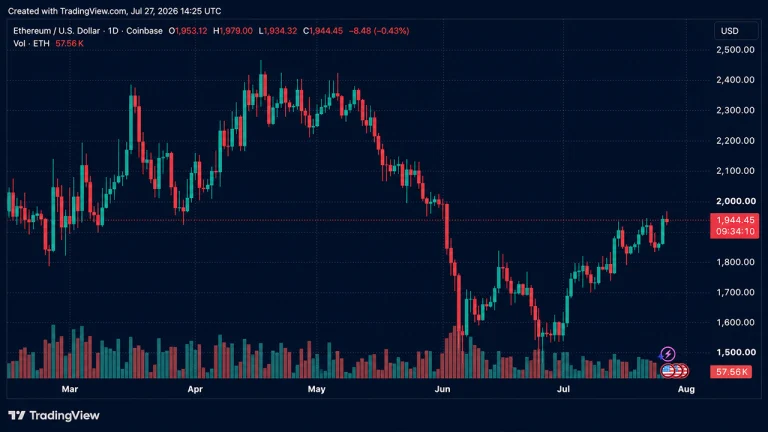
Ethereum Bears Squeezed: $113M Liquidated as ETH Eyes Critical $2,000 Breakout
Driven by surging ETF inflows and increased staking activity, the Ethereum market cap has climbed to $237 billion. All eyes are now on the $2,000 threshold, a key psychological level that could serve as the launchpad for a major breakout if momentum continues.
