The Institutional Myth: Individuals Still Control 66% of All Bitcoin Supply
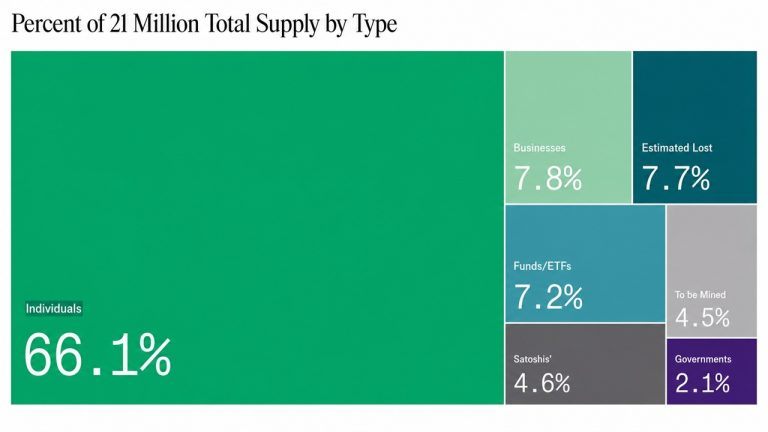
Wall Street isn't in charge of Bitcoin just yet. New data from asset manager Bitwise reveals that individual investors hold a massive 66.1% of the total Bitcoin supply, proving that retail power remains the backbone of the network. This onchain analysis highlights a level of decentralization that contradicts the narrative of total institutional takeover.
With businesses holding only 7.8% and ETFs accounting for just 7.2%, the market remains driven by individual holders rather than corporate entities. This distribution suggests that despite the influx of institutional capital, the core ownership of Bitcoin remains firmly in the hands of the people.
Who actually owns Bitcoin? It turns out it isn't Wall Street or major institutions. According to a breakdown released by asset manager Bitwise, individual investors hold 66.1% of Bitcoin’s total supply, dwarfing the 7.8% held by businesses and the 7.2% sitting in funds and exchange-traded funds (ETFs).
Based on public wallet data and rigorous onchain analysis, the report confirms that retail investors still dominate the market. While institutional adoption continues to make headlines, the fundamental ownership structure of Bitcoin remains decentralized and firmly controlled by individual holders.
This is a summarized and adapted version by Artificial Intelligence. To read the complete original story, visit the official source.
Read Full Article at Bitcoin.comSupport Jornal Bitcoin
Independent journalism, curated by AI, no clickbait. Keep the flame alive with any amount of BTC.
jonata@walletofsatoshi.comDaily Crypto Brief 📬
Subscribe to receive the curation of the most important Bitcoin and crypto news, summarized by AI. No spam.
Join more than 10,000 smart readers.
Related News

US Labor Market Slowdown: ADP Miss Sparks Speculation on Crypto Rally
As the labor market loses steam, the narrative for monetary easing gains momentum. A potential pivot by the Fed to lower interest rates could provide a massive tailwind for non-yielding assets, potentially driving a significant surge in the cryptocurrency market.

Saylor's Pivot: MicroStrategy Hoards Cash as Bitcoin Market Chops
This strategic pause coincides with heightened macroeconomic tension, as rising oil prices and anticipation surrounding the upcoming CPI print create a volatile backdrop. Investors are closely monitoring whether this liquidity buildup is a tactical move to prepare for a dip or a response to shifting global economic indicators.

Interpol Crackdown Uncovers Massive $122M Crypto Wallet Linked to Global Romance Scams
Beyond the massive seizure, the operation resulted in thousands of arrests, signaling a major crackdown on cybercrime and illicit crypto movements. This development highlights the intensifying battle between international law enforcement and bad actors using cryptocurrency to facilitate large-scale financial fraud and money laundering.

Japan's Payment Giant JCB Partners with Circle to Deploy USDC for 40 Million Merchants
As Japan ramps up its efforts to integrate digital assets into everyday commerce, this collaboration aims to bridge the gap between traditional retail and blockchain technology. By leveraging USDC, JCB is positioning itself at the forefront of a massive shift toward more efficient, stable, and globalized payment solutions for millions of businesses.

Oil Price Surge: Trump's Threats on Strait of Hormuz Trigger Market Chaos
As uncertainty surrounds the global oil supply and pricing, the broader economic implications are profound. Investors are bracing for potential supply chain disruptions, which could fuel inflation and force a shift in asset allocation across both traditional commodities and the crypto market as traders seek safe havens.

Bitcoin Volatility Alert: 90-Minute Fed Shock Looms as CPI and Warsh Testimony Collide
Market analysts expect the headline CPI to cool to approximately 3.8% year-over-year, down from May's 4.2%. While this projected deceleration offers a potential tailwind for Bitcoin, the market remains hypersensitive to any deviation from these forecasts, as the Federal Reserve's next moves depend heavily on these inflation metrics.
