Polymarket Shock: Eizenkot Hits 40% Probability for Israel PM Role

The prediction market Polymarket is delivering massive geopolitical signals, with Eizenkot now sitting at a 40% probability to become the next Prime Minister of Israel. This surge in betting volume highlights how decentralized prediction markets are becoming essential tools for gauging real-world political shifts and global sentiment.
As these markets evolve, the impact extends beyond simple gambling, offering a sophisticated look at political forecasting through the lens of blockchain technology. The ability of Polymarket to aggregate diverse data points allows traders to anticipate major leadership changes, creating a high-stakes environment where information is the ultimate currency.
In a move that has caught the attention of risk analysts and crypto enthusiasts alike, the prediction market Polymarket has indicated that Eizenkot now holds a 40% probability of becoming the Prime Minister of Israel. This data emerges during a period of intense political reconfiguration, highlighting the capacity of prediction market platforms to process global sentiments in real-time.
While other global events are unfolding—such as France and Morocco advancing to the World Cup quarterfinals—it is the political maneuvering in the Middle East that is driving the most significant engagement among investors using prediction markets for geopolitical hedging.
This is a summarized and adapted version by Artificial Intelligence. To read the complete original story, visit the official source.
Read Full Article at Blockchain.newsSupport Jornal Bitcoin
Independent journalism, curated by AI, no clickbait. Keep the flame alive with any amount of BTC.
jonata@walletofsatoshi.comDaily Crypto Brief 📬
Subscribe to receive the curation of the most important Bitcoin and crypto news, summarized by AI. No spam.
Join more than 10,000 smart readers.
Related News

Zelenskyy Warning: Patriot Missile Delays Could Fuel Russia and Shake Global Markets
Beyond the battlefield, these delays heighten the perceived NATO-Russia risks, creating significant ripples in global market sentiment. As geopolitical tensions rise, investors are closely monitoring how these shifts in defense capabilities might drive volatility and influence the demand for safe-haven assets amidst heightened macro uncertainty.
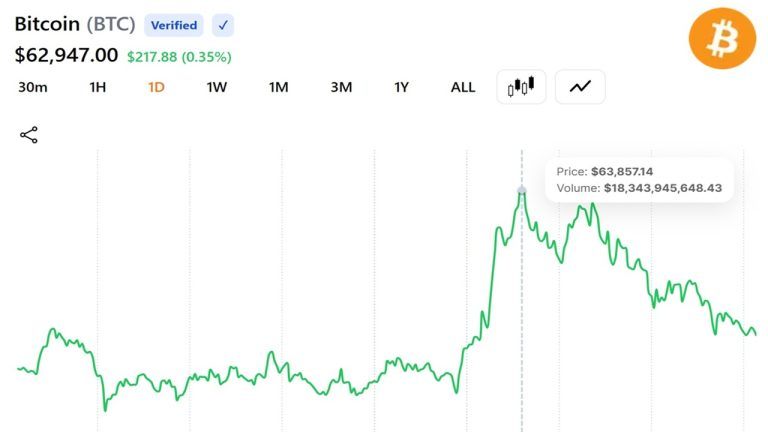
Bitcoin Reclaims $63K: ETF Inflows and Short Squeeze Fuel Massive Rebound
This rally marks a significant recovery from the late-June downturn, as Bitcoin climbed back from levels below $60,000. The combination of institutional demand via ETFs and the liquidation of short positions suggests a strengthening bullish sentiment across the broader cryptocurrency landscape.
Gold vs. Bitcoin: Peter Brandt’s Strategic Pivot as Polymarket Bets Big on $50K+
Simultaneously, the Polymarket prediction market is showing extreme bullishness, with a 99.95% probability of Bitcoin staying above the $50,000 threshold. This divergence between seasoned macro traders and high-stakes prediction markets highlights the intense tug-of-war between traditional safe havens and the digital asset revolution.

Iran Power Shift: Mojtaba Khamenei Takes Charge Amid Escalating US-Israel Tensions
As the geopolitical stability of the region hangs in the balance, market confidence is facing a rigorous test. The potential for intensified regional tensions could trigger significant volatility, influencing global economic sentiment and impacting risk appetite across both traditional and digital asset markets.

Geopolitical Alert: Israel Readies Military Action Amid Fragile Iran Ceasefire
Any escalation in military action between Israel and Iran could fundamentally destabilize global dynamics, triggering significant market volatility and economic uncertainty. For crypto markets and traditional finance alike, this looming conflict acts as a systemic risk factor capable of driving rapid liquidity shifts and a flight to safety.

Market Turmoil: Gilt Yields Surge to Post-2008 Highs as Iran Crisis Pressures Bank of England
Rising energy-driven inflation risks are pushing the economy toward a dangerous stagflation scenario. As the BoE navigates these turbulent waters, the impact on financial stability and broader asset markets remains a critical concern for institutional investors and global economists alike.
