Pi Network crumbles to a new ATL as Bitcoin stalls near $64K — market flips in 24 hours

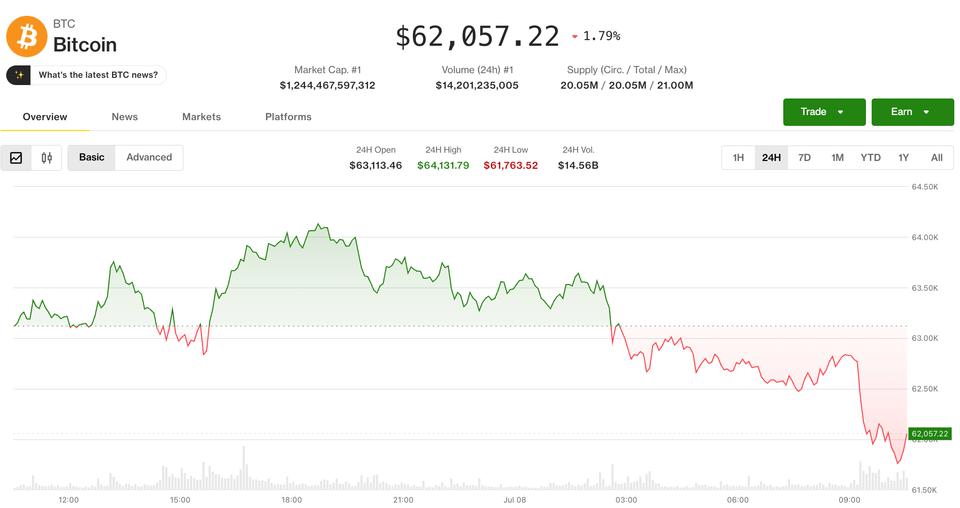
INTEL BRIEF: Pi Network has broken lower into a new ATL, intensifying sell-side pressure, while Bitcoin (BTC) is essentially halted around the $64K mark. With momentum stalling, traders are being pushed back into risk-off behavior.
The Pi Network move highlights a fast liquidity rotation: it’s not just “red candles,” it’s a narrative shift. Over the same 24-hour window, the market saw opposite extremes—M jumped double digits, while LAB dropped by more than 80%—bringing price action, liquidity, and risk management back to the center of attention. Until BTC regains traction beyond $64K, altcoin volatility is likely to remain the dominant theme.
Crypto markets moved into another high-volatility phase. Pi Network (Pi) collapsed and printed a new all-time low (new ATL), signaling strong selling pressure over the past hours. At the same time, Bitcoin (BTC) stalled—pausing its advance and drawing fresh attention around the $64K level.
Within the same 24-hour stretch, other coins delivered extreme moves: M surged by double digits, while LAB plunged by more than 80%. The sharp divergence underscores an aggressive capital rotation, and with BTC still stuck, instability is likely to continue—concentrating gains in a few names while punishing others as liquidity fades.
This is a summarized and adapted version by Artificial Intelligence. To read the complete original story, visit the official source.
Read Full Article at CryptoPotatoSupport Jornal Bitcoin
Independent journalism, curated by AI, no clickbait. Keep the flame alive with any amount of BTC.
jonata@walletofsatoshi.comDaily Crypto Brief 📬
Subscribe to receive the curation of the most important Bitcoin and crypto news, summarized by AI. No spam.
Join more than 10,000 smart readers.
Related News

EU Regulator ESMA Targets Crypto Custody Risks in Major MiCA Compliance Push
As the MiCA framework transitions into full implementation, this crackdown highlights the EU's commitment to institutional-grade security. By scrutinizing incident response capabilities and reliance on third-party technology providers, ESMA is setting a high bar for digital operational resilience to protect the broader crypto-asset ecosystem.

Geopolitical Shock: Bitcoin Drops 2% as Trump Ends Iran Peace Deal
As Bitcoin threatens to break below the critical US$ 62,000 support level, the market is bracing for increased volatility. The ongoing tension in the Middle East serves as a major catalyst, driving risk-off sentiment and forcing traders to reassess their positions in the crypto market amid global instability.
Mortgage Rate Surge: High Interest Forecasts to Persist Until 2027
This sustained high-interest environment poses significant challenges for housing affordability and broader economic stability. As the mortgage market adjusts to these long-term forecasts, the impact on consumer spending and the construction sector is expected to be profound, signaling a cautious era for real estate investors.

India Crackdown Escalates: Central Bank Doubles Down on Crypto Ban Push
Tax officials are sounding the alarm, noting that the rise of private wallets and offshore trading is significantly undermining enforcement efforts. As authorities struggle to track decentralized movements, the regulatory pressure on crypto users in India is expected to intensify, creating a complex landscape for global investors.
Market Meltdown: Crypto and Stocks Tumble as Trump Declares Iran Ceasefire 'Over'
As the U.S. and Iran engage in direct military exchanges, the resulting volatility is reshaping the risk landscape for digital assets. The immediate impact of these airstrikes highlights how deeply geopolitical instability can disrupt the crypto market, driving a rapid flight to liquidity as uncertainty dominates the global economic outlook.

Ukraine Drone Strike on Omsk Refinery Shifts Polymarket Odds for United Russia
As repairs begin on the damaged distillation units, the broader implications for Russian oil production and geopolitical stability remain uncertain. The intersection of drone strikes and market volatility highlights how physical warfare is now directly influencing real-time forecasting and political betting landscapes.
