One Year of the GENIUS Act: How New Laws Supercharged Stablecoin Liquidity
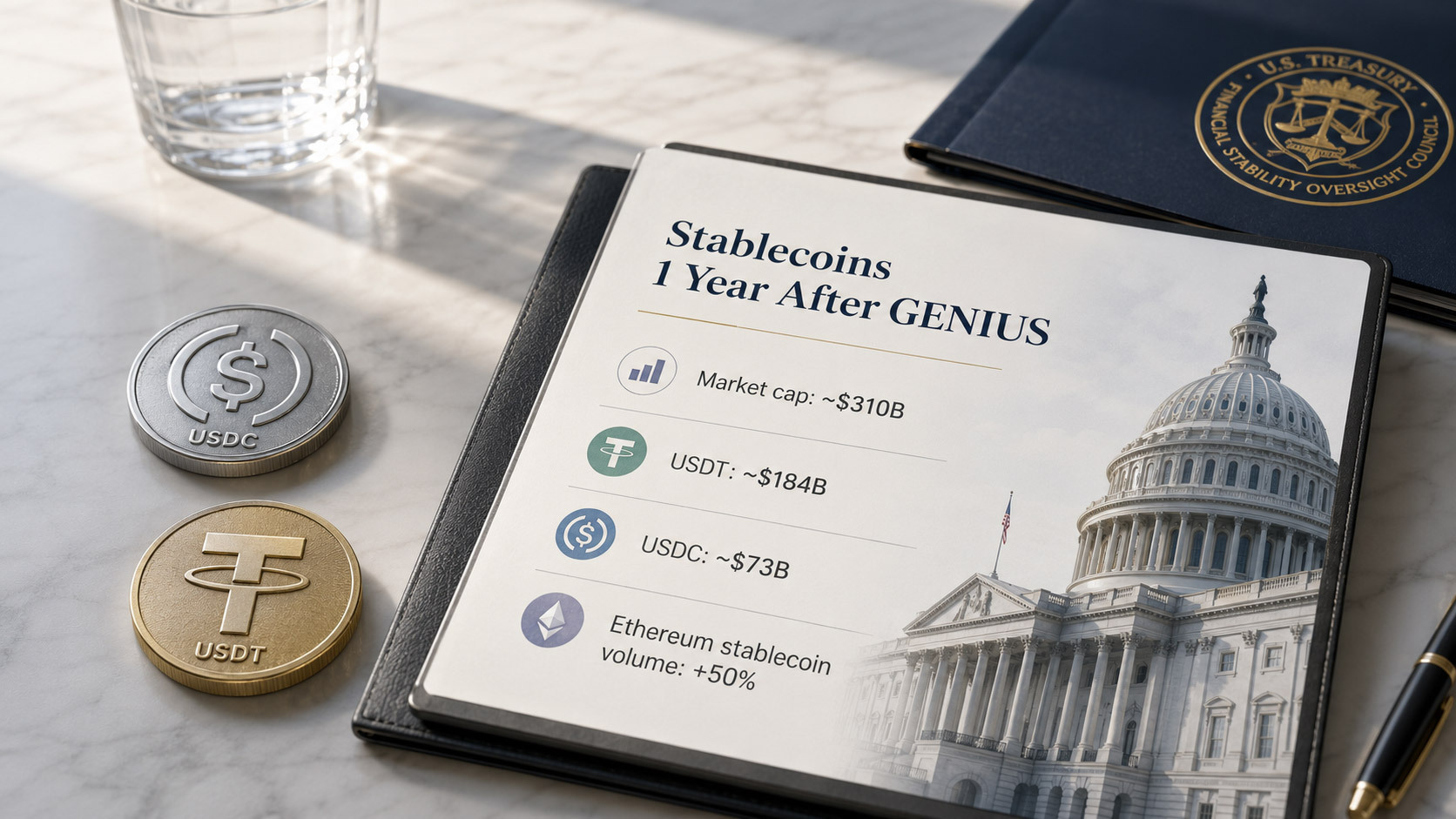
The stablecoin market has surged to $310 billion one year after the landmark GENIUS Act took effect, signaling a new era of regulatory clarity. Following the law signed by President Donald Trump, the market now operates under a strict federal framework requiring one-for-one liquid reserves and mandatory monthly disclosures to ensure stability.
This legislative shift has significantly streamlined the ability to trade and redeem assets like USDT and USDC, fostering massive institutional confidence. By codifying redemption rights and reserve transparency, the GENIUS Act has effectively removed the primary hurdles for stablecoin integration into the global financial system.
One year later, the results are evident: the GENIUS Act has made stablecoins easier to sell and trade by providing the legal certainty required for large-scale market participation.
This is a summarized and adapted version by Artificial Intelligence. To read the complete original story, visit the official source.
Read Full Article at CryptoSlateSupport Jornal Bitcoin
Independent journalism, curated by AI, no clickbait. Keep the flame alive with any amount of BTC.
jonata@walletofsatoshi.comDaily Crypto Brief 📬
Subscribe to receive the curation of the most important Bitcoin and crypto news, summarized by AI. No spam.
Join more than 10,000 smart readers.
Related News

Middle East Escalation: Iran Strikes Saudi Arabia as Geopolitical Tensions Surge
Adding to the complexity, whispers of a potential US-Iran deal in 2026 involving Iran Reconstruction Funding are circulating. The interplay between active military conflict and long-term diplomatic restructuring creates a high-stakes environment for macro traders and digital asset investors alike.
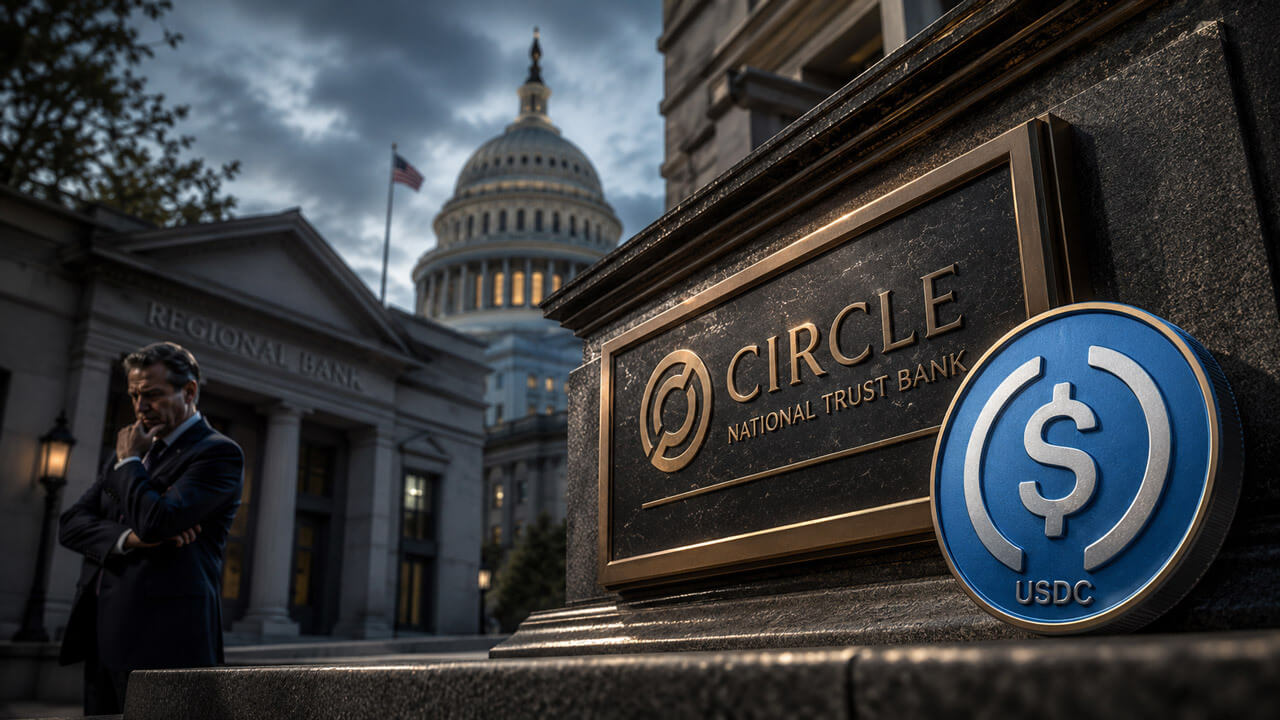
Circle Secures US Federal Bank Status Amid Warnings of $500 Billion Stablecoin Drain
Despite this regulatory victory, a shadow looms over the industry as lenders warn of a massive liquidity shift. Projections suggest that the rapid rise of stablecoins could drain as much as $500 billion from traditional banking systems, creating a tension between the growing legitimacy of digital currencies and the stability of conventional financial institutions.

Chainlink Watch: Analysts Decipher LINK's Tight July Price Consolidation
Monitoring the LINK price action is essential for understanding the broader market sentiment surrounding the Chainlink ecosystem. As trading activity remains subdued, the current price stability could serve as the calm before a significant volatility event, potentially shifting the long-term trajectory for LINK holders.

Ethereum Challenger? BNB Chain RWA TVL Surges to $5.2B Milestone
This surge highlights a growing trend of asset migration as investors seek more efficient environments for on-chain finance. As the RWA sector expands, the massive growth in BNB Chain's TVL suggests that the network is successfully capturing a significant share of the tokenized economy, providing a formidable alternative to the Ethereum-centric landscape.

Middle East Escalation: Iran Strikes Saudi Arabia, Sending Oil Prices Surging and Bitcoin Tumbling
This volatility highlights the ongoing sensitivity of the crypto market to international conflicts. As the energy sector braces for supply disruptions, the sudden movement in Bitcoin underscores how macroeconomic shocks and Middle East instability continue to dictate short-term liquidity and investor sentiment in the digital asset space.

Gas Fees Are Dead? Sui Unveils Protocol-Level Free Stablecoin Transfers
This protocol-level integration significantly enhances the user experience, paving the way for seamless mass adoption. By eliminating the 'gas hurdle,' Sui is setting a new standard for decentralized finance and real-world payment applications, making crypto transactions as intuitive as traditional banking.
