Morgan Stanley Disrupts Crypto Market with Ultra-Low Fee ETH and SOL ETFs

Morgan Stanley has officially entered the fray with a high-impact launch of Ethereum and Solana ETFs, boasting an industry-leading expense ratio of just 0.14%. This move signals a massive shift in institutional accessibility, providing a low-cost gateway for investors to gain exposure to the world's leading smart contract platforms.
Beyond mere price competitiveness, the standout feature is the integration of staking rewards, with an expected 95% of rewards being passed through to investors. By combining ultra-low fees with significant staking yields, Morgan Stanley is setting a new benchmark for how institutional-grade crypto ETFs should function in a maturing market.
Morgan Stanley has made a bold move into the crypto-asset space by debuting new Ethereum and Solana ETFs designed to undercut existing competition. Featuring a razor-thin 0.14% management fee, the funds are built for cost-efficiency. Most notably, the ETFs incorporate staking capabilities, with the bank aiming to pass approximately 95% of the staking rewards directly to investors, effectively bridging the gap between traditional finance and decentralized yield generation.
This is a summarized and adapted version by Artificial Intelligence. To read the complete original story, visit the official source.
Read Full Article at Crypto BriefingSupport Jornal Bitcoin
Independent journalism, curated by AI, no clickbait. Keep the flame alive with any amount of BTC.
jonata@walletofsatoshi.comDaily Crypto Brief 📬
Subscribe to receive the curation of the most important Bitcoin and crypto news, summarized by AI. No spam.
Join more than 10,000 smart readers.
Related News

Wall Street Titans Unite: BlackRock and Fidelity Back the Clarity Act
This massive show of support from Goldman Sachs and Franklin Templeton aims to resolve the ongoing legal ambiguity surrounding digital assets. By backing this framework, these financial giants are pushing for a standardized environment that could trigger a massive wave of institutional capital entering the crypto market.

AI Exodus: Wall Street Rotates to Insurers, Signaling Caution for Crypto Markets
This trend carries significant implications for the digital asset space. As the market moves toward defensive sectors, high-beta assets like crypto may face liquidity headwinds, as the broader shift toward caution often precedes volatility in risk-on environments.

Whale Alert: Why Bitcoin's Current Setup is 'Constructive' Amidst the Pullback
This strategic move suggests that the current Bitcoin setup is fundamentally strong despite the short-term dip. By absorbing supply during this correction, whales are positioning themselves for future upside, signaling that institutional-grade interest remains high even when sentiment turns cautious.
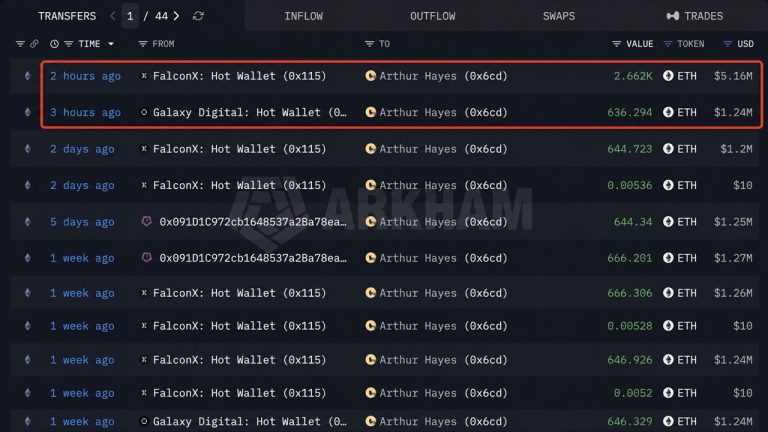
Arthur Hayes Doubles Down: Buys $6.39M in ETH Despite $301K Paper Loss
This high-stakes accumulation follows a series of recent losses, including a $606,000 hit on ETH just weeks ago. By ignoring short-term paper losses, Hayes is signaling a major bet on the long-term recovery and dominance of the Ethereum network amidst current market volatility.

Russia Tightens Grip: Central Bank Unveils Strict New Crypto Trading Regulations
This regulatory shift marks a significant move toward institutional oversight of the crypto market within Russia. As exchanges are forced to report digital assets more transparently, the industry faces a new era of compliance and rigorous monitoring by state authorities.

Crypto Alert: Maine's July 29 Deadline Creates Legal Chaos Over Asset Seizures
This bureaucratic ambiguity poses a significant threat to digital wealth management within the state. As the manual conflicts with existing transition protocols, the risk of losing cryptoassets due to technical reporting discrepancies is higher than ever for those with dormant accounts.
