Regulatory Win, Market Loss? Mizuho Warns Circle's Bank Approval Won't Save USDC Growth

Mizuho, the prominent Japanese investment bank, has issued a sobering outlook regarding Circle's recent regulatory milestones. While the OCC's approval for Circle to operate as a national trust bank is a significant legal achievement, Mizuho maintains a neutral rating, asserting that this development fails to address the underlying issue of slowing USDC growth.
The core of the concern lies in the intensifying landscape of stablecoin competition. The bank suggests that regulatory compliance alone cannot shield Circle from market pressures or the rising dominance of rival assets, implying that the long-term viability of USDC depends more on market adoption and competitive maneuvering than on banking licenses.
Furthermore, Mizuho emphasizes that the rising competition within the stablecoin sector remains a critical risk. The bank's analysis suggests that while a banking charter provides a layer of legitimacy, it does not inherently grant a competitive advantage in a market increasingly crowded by rival stablecoins and evolving liquidity demands.
This is a summarized and adapted version by Artificial Intelligence. To read the complete original story, visit the official source.
Read Full Article at CoinDeskSupport Jornal Bitcoin
Independent journalism, curated by AI, no clickbait. Keep the flame alive with any amount of BTC.
jonata@walletofsatoshi.comDaily Crypto Brief 📬
Subscribe to receive the curation of the most important Bitcoin and crypto news, summarized by AI. No spam.
Join more than 10,000 smart readers.
Related News

Oil Price Shock: Trump Proposes 20% Levy on Hormuz Shipments, Fueling Market Volatility
The proposed levy is expected to escalate geopolitical tensions in a vital maritime corridor, potentially reshaping global energy security and inflation trends. As supply chain risks mount, investors are closely monitoring the ripple effects that this instability may have on both traditional energy sectors and the broader macroeconomic landscape.
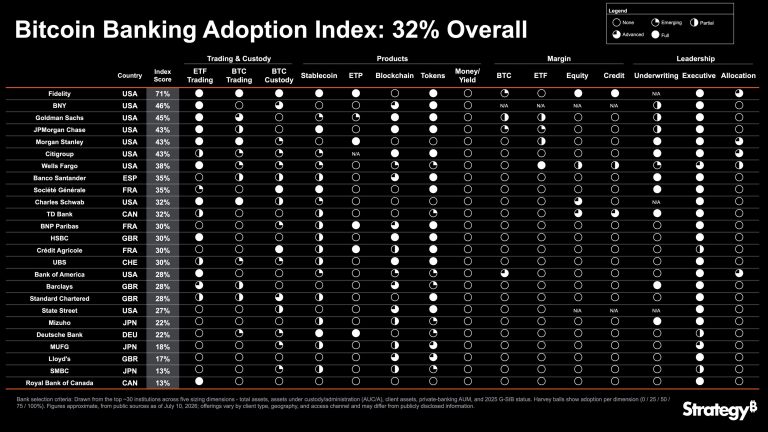
Banking Revolution: New Index Shows Bitcoin Adoption Hits 32% Among Major Institutions
The 32% adoption score highlights a growing momentum as major banks move beyond skepticism toward active service integration. By quantifying this trend, Strategy Inc. provides essential intelligence on the institutionalization of Bitcoin, suggesting that the bridge between legacy banking and decentralized finance is being built at an accelerating pace.

Clarity Act Under Fire: Democrats Launch Final Stand Against Trump-Linked Crypto Bill
As the bill faces a do-or-die moment, this legislative friction threatens to derail the regulatory framework. The focus on potential conflicts of interest highlights the growing tension between political wealth and the future of crypto regulation in the United States.
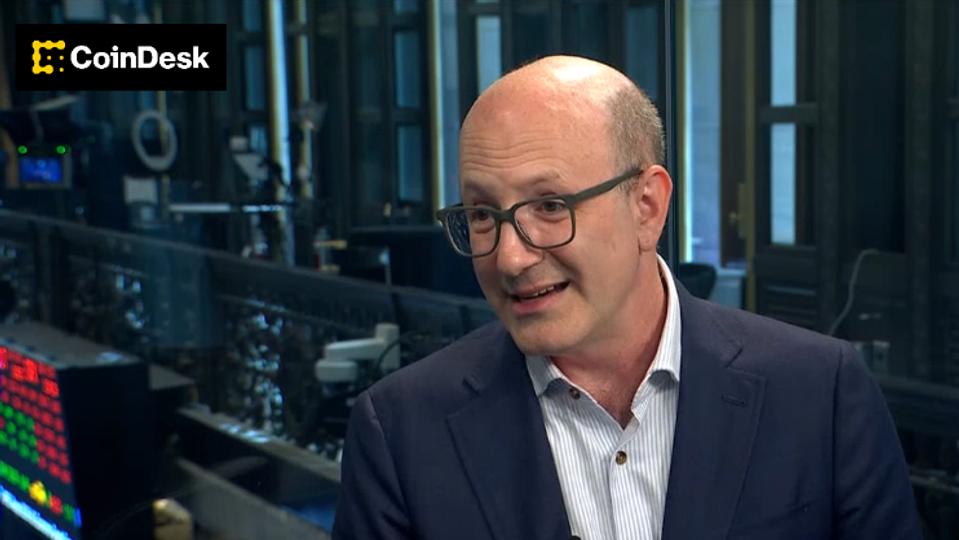
Market Disconnect: Franklin Templeton CIO Warns Crypto Prices Are Ignoring Massive Fundamentals
This gap between market valuation and institutional integration suggests a significant misalignment. As the industry moves toward deeper maturity, the disconnect between current crypto prices and underlying fundamentals could define the next major phase of market movement.

Polymarket pins Starmer at 98%: bets point to a leader-out move before 2027
The catalyst is a 2027 constitutional referendum in New York that would allow mid-decade redistricting, with New York City turnout viewed as pivotal. If the referendum passes, political leverage and electoral maps could be rewritten sooner than expected — and crypto prediction markets like Polymarket are already reflecting that risk with high-conviction odds. Bottom line: election mechanisms and constitutional votes often amplify uncertainty, and the current Polymarket pricing is a clear read on what the market expects next.

Beyond Hype: Hyperliquid Outperforms Consumer Tokens via Strong Fundamentals and Circle Partnership
This trend indicates that market dynamics are pivoting away from speculative consumer assets toward robust financial infrastructure. As Hyperliquid gains momentum, it is poised to reshape investment strategies, forcing a reevaluation of how value is captured within the decentralized finance ecosystem.
