Against All Odds: Home Miner Strikes Gold with R$ 1 Million Bitcoin Jackpot
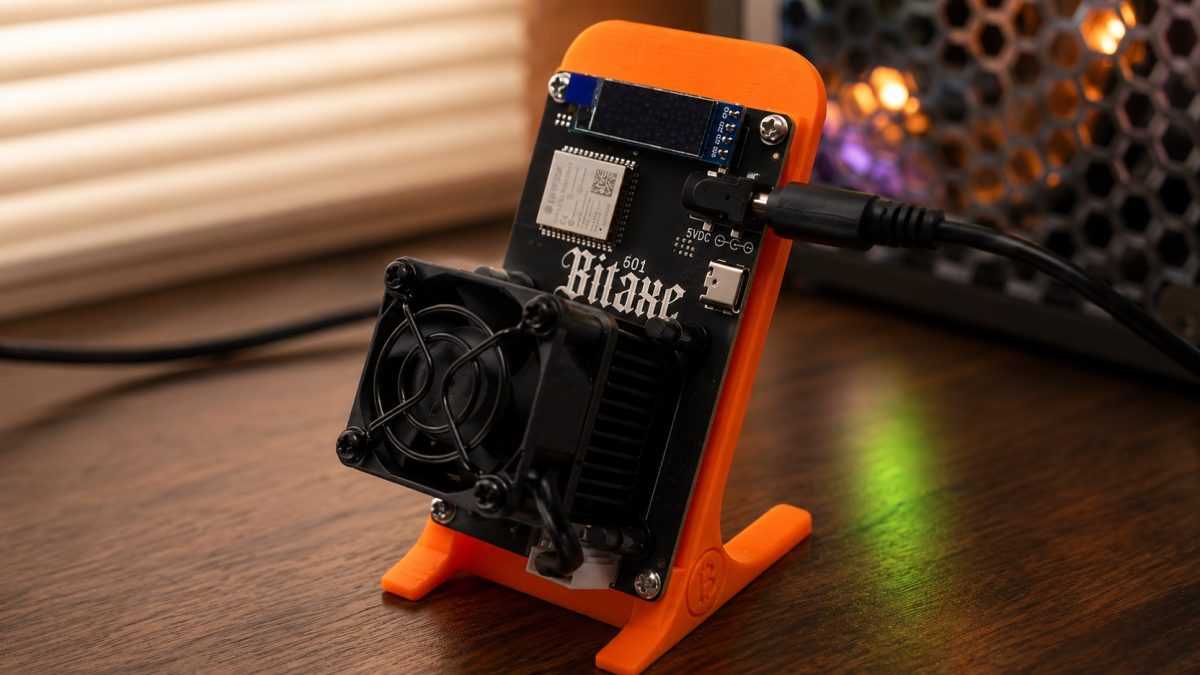
In a stunning defiance of industrial mining dominance, a solo miner has secured a windfall of over R$ 1 million by successfully solving Bitcoin block 957.382. Using nothing more than a single Bitaxe—a low-power, home-based mining device—the miner achieved what was deemed statistically improbable by the broader crypto community.
Confirmed by Public Pool, this event serves as a powerful narrative for the decentralization of Bitcoin. While the mining landscape is increasingly controlled by massive industrial farms, this extraordinary win proves that the mathematical lottery of the blockchain can still reward individual enthusiasts using modest hardware.
Defying the multi-billion dollar mining industry, a small-scale Bitcoin miner earned over R$ 1 million last Friday (10th) after successfully solving block number 957.382.
As revealed by Public Pool, the miner was utilizing a single Bitaxe, a home mining device with limited computational power. Although it is statistically rare for such low-power hardware to compete with industrial-grade ASIC miners, the event highlights the unpredictable and decentralized nature of the Bitcoin network.
This is a summarized and adapted version by Artificial Intelligence. To read the complete original story, visit the official source.
Read Full Article at LivecoinsSupport Jornal Bitcoin
Independent journalism, curated by AI, no clickbait. Keep the flame alive with any amount of BTC.
jonata@walletofsatoshi.comDaily Crypto Brief 📬
Subscribe to receive the curation of the most important Bitcoin and crypto news, summarized by AI. No spam.
Join more than 10,000 smart readers.
Related News

Beyond Exchanges: Why Prop Firms are Becoming the New Standard for Crypto Traders in 2026
As we approach 2026, these proprietary trading firms are being ranked alongside major exchanges as essential infrastructure. This evolution reflects a sophisticated demand for better capital management, forcing traders to learn how to identify the best prop firms to maintain a competitive edge in the digital asset market.

Jupiter Goes Gacha: Pokémon and One Piece Cards Hit the Solana Blockchain
Built in collaboration with Collector Crypt, this move bridges the gap between traditional Trading Card Games (TCG) and decentralized finance. By integrating physical assets with onchain mechanics, Jupiter is setting a new standard for how digital scarcity and real-world value interact within the Solana ecosystem.

The Future of Finance: Blockchain.RIO Unveils 13 Content Tracks to Shape Latin America's Digital Infrastructure
By focusing on the deep-seated shifts in digital finance, the event aims to bridge the gap between emerging technologies and institutional adoption. This gathering is a critical milestone for stakeholders looking to grasp how blockchain technology is reshaping the regional economy and setting new global standards for financial systems.
Washington's Clock: The CLARITY Act Debate and the High-Stakes Crypto Lobby Battle
This delay creates a critical window of uncertainty for the entire digital asset ecosystem. As lawmakers navigate their busy agendas, the industry remains on edge, waiting to see if the CLARITY Act will provide the much-needed regulatory framework or if political inertia will continue to stall crypto policy progress.

New Hampshire Doubles Down on Crypto: 'Blockchain Basic Laws' Officially Signed
Following recent discussions regarding Bitcoin reserves, this move signals a proactive approach to securing decentralized infrastructure. By specifically safeguarding mining and staking operations, the state is building a competitive moat to attract blockchain developers and institutional liquidity.

Robinhood’s Chainlink CCIP Integration Sets New Standard for Tokenized Equity Infrastructure
By leveraging CCIP, Robinhood is directly addressing the liquidity fragmentation that plagues the current blockchain landscape. This integration significantly raises the stakes for tokenized equity infrastructure, signaling to institutional players that the bridge between traditional finance and decentralized networks is becoming more robust and scalable.
