BlockTrends

MicroStrategy Loses $8.3 Billion on Bitcoin, Sells Reserves for First Time Since 2022
July 31, 202612:33 PM
MicroStrategy Loses $8.3 Billion on Bitcoin, Sells Reserves for First Time Since 2022

MicroStrategy, the largest corporate holder of Bitcoin, has suffered a staggering loss of $8.3 billion in the last quarter due to Bitcoin's 14% price drop. The company has radically shifted its strategy, selling part of its Bitcoin reserves for the first time since 2022, marking a turning point in its approach to the digital asset. This sale represents a significant shift in the company's stance, which had become synonymous with conviction in Bitcoin as a store of value. The decision comes amid a volatile market and growing financial pressures on the company. The move could signal a strategic adjustment or a necessary response to market conditions, sparking debates about the sustainability of corporate Bitcoin accumulation strategies.

This is a summarized and adapted version by Artificial Intelligence. To read the complete original story, visit the official source.

Read Full Article at BlockTrends
QR Code Lightning

Support Jornal Bitcoin

Independent journalism, curated by AI, no clickbait. Keep the flame alive with any amount of BTC.

Wallet of Satoshi
jonata@walletofsatoshi.com

Daily Crypto Brief 📬

Subscribe to receive the curation of the most important Bitcoin and crypto news, summarized by AI. No spam.

Join more than 10,000 smart readers.

Related News

Blackrock Fuels 79% of Bitcoin ETF Inflows with $183.38M as Institutional Money Returns
Bitcoin.com★ Featured

Blackrock Fuels 79% of Bitcoin ETF Inflows with $183.38M as Institutional Money Returns

Bitcoin ETFs attracted $233.13 million on Thursday, with Blackrock driving $183.38 million of this total, representing 79% of all inflows. This significant institutional capital injection marks a strong recovery for the crypto market after ending a four-day losing streak. The positive performance of Bitcoin ETFs contrasts with the stagnant flows seen in HYPE ETFs, while other cryptocurrency funds like Ether, XRP, and Solana also recorded positive net inflows. This capital movement reflects growing institutional confidence in Bitcoin as an asset class, potentially driving future price appreciation and broader adoption.
Bitcoin Magazine

US Closes in on Iran's Strait of Hormuz Bitcoin Insurance Policy, Sanctions Companies

The United States government is tightening its grip on Iran, sanctioning companies involved in the Bitcoin insurance policy for the Strait of Hormuz. This action follows the freezing of the country's other digital assets, marking a new chapter in the financial war between nations. Iran's Bitcoin insurance strategy represents an attempt to circumvent traditional sanctions using cryptocurrencies.

The sanctions demonstrate growing US concern over the use of Bitcoin and other cryptocurrencies for geopolitical purposes. The Strait of Hormuz, a strategic maritime route for global oil, has become a focal point in tensions between the two nations. This development could lead to increased cryptocurrency regulation worldwide as governments seek to control its use in international conflict situations.
US Treasury Yields Surge as TIPS Challenge Inflation Narrative
CoinTelegraph

US Treasury Yields Surge as TIPS Challenge Inflation Narrative

TIPS data points to rising real yields, not inflation, a dynamic that weighs on non-yielding assets like Bitcoin. Investors are reassessing their strategies in light of these developments in the US government bond market, with real yields becoming a more significant factor than inflation expectations.

This shift in market narrative has significant implications for the cryptocurrency landscape and risk assets. With real yields increasing, non-cash-flow-generating assets like Bitcoin face additional pressure. Analysts are closely watching how this trend develops and its potential impact on investor behavior in the crypto space.

Bitcoin Price Sinks to 2-Week Lows as US Stocks Fail to Copy Asia Rebound
CoinTelegraph

Bitcoin Price Sinks to 2-Week Lows as US Stocks Fail to Copy Asia Rebound

Bitcoin (BTC) plunged to two-week lows, hitting $62,369 on Bitstamp, a level last seen on July 14. The leading cryptocurrency faced fresh downside pressure as US stocks tracked sideways into the monthly close, diverging from the relief bounce witnessed in Asian markets.

The 3.5% Bitcoin drop comes amid global financial market uncertainty, with investors closely tracking traditional equity movements for directional signals. The divergence between Asian and US market performance is creating a volatile environment for digital assets, with traders assessing whether this represents a healthy correction or the beginning of a deeper downtrend.
Ethereum Turns 11 With $148B Stablecoin Base But Cooler Mainnet Fees
NewsBTC

Ethereum Turns 11 With $148B Stablecoin Base But Cooler Mainnet Fees

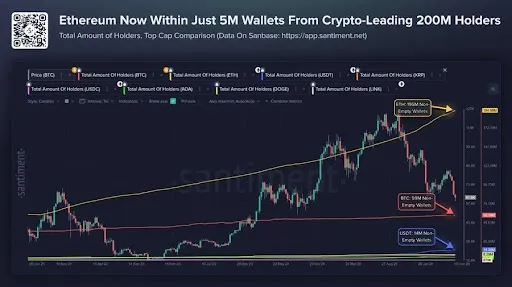
Ethereum marks its 11th anniversary with a formidable $148 billion stablecoin base, reinforcing its status as one of the most critical liquidity networks in the crypto ecosystem. Despite its exponential growth, mainnet fees have shown a cooling trend, potentially improving accessibility for everyday users and developers building on the network. This milestone arrives at a pivotal moment for the network as the proof-of-stake transition continues to strengthen and developers work on upgrades like Dencun. The combination of massive stablecoin volume and more affordable fees could drive mass adoption, particularly with Bitcoin's upcoming halving and the sustained interest in DeFi and NFTs across the cryptocurrency market.
Bitcoin Magazine

COLD CARD SECURITY RISK: IMMEDIATE ACTION REQUIRED

A critical security vulnerability has been discovered in Coldcard hardware wallets, requiring immediate action from all users. The Coldcard team has issued an urgent alert, advising all owners to review disclosures and implement necessary corrective measures to protect their bitcoins. This incident highlights the ongoing security challenges in the Bitcoin ecosystem, even with devices considered highly secure. Coldcard users must act quickly to mitigate any potential risk of fund loss, serving as an important reminder about the necessity of staying updated on security vulnerabilities and firmware updates in hardware wallets.
Jornal Bitcoin Logo
