Bitcoin's Difficulty Adjustment: The Self-Correcting Rule Causing Massive Network Swings
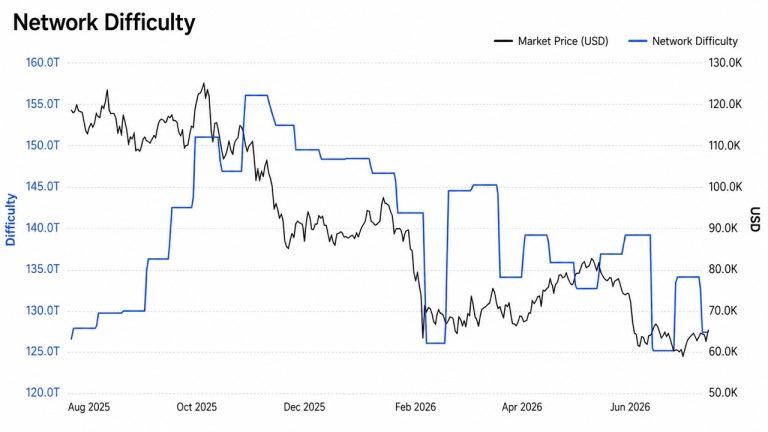
Bitcoin's network just experienced one of its most dramatic difficulty adjustments in recent history, showcasing the raw power of its self-correcting protocol. In a mere 12-day window, the network swung from an 11.16% difficulty cut to a massive 14.7% hike, marking the sharpest whipsaw movement seen since 2021.
This automated adjustment occurs every 2,016 blocks to ensure that block production remains consistent regardless of changes in total mining power. By functioning without a central manager or human vote, this mathematical rule maintains Bitcoin's scarcity and stabilizes the network against extreme fluctuations in hash rate.
Bitcoin’s difficulty adjustment is a vital self-correcting rule that resets approximately every two weeks, or every 2,016 blocks. The network recently underwent a period of intense volatility, swinging from an 11.16% difficulty reduction on February 7, 2026, to a 14.7% hike just 12 days later. This represents the network's sharpest whipsaw since 2021.
Unlike traditional financial systems, Bitcoin has no manager or governing body to oversee these shifts. It is an immutable mathematical rule designed to ensure that no matter how much mining hardware joins or leaves the network, the issuance of new Bitcoin remains predictable and the network remains secure.
This is a summarized and adapted version by Artificial Intelligence. To read the complete original story, visit the official source.
Read Full Article at Bitcoin.comSupport Jornal Bitcoin
Independent journalism, curated by AI, no clickbait. Keep the flame alive with any amount of BTC.
jonata@walletofsatoshi.comDaily Crypto Brief 📬
Subscribe to receive the curation of the most important Bitcoin and crypto news, summarized by AI. No spam.
Join more than 10,000 smart readers.
Related News

Bitcoin ETFs Bounce Back: $34M Inflow Signals Broader Market Recovery
This influx comes as these financial products work to offset nearly $4.8 billion in cumulative outflows seen previously. The recent surge in Bitcoin ETF inflows suggests that a broader market recovery is taking shape, potentially stabilizing sentiment among institutional investors.
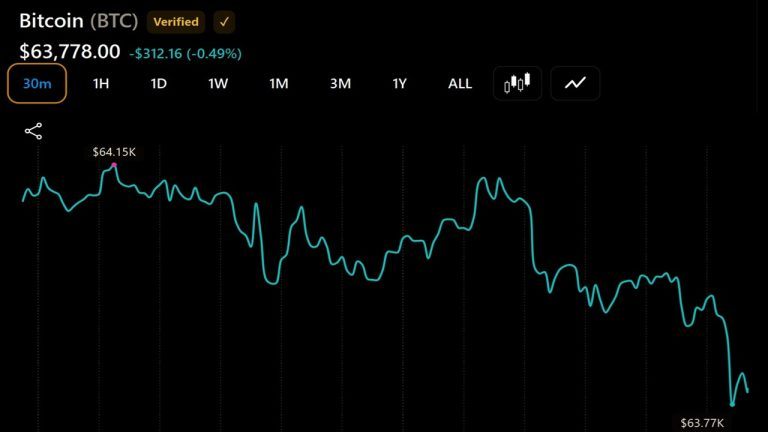
Bitcoin Battles to Hold $64,000 Following Massive $225 Million ETF Outflow
With the Crypto Fear & Greed Index sitting at a low of 27, the market remains firmly in 'fear' territory. This lack of bullish momentum suggests that institutional outflows are weighing heavily on sentiment, leaving traders cautious as they watch for a definitive support level to emerge amidst the current crypto market instability.

Weather Derivatives Tokenization: Crypto's Most Critical Real-World Use Case?
By leveraging blockchain technology, the industry can democratize access to sophisticated financial tools, providing essential protection for climate-sensitive sectors. This shift toward on-chain weather derivatives could bridge the gap between decentralized finance and tangible global economic stability.

Transfer Chaos: How Arsenal’s Vinícius Júnior Interest Exposes Crypto’s Messy Link to Football Rumors
From the sudden emergence of unauthorized meme tokens to the broader impact of speculative hype, the connection between football news and crypto volatility is becoming increasingly messy. This trend highlights a growing challenge for the industry: distinguishing between legitimate blockchain integration and predatory schemes fueled by transfer window frenzy.

Trump Defies Supreme Court with New 15% Tariffs: Bitcoin Volatility Explodes
The crypto market felt the immediate impact of this news, as Bitcoin experienced a rapid surge followed by a sharp reversal. As investors navigate this new era of trade warfare, the volatility of Bitcoin remains a key indicator of how digital assets react to sudden shifts in US executive power and international trade regulations.

Bitcoin Mining Giant Poolin Files for Chapter 11 Bankruptcy in New Jersey
Despite the instability signaled by the Poolin bankruptcy, market sentiment remains split on long-term price action. Some bullish forecasts suggest Bitcoin could reach $67.5K by July 2026, even as the industry grapples with the fallout of major players restructuring their debt through legal channels.
