Silicon Valley Meets Wall Street: a16z’s Marc Andreessen Joins Fed AI Task Force

In a massive convergence of tech and finance, the Federal Reserve has appointed a16z co-founder Marc Andreessen to co-lead a high-stakes task force on AI productivity and jobs. This strategic appointment places a titan of venture capital at the heart of the Fed's policy review, ensuring that the rapid evolution of artificial intelligence is directly integrated into the central bank's economic outlook.
Collaborating with heavyweights from Microsoft and Anthropic, the task force aims to dissect how general-purpose technologies will reshape employment landscapes and national productivity. As AI continues to disrupt traditional economic models, Andreessen's involvement underscores the Federal Reserve's commitment to understanding the profound implications of automation and machine learning on future policymaking.
Andreessen will serve on the Fed’s Productivity and Jobs task force alongside Charles I. Jones, a Stanford University economics professor currently on leave at Anthropic, and Asha Sharma, Microsoft's executive vice president and Xbox CEO. The new task force will assess how general-purpose technologies such as AI will affect employment and productivity to better inform the central bank's policymaking, according to a recent press release.
This is a summarized and adapted version by Artificial Intelligence. To read the complete original story, visit the official source.
Read Full Article at CoinTelegraphSupport Jornal Bitcoin
Independent journalism, curated by AI, no clickbait. Keep the flame alive with any amount of BTC.
jonata@walletofsatoshi.comDaily Crypto Brief 📬
Subscribe to receive the curation of the most important Bitcoin and crypto news, summarized by AI. No spam.
Join more than 10,000 smart readers.
Related News
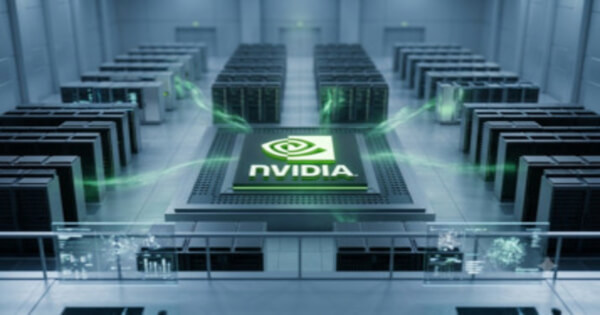
NVIDIA's New Strategy: Hardware-Aware Co-Design to Supercharge LLM Efficiency
By bridging the gap between software design and physical silicon, NVIDIA aims to drastically improve throughput, minimize latency, and optimize cost-efficiency. This evolution is set to become the gold standard for deploying massive AI models, making high-performance intelligence more scalable and sustainable for the global market.

AI Memory Giant SK Hynix Hits Solana: Tokenized Stocks Enable 24/7 Trading
By leveraging Solana's high-speed infrastructure, this launch brings critical semiconductor exposure to the blockchain. The move allows investors to hedge or speculate on the AI hardware boom through tokenized assets, bypassing the limitations of traditional market hours.

Market Shift: Investors Dump Long-Term AI Debt Amid $159 Billion Big Tech Borrowing Spree
This strategic retreat highlights a growing tension between massive technological ambition and market appetite. The consequences of this shift could fundamentally reshape Big Tech's financial strategies and dictate the future level of investor confidence in the artificial intelligence infrastructure sector.

Ethereum Foundation AI Research Unveils the Next Evolution of Smart Contracts
This evolution suggests a future where smart contracts are no longer static scripts but dynamic, intelligent entities capable of complex decision-making. As the market absorbs this shift, the integration of AI agents could become the primary catalyst for the next wave of scalability and automation within the Ethereum ecosystem.

Legal Tech Breakthrough: Harvey AI Unveils Smart Contract Review Checklist
This move signals a massive shift in how legal ops will function moving forward. By leveraging AI-driven automation, legal teams can enhance efficiency and ensure higher accuracy in contract management, setting a new standard for the intersection of law and technology.
AMD Supercharges AI Inference: ZenDNN 6.0 Unleashed for EPYC CPUs
Beyond raw speed, the expanded compatibility with vLLM ensures that AMD's EPYC ecosystem remains a top-tier choice for deploying large-scale language models. This strategic move optimizes computational efficiency and provides a scalable solution for enterprises looking to maximize their AI inference throughput and reduce latency in data center environments.
