Ledger's Bold Move: AI Agents to Manage Your Crypto While You Keep the Keys

Ledger is redefining asset management by introducing AI agents capable of navigating the complexities of the crypto market. These intelligent agents can autonomously read wallet balances and perform deep portfolio analysis, providing a level of sophisticated automation previously unavailable to retail users.
Crucially, this integration prioritizes security over pure automation; every sensitive transaction requires a manual sign-off on a Ledger hardware device. By bridging the gap between AI-driven efficiency and non-custodial security, Ledger ensures that while AI manages the strategy, the user retains absolute control over their private keys.
Ledger is aiming to revolutionize how users interact with their digital assets by enabling AI agents to manage crypto portfolios. As reported by CoinDesk, these AI agents will be able to monitor wallet balances and analyze asset distributions to optimize performance. However, the company is maintaining a strict security protocol: any sensitive action or transaction must be manually approved on a Ledger hardware device before execution. This approach allows users to leverage the power of AI-driven automation without ever relinquishing control of their private keys.
This is a summarized and adapted version by Artificial Intelligence. To read the complete original story, visit the official source.
Read Full Article at CoinDeskSupport Jornal Bitcoin
Independent journalism, curated by AI, no clickbait. Keep the flame alive with any amount of BTC.
jonata@walletofsatoshi.comDaily Crypto Brief 📬
Subscribe to receive the curation of the most important Bitcoin and crypto news, summarized by AI. No spam.
Join more than 10,000 smart readers.
Related News

The End of Crypto Chaos? Why the 'Clarity Act' is a Game-Changer for Consumer Protection
Summer Mersinger, CEO of the Blockchain Association, argues that waiting for the next major crisis to implement safeguards is a mistake. By establishing clear legal frameworks, this act aims to foster institutional trust and ensure that digital asset innovation is built on a foundation of robust consumer security.

The $65.5K Rejection: What Top Analysts Are Saying About Bitcoin’s Next Move
This technical tug-of-war is essential for defining the short-term trend of the crypto market. If Bitcoin can consolidate above this support, it may trigger a bullish breakout; however, failure to hold this level could lead to further liquidations and a search for lower price floors.

AI Fraud Alert: Why Crypto Advisors Must Upgrade Their Defenses Immediately
As AI-driven scams become more indistinguishable from legitimate communications, the impact on market trust could be devastating. Implementing advanced verification protocols and staying ahead of AI-generated threats is critical for maintaining security and protecting client wealth in an increasingly automated landscape.

The $75M Void: Esports World Cup 2026 Sets Massive Prize Pool as Crypto Stays Away
This trend suggests a strategic shift toward more stable sponsorships, which is fundamentally reshaping future esports funding dynamics. As the industry seeks long-term reliability, the lack of crypto integration presents both a challenge and a massive untapped opportunity for blockchain projects to prove their institutional maturity.
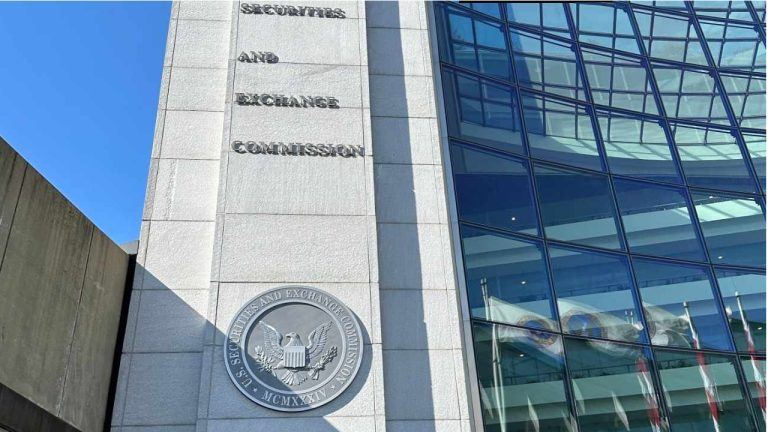
SEC Hypocrisy? Ripple’s David Schwartz Claims XRP Was Unfairly Labeled a Security
This legal battle carries massive implications for the entire crypto industry, as it challenges how the SEC defines securities in a decentralized era. The fallout from Schwartz's critique underscores the ongoing struggle for regulatory clarity and the potential for arbitrary enforcement to stifle innovation within the global blockchain ecosystem.

AI Economy Breakthrough: Cloudflare x402 Integration Enables Bitcoin Micropayments
As AI agents become increasingly autonomous, the demand for scalable payment rails will skyrocket. The x402 integration ensures that Bitcoin is no longer just a store of value, but a functional medium of exchange for the massive influx of machine-to-machine microtransactions expected in the near future.
