India Divided: Central Bank Pushes for Crypto Ban While Tax Authorities Warn of Revenue Loss

A major regulatory rift has emerged within the Indian government regarding the future of digital assets. While the Reserve Bank of India is doubling down on its stance to prohibit cryptocurrencies, the country's tax authorities are sounding the alarm, warning that such a ban could inadvertently trigger massive tax evasion risks.
This internal tug-of-war underscores the growing difficulty of regulating a massive economy in the age of decentralized finance. The clash between strict monetary control and the necessity of maintaining tax revenue creates a volatile environment for Bitcoin holders and institutional investors looking for regulatory clarity in India.
The standoff highlights the complex balancing act required in the world's most populous nation. As monetary regulators seek to safeguard the traditional financial system, fiscal authorities are concerned about losing oversight and the ability to collect taxes on crypto-related capital gains.
This is a summarized and adapted version by Artificial Intelligence. To read the complete original story, visit the official source.
Read Full Article at LivecoinsSupport Jornal Bitcoin
Independent journalism, curated by AI, no clickbait. Keep the flame alive with any amount of BTC.
jonata@walletofsatoshi.comDaily Crypto Brief 📬
Subscribe to receive the curation of the most important Bitcoin and crypto news, summarized by AI. No spam.
Join more than 10,000 smart readers.
Related News

Geopolitical Flashpoint: Trump Threatens Iran Strikes as Tehran Vows Retaliation
As the window for diplomatic solutions narrows, the threat of direct military engagement looms large over international alliances. The potential for a broader conflict could disrupt energy supplies and global trade routes, forcing a rapid reassessment of risk management strategies in both traditional finance and the cryptocurrency sectors.

The End of Permissionless Money? Bitcoin Maxi Issues Dire Warning Over BIP-110 Failure
Failure to resolve this conflict could fundamentally undermine the concept of permissionless money. As maximalists warn, the outcome of this governance dispute will dictate whether Bitcoin remains a decentralized fortress or shifts toward a more controlled structure, impacting the long-term sovereignty of the network.

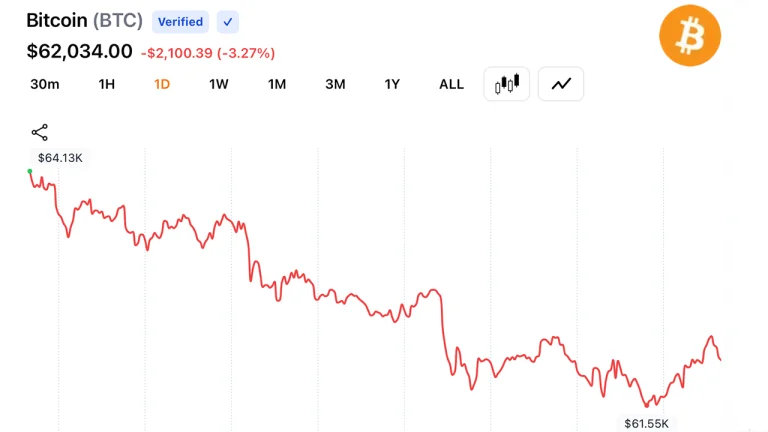
Bitcoin Drops to $62K: Geopolitical Tensions and Fed Uncertainty Cloud BTC Rally
The volatility extends beyond the crypto space, fueled by a sharp selloff in semiconductor and AI stocks following news from Samsung. As traders digest the latest Fed minutes to gauge the timing of potential rate cuts, the Bitcoin price remains highly sensitive to these macroeconomic shifts and the rising cost of oil.

Turning the Corner: Bitcoin ETFs Bounce Back After Massive $8 Billion Bleed
This shift in momentum is a vital indicator for the broader crypto market and institutional adoption. As Bitcoin ETFs stabilize, the transition from massive outflows to potential accumulation suggests that the market is absorbing the recent volatility and preparing for a new phase of price discovery.
Middle East Escalation Triggers Crypto Bloodbath: Bulls Lose $310M as Bitcoin Slumps
As military exchanges threaten to unravel the fragile Middle East ceasefire, market participants are pivoting from bullish sentiment to defensive positioning. The sudden volatility highlights how geopolitical instability continues to act as a primary driver for Bitcoin price fluctuations and sudden market liquidations.

Deadline Approaching: CFTC Chair Claims Clarity Act is 'So Close' to Passing
The push for this legislation aims to provide much-needed legal certainty to the digital asset space. If passed, the Clarity Act will establish a definitive framework for market structure, potentially resolving long-standing disputes and shaping the future of crypto regulation in the United States.
