Red Sea Crisis Escalates: IMO Warns of Massive Supply Chain Disruptions
The International Maritime Organization (IMO) has issued a stern condemnation of ongoing shipping attacks in the Red Sea, signaling a major threat to global stability. The primary concern is the potential closure of the Bab el-Mandeb Strait, a critical maritime artery currently under extreme pressure.
With a high probability of a total shutdown by September 30, the global supply chain faces unprecedented risks of disruption. This geopolitical volatility is expected to impact international trade routes, potentially driving up costs and creating significant economic uncertainty across multiple sectors.
The International Maritime Organization (IMO) has officially condemned the recent attacks on shipping vessels in the Red Sea, raising urgent concerns regarding global supply chain risks. The situation is particularly dire at the Bab el-Mandeb Strait, which faces a high likelihood of closure by September 30. As maritime security deteriorates, the international community braces for the economic fallout of losing access to one of the world's most essential trade corridors.
This is a summarized and adapted version by Artificial Intelligence. To read the complete original story, visit the official source.
Read Full Article at Crypto BriefingSupport Jornal Bitcoin
Independent journalism, curated by AI, no clickbait. Keep the flame alive with any amount of BTC.
jonata@walletofsatoshi.comDaily Crypto Brief 📬
Subscribe to receive the curation of the most important Bitcoin and crypto news, summarized by AI. No spam.
Join more than 10,000 smart readers.
Related News

SEC Warning: Crypto Vaults and On-chain Lending Could Be Classified as Securities
As the regulatory landscape shifts, the consequences for the DeFi sector could be profound, potentially forcing a massive restructuring of on-chain financial activities. Peirce urged developers to proactively engage with regulators, stressing that moving financial operations on-chain does not place them beyond the reach of existing legal frameworks.
US House Greenlights $1.1T Defense Bill Featuring Strategic US-Israel Tech Pact
This massive spending comes at a volatile time, as geopolitical tensions rise with potential military threats from Houthi forces against Israel projected through 2026. The bill's focus on high-tech defense cooperation underscores the urgent need for technological superiority in modern warfare environments.
Bitcoin Defies Gravity: Crypto Outperforms US Stocks Amid Market Retreat
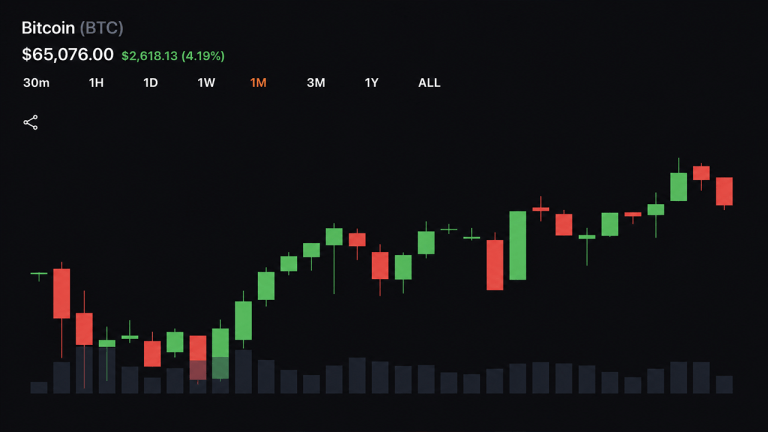
However, this period of subdued volatility may be a precursor to turbulence. Rising leverage and ongoing tensions in oil markets suggest that the current stability is fragile. As traders price in a 75% probability of a Fed hold while yields hover near 4.60%, the crypto market remains positioned at a critical macroeconomic crossroads.
Wall Street Split: Goldman Sachs CEO Breaks Ranks to Back Crypto Clarity Act
Solomon's stance creates a sharp divide with JP Morgan's Jamie Dimon and various banking trade groups, who remain staunchly opposed to the bill. The core conflict centers on stablecoin-yield provisions, which critics argue could trigger a massive outflow of deposits from traditional lenders toward the crypto ecosystem, fundamentally altering the landscape of modern finance.
Polymarket Odds Surge: Le Pen Climbs to 31% for 2027 French Election
The implications of this trend suggest that decentralized forecasting is becoming a critical tool for assessing geopolitical risk. As the Polymarket odds fluctuate, they provide a data-driven lens through which analysts can view the potential for political upheaval in Europe, moving beyond traditional polling to capture the raw sentiment of global participants.
Geopolitical Shockwave: Trump Signals Potential Military Escalation Against Iran
With predictive models suggesting a 30.5% chance of a U.S. invasion of Iran before 2027, the market is on high alert. Such high-stakes military tension could trigger massive volatility, driving investors toward safe-haven assets and creating unpredictable waves across the crypto and traditional finance sectors.
